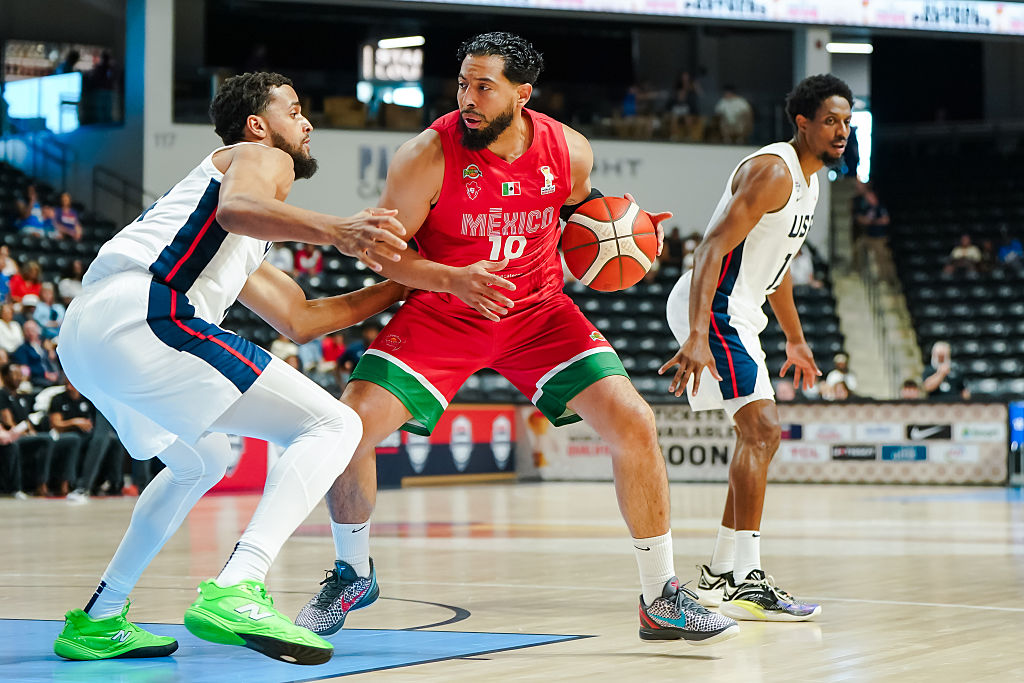
The concluding fixture of the FIBA Americas Qualifiers First Round (Group A) in Zacatecas City exposes the structural tension inherent in international basketball scheduling. Carrying a 4-1 record after a narrow 82-81 victory over the Dominican Republic on July 4, 2026, USA Basketball faces a highly coordinated Mexican squad. This matchup serves as a critical diagnostic for the competitive volatility of mid-summer qualification windows, where roster composition is dictated more by institutional calendar conflicts than by absolute talent distribution.
The Asymmetrical Roster Incentive Structure
The stark divergence in roster construction models between competing federations during these windows reveals systemic inequalities in player availability. While Canada Basketball mobilized premier NBA talent—including Shai Gilgeous-Alexander, Dillon Brooks, and Andrew Nembhard—for their qualifying matchups, USA Basketball must navigate a far more fragmented selection matrix. Without the prestige of an Olympic cycle, top-tier American NBA players lack the commercial and athletic incentives to participate in regional qualification windows.
Consequently, the United States relies on a rotating pool of G League athletes, international overseas professionals, and free agents. This high roster turnover prevents long-term tactical cohesion. Conversely, regional opponents like Mexico maintain a consistent domestic core, converting developmental continuity into a competitive equalizer against the historically dominant, albeit transient, American talent pool.
Physiological and Environmental Leverage in Zacatecas
The selection of Zacatecas City as the host venue introduces significant environmental variables that favor the home team. Situated at an elevation exceeding 2,400 meters, the venue imposes a severe physiological tax on unacclimatized athletes. For a newly assembled USA roster lacking systemic conditioning, recovery intervals and sustained defensive rotations will be severely tested under hypoxic conditions.
The Mexican national team has structured its preparation around these localized dynamics. By leveraging high-altitude conditioning alongside a highly partisan home crowd, Mexico aims to disrupt the offensive rhythm of the American team. Tactically, this requires Mexico to execute a low-possession, high-efficiency half-court offense, deliberately preventing the USA from exploiting its transition and raw athletic advantages in open-court scenarios.
Tactical Frameworks: Transition Containment vs. Half-Court Execution
To neutralize the individual physical advantages of the American roster, Mexico’s coaching staff must enforce strict defensive discipline on the perimeter. Forcing the United States into prolonged half-court possessions minimizes their isolation advantages and tests their half-court execution under clock pressure. Because the American squad has had minimal practice time to establish spatial chemistry, their offensive efficiency drops significantly when forced out of transition play.
Conversely, the USA’s operational imperative centers on defensive pressure designed to generate turnovers and initiate early-offense opportunities. Overcoming the home team’s cohesion requires the American coaching staff to implement simple, highly communicative defensive schemes that mitigate their lack of collective repetitions. The game will be decided by whether Mexico can control the tempo or if the USA can force a high-tempo, chaotic transition game.
Market Valuations and Sportsbook Adjustments
From a sports betting perspective, these qualification windows challenge traditional power-ranking metrics. Bookmakers like DraftKings must systematically adjust their point spreads to account for the high variance of secondary-tier American rosters. The public’s historical bias toward backing USA Basketball often creates market inefficiencies, as oddsmakers recalibrate lines based on recent performance data—most notably the USA’s single-point survival against the Dominican Republic.
This narrowing competitive parity impacts media valuations and sponsorship engagement. While the absence of marquee NBA stars reduces casual viewership, the resulting competitive parity produces a more compelling sporting narrative for endemic fans. A qualification system where outcomes are genuinely contested enhances the long-term commercial credibility of FIBA’s regional tournaments, driving localized investment from host municipalities and regional partners.
Downstream Implications for the 2027 FIBA World Cup
The sporting implications of this Group A finale extend directly into the seeding configurations for the second round of the 2027 FIBA World Cup Americas Qualifiers. A victory for the United States consolidates their seeding advantage, offering a more statistically favorable path in subsequent rounds. For Mexico, an upset would shift the regional power balance, demonstrating the viability of their long-term domestic development pipeline over pure talent aggregation.
Ultimately, this fixture acts as a strategic case study for both federations. It forces USA Basketball to evaluate the sustainability of its G League recruitment model in an era of rapidly rising global basketball competency. Meanwhile, Mexico has an opportunity to validate its structured, continuity-first approach, proving that tactical synergy and localized environmental preparation can offset the talent gap against elite international competition.