Market Saturation and Logistical Synergy in Newark
The return to the Prudential Center for UFC 328 represents the eleventh iteration of the promotion’s engagement with the Newark corridor, a move that leverages high-density demographic data and established infrastructure. By utilizing a venue with deep institutional memory, the organization achieves logistical friction reduction—essential for maintaining broadcast integrity during high-stakes championship cycles. This consistent reliance on the Tri-State area ensures predictable gate performance and maximizes localized sponsorship activation within a mature combat sports market.
Operational Risk Mitigation: Media Protocol Sterilization
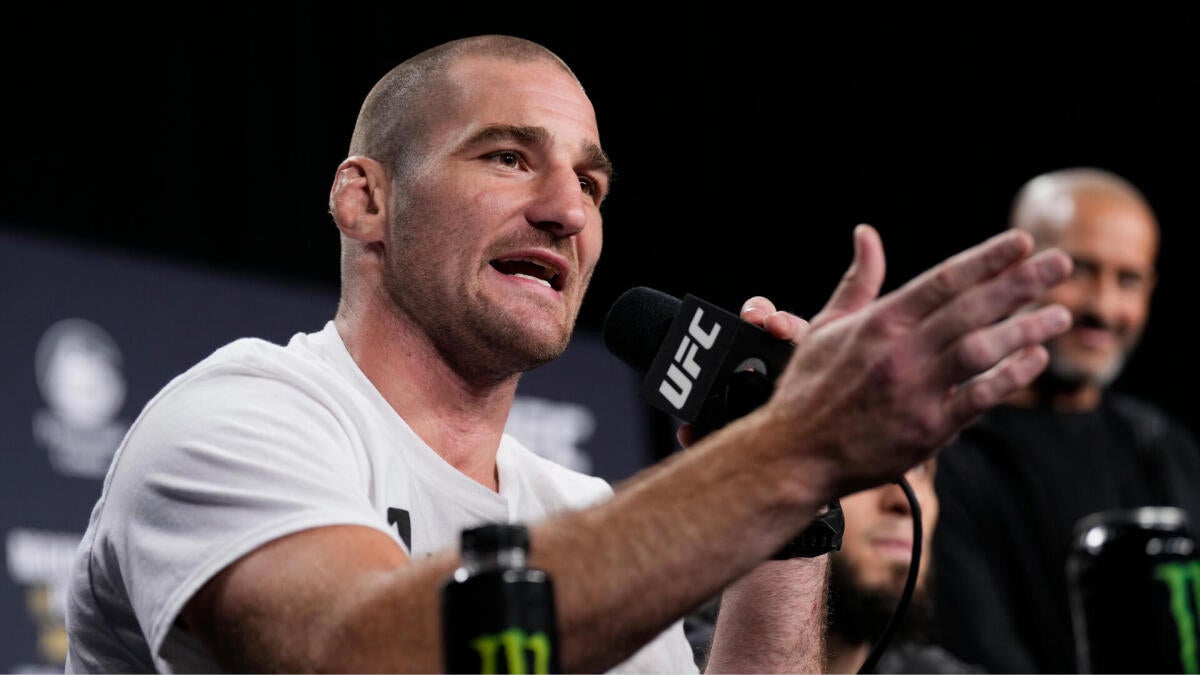
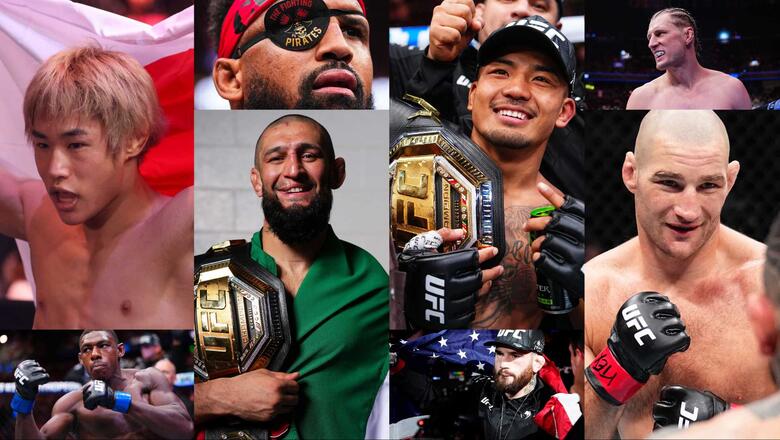
The decision to restrict the pre-fight press conference exclusively to title-fight participants—Khamzat Chimaev, Sean Strickland, Joshua Van, and Tatsuro Taira—marks a definitive shift in the UFC’s operational risk management. This strategy seeks to insulate the event from the liability of multi-athlete altercations. By deploying additional security assets to manage the volatility of the Chimaev-Strickland dynamic, the promotion is prioritizing commercial stability and regulatory compliance over traditional promotional spectacle, effectively treating athlete rhetoric as a controlled variable.
Middleweight Hierarchy: Chimaev’s Defensive Stabilization
Khamzat Chimaev’s inaugural title defense against Sean Strickland serves as a test of regime stability versus disruptive veteran pressure. Chimaev is transitioning from an agent of chaos into an institutional anchor, a shift that requires his high-efficiency wrestling system to withstand Strickland’s volume-based defensive striking. Strickland’s psychological warfare—questioning the champion’s resilience—is a calculated attempt to induce technical errors. The outcome will determine if the 185-pound division enters a period of Chimaev-led consolidation or reverts to the tactical unpredictability of the Strickland era.
Flyweight Globalization and Developmental Pipelines
The co-main event featuring Joshua Van and Tatsuro Taira highlights the strategic elevation of the flyweight division to capture emerging Asian and North American markets. Van’s defense represents a commitment to technical standard-bearing, while Taira’s position as a challenger underscores the Japanese market’s criticality in the UFC’s global expansion. Positioning this 125-pound title bout as the lead-in to the middleweight headliner is a deliberate maneuver to increase the commercial profile of lower weight classes, which have historically faced challenges in pay-per-view conversion.
Distribution Evolution: The Paramount+ Integration
The shift to Paramount+ as a primary delivery vehicle for UFC 328 reflects a broader digital-first transition within sports media rights. This partnership bypasses traditional cable dependencies to access a distinct streaming-native subscriber base. This distribution model not only enhances real-time engagement via pre-fight digital access but also provides the UFC with more granular viewer data, essential for maintaining growth in a fragmented media landscape where digital accessibility is the primary driver of viewership metrics.
Competitive Depth and Contingency Planning
The main card’s depth—featuring Alexander Volkov, Sean Brady, and Joaquin Buckley—functions as a strategic hedge against potential disruptions to the headlining bouts. This roster depth ensures event viability through high-level matchmaking that appeals to both technical purists and casual spectators. Furthermore, the inclusion of veterans like King Green and Jeremy Stephens, alongside prospects like Joel Alvarez and Yaroslav Amosov in the preliminaries, creates a robust competitive foundation that justifies the subscription cost and sustains viewer retention throughout the broadcast duration.