Strategic Capital Allocation and the $1.25 Billion Commitment
The partnership between Uber Technologies and Rivian Automotive marks a pivot from speculative R&D toward industrial-scale procurement. By committing $1.25 billion, Uber secures a critical hardware pipeline in the competitive autonomous vehicle (AV) sector. The deal structure initiates with a $300 million tranche to provide Rivian with immediate liquidity as it transitions to the high-volume R2 platform, while contingent on standard regulatory approvals.
Market response highlighted divergent risk profiles: Rivian shares surged 10% premarket—settling at 3%—on the news of guaranteed volume, while Uber shares saw a 1% contraction. This suggests investor scrutiny over the high capital expenditure required for massive autonomous deployments versus the immediate balance-sheet benefits for the EV manufacturer.
The R2 Platform: Architectural Foundation for Scaling
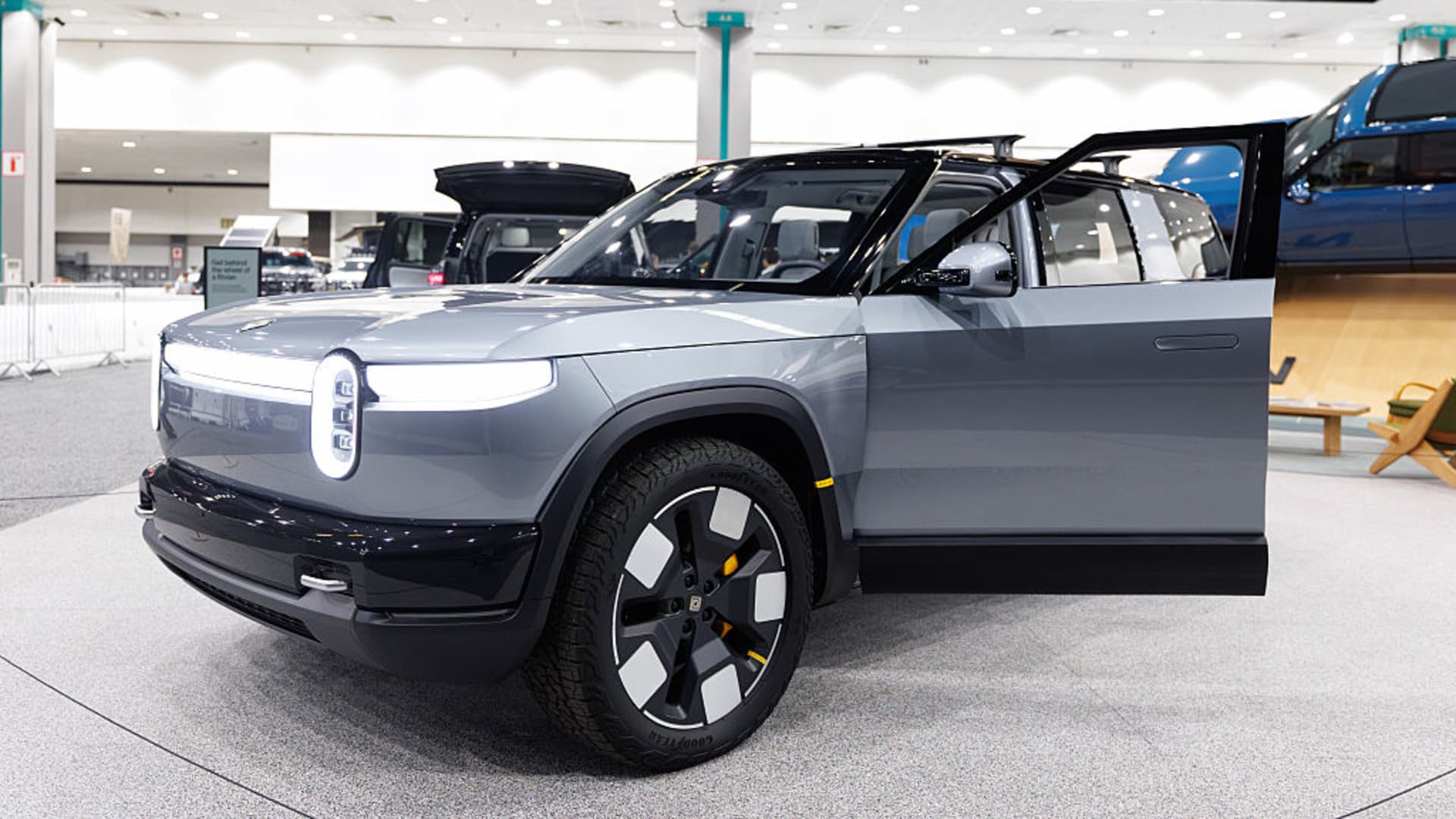
Central to the agreement is the Rivian R2, a cost-efficient platform designed for mass-market scalability. The procurement strategy is bifurcated: an initial 10,000 units for Uber or its fleet partners, with a subsequent option for 40,000 additional vehicles starting in 2030. This phased integration allows Uber to validate operational viability before full-scale financial exposure.
By leveraging the R2, Rivian enters the commercial fleet market following a stabilization period in 2025, characterized by achieved earnings after years of restructuring. This partnership ensures that Rivian’s transition to mass production is backed by a major institutional buyer, mitigating the market entry risks of its new platform.
Geographic Roadmap and Regulatory Navigation
The deployment schedule is synchronized with regulatory maturation, targeting San Francisco and Miami for a 2028 launch. These regions offer established legal frameworks for driverless operations. Success in these hubs will serve as a pilot for a broader expansion into 23 additional cities across North America and Europe by 2031.
This aggressive trajectory aims to capture share in a projected multitrillion-dollar autonomous mobility industry. Navigating the heterogeneous regulatory environments of 25 global cities remains a primary operational hurdle, making the choice of tech-forward launch sites a strategic necessity for the partnership’s international viability.
Performance Milestones and Risk Mitigation
The $1.25 billion commitment is not unconditional; it is tethered to strict autonomous performance milestones. These contractual safeguards ensure Uber’s capital is deployed only if Rivian’s hardware and integrated software meet rigorous safety benchmarks. This de-risks the investment against the technical hurdles that have historically delayed Uber’s internal AV ambitions.
Furthermore, Uber is utilizing a hybrid ownership model. By facilitating vehicle acquisition for third-party fleet partners, Uber maintains its asset-light identity while dictating the technological standards of its network. This strategy offloads direct depreciation costs while ensuring high-quality, exclusive hardware availability.
Institutional Implications and Conclusion
The deal creates a significant competitive moat. Rivian’s exclusivity on the Uber platform for this fleet size effectively blocks other EV manufacturers from immediate large-scale integration into the world’s largest ride-hailing network. For Uber, it represents a return to AV leadership via strategic outsourcing rather than proprietary manufacturing.
Ultimately, this alliance aligns two industry leaders to dominate the future of urban transit. By locking in a 50,000-vehicle fleet, Uber and Rivian are betting that the combination of proven EV engineering and massive ride-hailing demand will redefine the economics of mobility through the next decade.