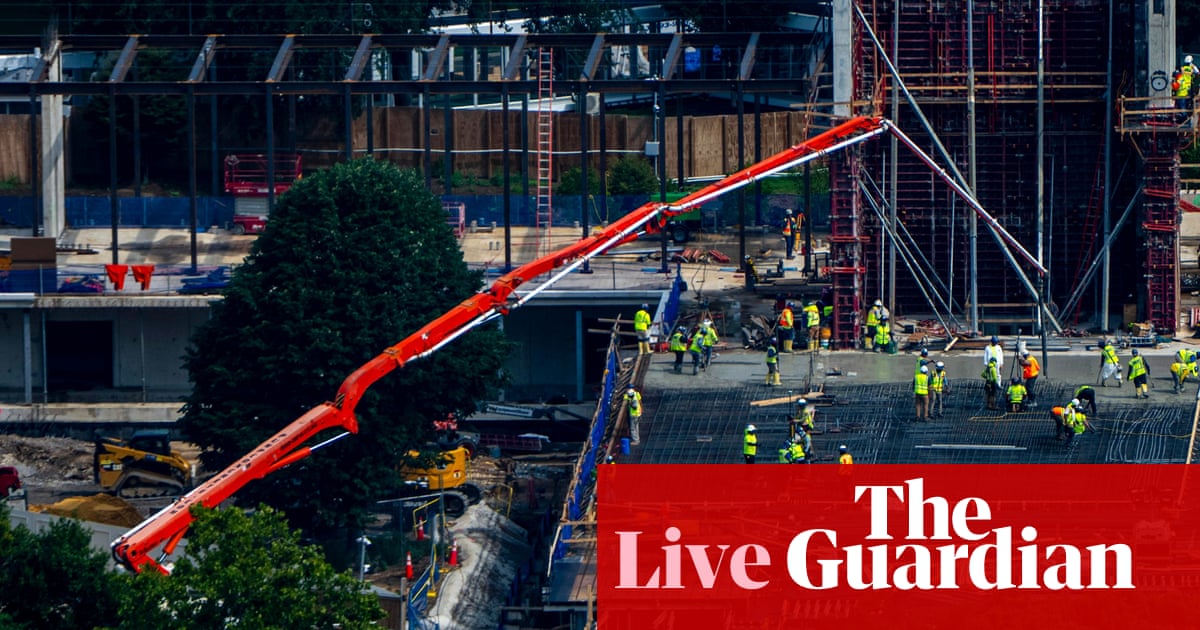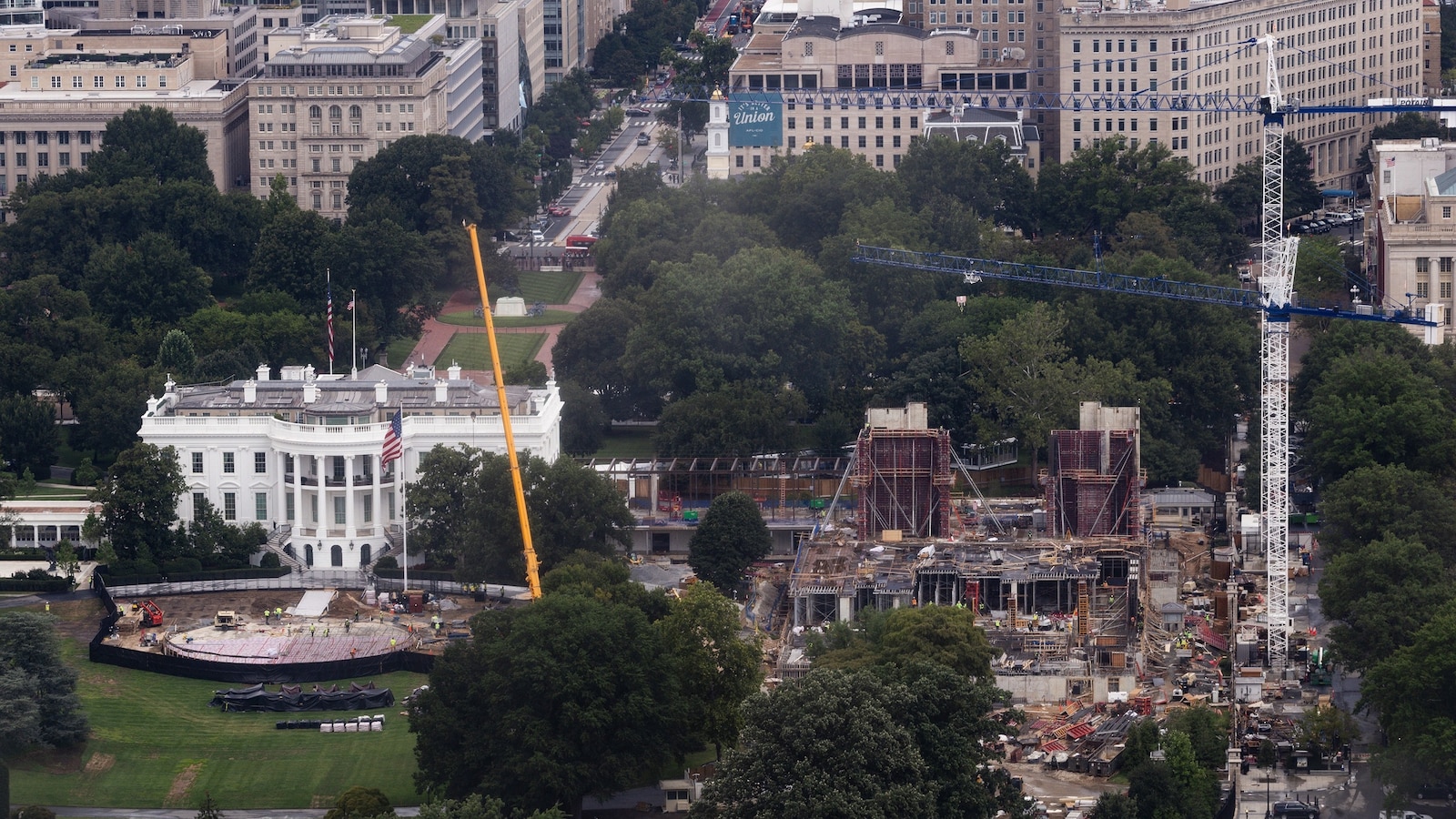
The Trump administration has formally petitioned the Supreme Court to vacate an appellate injunction halting construction of a $400 million ballroom and security complex at the White House. This emergency filing challenges lower court rulings that executive authority cannot bypass explicit congressional authorization for large-scale capital infrastructure projects. With work paused at the former East Wing site under a temporary 14-day stay, the Supreme Court must now resolve a significant separation-of-powers conflict concerning executive security mandates and legislative control over federal property.
The Dispute Over Executive Facilities and Congressional Appropriations
This litigation highlights a direct conflict between the Article II executive powers, particularly concerning presidential protection, and the Article I legislative authority over federal appropriations and property management. The U.S. Court of Appeals for the District of Columbia Circuit recently ruled that the executive branch lacked statutory backing to proceed without affirmative legislative consent, mandating an immediate halt to above-ground development. This decision rejected the premise that inherent executive authority extends to unappropriated physical expansions of this magnitude.
In response, the Department of Justice, represented by U.S. Solicitor General John Sauer, framed the judicial intervention as an unlawful intrusion into sovereign executive management. Sauer argued that the president, as head of the executive branch, possesses inherent statutory authority to renovate and secure the executive mansion, distinguishing the presidential role from that of a standard public tenant. The administration’s position is that facility modernization essential for physical survival does not necessitate itemized congressional votes.
This jurisdictional clash forces the Supreme Court to define the boundaries of presidential security operations and their relationship to legislative funding channels for major capital reconfigurations. Opponents of unilateral executive construction initiatives argue that Congress’s power of the purse is an absolute check on facility modifications within the historic complex. Conversely, the administration contends that standard procurement constraints impair the functional operation of the presidency, especially concerning urgent defense infrastructure.
Integrated Facility Defense and Structural Engineering Challenges
A critical technical issue with the appellate court’s order lies in its bifurcation of the project into subterranean defense works and above-ground social facilities. The D.C. Circuit permitted underground work on a fortified military complex to continue while enjoining the above-ground ballroom superstructure. The administration’s petition directly challenges this division, classifying the entire development as an indivisible engineering project that cannot be functionally partitioned.
According to the government’s filing, each phase of the East Wing development is engineered as an integrated system to address severe defensive deficiencies within the Executive Mansion perimeter. The administration states that the ballroom structure acts as an indispensable physical shield, enclosing and protecting a sensitive military installation situated beneath its foundation. By characterizing the above-ground perimeter as protective armor for underground command and control operations, the legal strategy aims to invalidate the appellate court’s distinction between recreational space and security infrastructure.
The administration argues that halting the above-ground portion while advancing subterranean foundations creates significant operational bottlenecks and engineering liabilities. Site managers and contractors face logistical challenges in stabilizing deep excavations without erecting the load-bearing superstructures designed to seal them. Consequently, the executive branch contends that partial injunctions degrade the structural integrity of the entire compound, leading to financial waste and exposing the primary installation to vulnerabilities.
Capital Allocation and Contractual Exposure at 65 Percent Completion
The operational stakes are heightened by the project’s advanced stage of completion, with the administration confirming it is 65 percent finished. Suspending a complex infrastructure development at this juncture incurs immediate financial friction, contractor demobilization costs, and procurement disruptions. The federal government faces compounding holding costs, contractual penalties, and asset depreciation for custom-manufactured components.
Halting active site operations at 65 percent completion also disrupts critical supply chains for specialized defensive materials, blast-rated architectural elements, and integrated secure telecommunications conduits. Prolonged judicial stays in major government projects often compel contractors to renegotiate subcontracts, leading to cost escalations. The administration’s petition highlights that pausing an advanced military-grade construction site generates acute fiscal inefficiencies and security vulnerabilities, rather than preserving the status quo.
Furthermore, an open construction zone adjacent to active executive workspaces expands the security footprint, demanding increased surveillance and physical guarding compared to completed facilities. The economic and strategic cost of maintaining a static, exposed building site in the executive complex’s core is a major component of the solicitor general’s argument for emergency relief.
Threat Vectors and the Protective Imperative for the Presidency
The administration’s petition grounds its constitutional claims in escalating physical threats against the executive branch. The filing explicitly references recent attempts on Donald Trump’s life, including a shooting incident during the White House Correspondents’ Dinner in April. Solicitor General Sauer argued that the East Wing modernization is essential to ensure presidential safety in an increasingly hostile threat landscape.
Government attorneys maintained that denying the executive branch the ability to complete its fortified gathering and military infrastructure leaves the president demonstrably less safe during major diplomatic and state events. The legal filing extends this reasoning to future administrations, asserting that structural delays create institutional vulnerabilities that compromise national security continuity. By framing the issue as one of enduring national security, the government seeks to shift the judicial standard from administrative review to executive defense necessity.
The emphasis on the April shooting incident reinforces the administration’s claim that conventional protective protocols within historic, unfortified spaces are inadequate against modern physical threats. The proposed ballroom is designed to provide a secure environment for large assemblies, eliminating the need for vulnerable off-site venues. The executive branch portrays the facility not as an architectural luxury, but as an essential hardening of the seat of government.
Administrative Precedent and Separation of Powers Implications
The Supreme Court’s decision on this emergency application will establish a lasting legal standard for unilateral executive infrastructure spending. A ruling overturning the appellate injunction would broaden presidential discretion to utilize broad security authorities for physical structural alterations without prior, specific congressional appropriation, significantly diminishing legislative leverage over the executive branch’s physical evolution.
Conversely, if the Supreme Court upholds the lower court’s injunction, it will reaffirm legislative supremacy over capital construction on federal property, even when the executive invokes national defense justifications. This outcome would obligate the administration to negotiate directly with lawmakers for the funding and authorization needed to complete the remaining 35 percent of the complex, subjecting the project to detailed legislative oversight.
This dispute reflects broader governance tensions concerning emergency powers, national security rationales, and traditional administrative law. By framing the project through executive protection, military continuity, and inherent executive authority, the administration challenges historical assumptions about White House property governance. The Supreme Court’s decision will determine whether the structural modernization of the presidency proceeds under executive directive or remains bound by the traditional appropriations process.