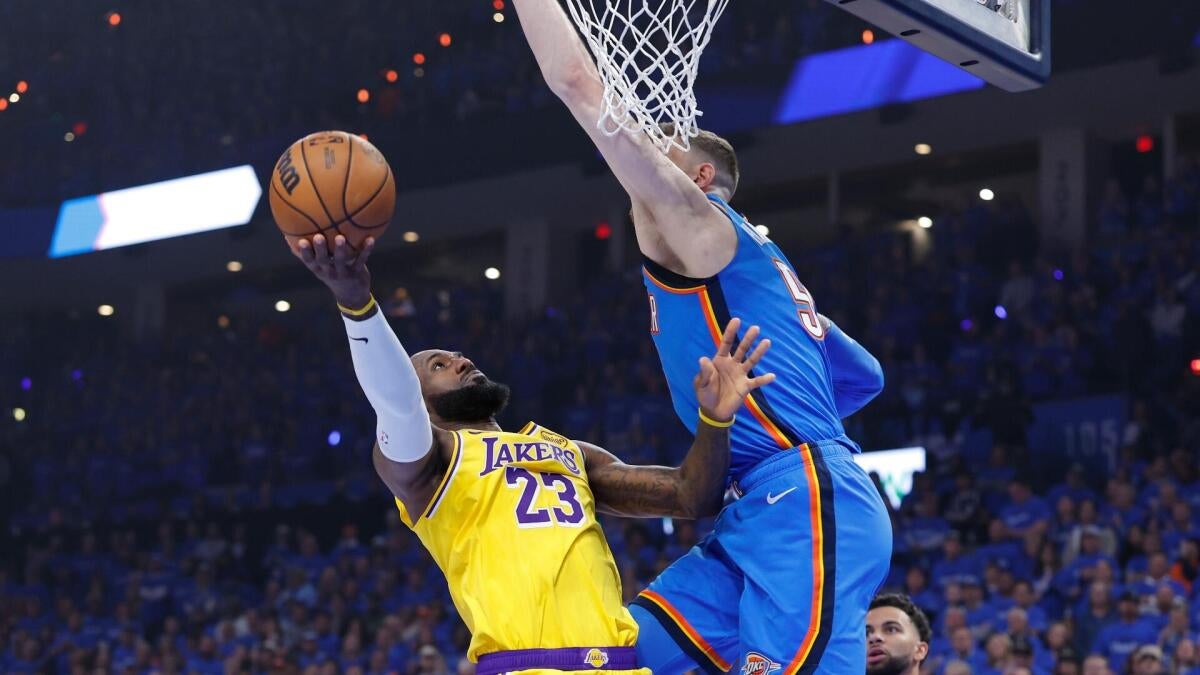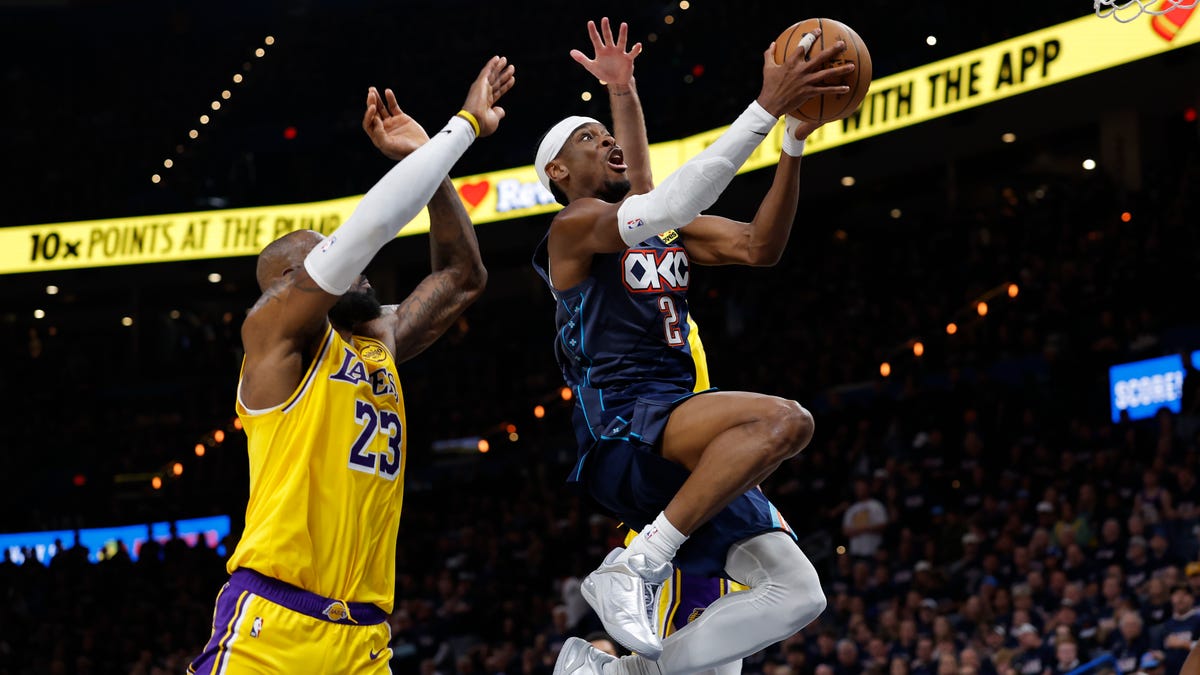
The 2026 Western Conference Semifinals shift to Los Angeles with the Oklahoma City Thunder holding a commandingly efficient 2-0 series lead. Following a 125-107 clinical execution in Game 2, the Thunder have exposed significant structural vulnerabilities in a Lakers roster struggling to adapt to high-leverage postseason basketball without their primary offensive engine.
The High Cost of the Doncic Vacuum
Luka Doncic’s hamstring injury has fundamentally altered the Lakers’ offensive geometry. Beyond his individual scoring, Doncic functions as the team’s primary gravity well; his absence has led to a stagnant half-court offense characterized by a lack of rim pressure and forced perimeter heaves. While Austin Reaves’ 31-point performance in Game 2 showcased individual resilience, the lack of a secondary playmaker to collapse the Thunder’s disciplined 2-3 and man-to-man hybrid schemes has resulted in a plummeting offensive rating during clutch sequences.
OKC’s Bench as a Tactical Multiplier
The Thunder’s roster construction emphasizes positional versatility, allowing them to thrive even with Jalen Williams sidelined. Their 18-point victory in Game 2 was not merely a product of star power but of a system that prioritizes high-IQ ball movement and transition efficiency. By maintaining a league-best 32-10 road record, Oklahoma City has demonstrated that their pace-and-space methodology remains resilient regardless of venue. The depth of their rotation forces Lakers coach JJ Redick into difficult defensive compromises, particularly when trying to hide weaker individual defenders against OKC’s multiple ball-handlers.
The ‘Non-Shai’ Minutes: A Critical Failure
Statistically, the most damning indicator for Los Angeles has been their inability to capitalize on intervals when Shai Gilgeous-Alexander is off the floor. Redick has explicitly identified these ‘non-Shai minutes’ as the Lakers’ primary operational failure. Instead of bridging the scoring gap, the Lakers’ second unit has suffered from defensive lapses and poor shot selection, allowing the Thunder’s bench to extend leads rather than surrender them. Solving this net-rating deficit is the Lakers’ only viable path to a Game 3 victory.
Market Analysis and Betting Trends
Oddsmakers have established the Thunder as 8.5-point favorites, an unusually high margin for a road team in a playoff environment. This line reflects a market consensus on the Lakers’ diminished ceiling without Doncic. With a total set at 210.5, the projection suggests a controlled, defensive-oriented contest where the Thunder’s superior execution in the final six minutes provides a distinct analytical edge. The return of Jarred Vanderbilt (dislocated pinky) and Luke Kennard may offer marginal defensive and spacing utility, but they do not address the fundamental playmaking void.
Conclusion: A Test of Institutional Resilience
For the Lakers, Game 3 is an existential crossroad. A 0-3 deficit is historically insurmountable, making the tactical adjustments to the starting rotation and second-unit usage rates the most significant decisions of JJ Redick’s coaching tenure. Conversely, the Thunder are operating with the poise of a defending champion, seeking to finalize a sweep that would solidify their status as the 2026 title favorites.