Maturation of the High-Altitude Labor Market
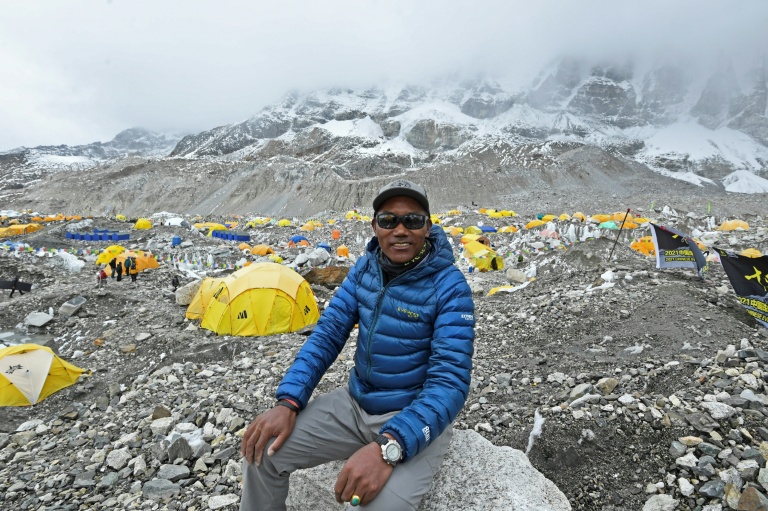
The 2026 mountaineering season, punctuated by Kami Rita Sherpa’s 32nd summit and Lhakpa Sherpa’s 11th ascent, marks a pivotal transition from individual athletic achievement to the institutionalization of a professionalized labor class. These milestones are no longer mere sporting anomalies; they represent the stabilization of the high-altitude labor market. By maintaining a 32-summit trajectory, Kami Rita reinforces the role of the Sherpa as a primary stabilizing force, providing a predictable operational framework that international expedition firms utilize to mitigate the inherent volatility of 8,000-meter environments.
Market Diversification and Gendered Professionalism
Lhakpa Sherpa’s 11th successful descent further solidifies the commercial viability of female-led mountaineering initiatives. Her career trajectory—evolving from the first Nepali woman to summit and descend in 2000 to a global record-holder—mirrors a broader demographic expansion within the industry. This shift allows Nepali-owned firms to diversify their client portfolios and challenge the traditional hegemony of Western-led expeditions, transitioning from support roles to lead operational architects.
Regulatory Strategy and National Branding
The Nepal Tourism Department’s endorsement of these records indicates a strategic alignment between individual performance and national economic branding. By framing ‘healthy competition’ as a catalyst for safety and dignity, regulators are moving toward standardized professional benchmarks. This institutionalization serves as a quality-control mechanism; state validation of these achievements implicitly endorses the operational standards of the agencies involved, creating a competitive incentive to prioritize high-retention labor strategies and technical proficiency over high-volume, low-skill recruitment.
The Industrialization of High-Altitude Performance
Kami Rita Sherpa’s characterization of his summits as routine labor highlights the decoupling of high-altitude climbing from its exploratory roots. In a commercialized context, the summit has transitioned from a singular objective to a repeatable industrial output. The climbing industry now operates on a service-based model where the reliability of technical trade takes precedence over the unpredictability of a sporting endeavor. This model reduces the risk profile for investors and insurance providers, who view veteran-led teams as stable assets in high-risk environments.
Infrastructure Dependency: The Khumbu Icefall
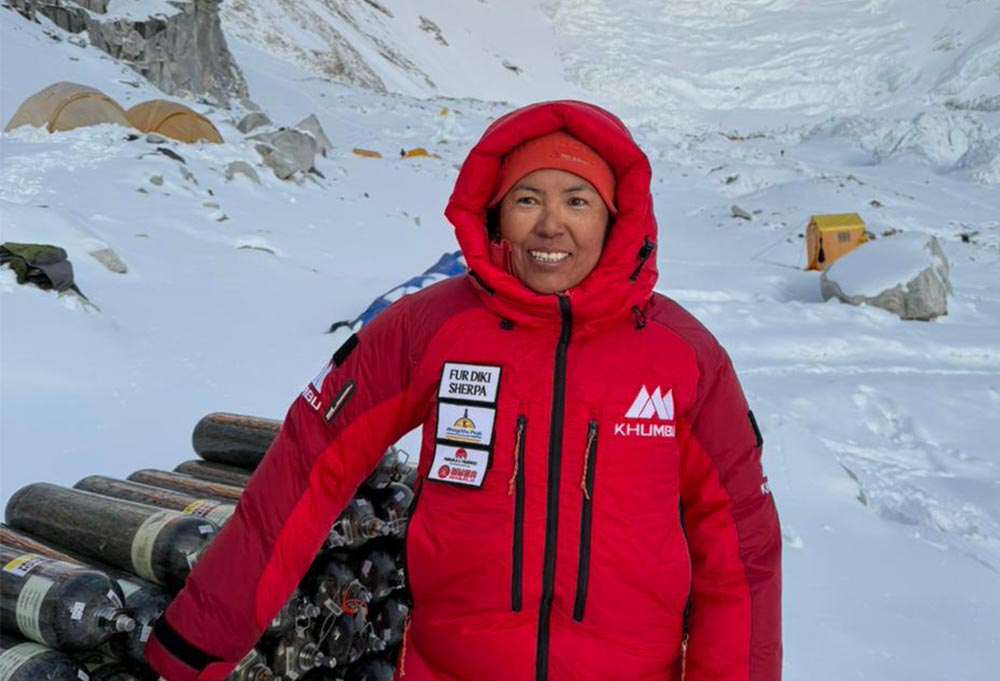
The narrative of Phur Diki Sherpa and the legacy of her late husband, Mingma Sherpa, underscores the critical role of ‘Icefall Doctors.’ These specialists maintain the technical infrastructure of the Khumbu Icefall, the South Col route’s most hazardous bottleneck. The human capital cost of this maintenance is profound; without this specialized labor, the commercial superstructure of Everest would collapse. The ongoing negotiation regarding insurance and compensation for these technicians remains a central pillar of the industry’s long-term sustainability.
Strategic Product Diversification: The Lhotse Speed Record
Phur Diki Sherpa’s pursuit of a speed record on Lhotse reflects a strategic diversification of the mountaineering product. By introducing performance metrics like the 24-hour summit-to-base return, elite climbers are seeking to monetize expertise beyond traditional guiding. This move alleviates commercial pressure on Everest while maintaining the prestige of the Himalayan industry. It enables higher value capture within the local economy as athletes build individual brands capable of attracting direct sponsorship and global media rights.
Conclusion: From Volume to Efficiency
The 2026 season demonstrates that records are now a byproduct of a highly efficient, industrialized labor system. The evolution from the 1953 exploratory model to today’s high-margin service economy necessitates a shift in focus from the sheer number of summits to the structural integrity of the operations. As the industry matures, the integration of labor rights, environmental oversight, and risk management will define the next phase of Nepal’s mountaineering history.