
Executive Resource Allocation and the Monumental Presidency
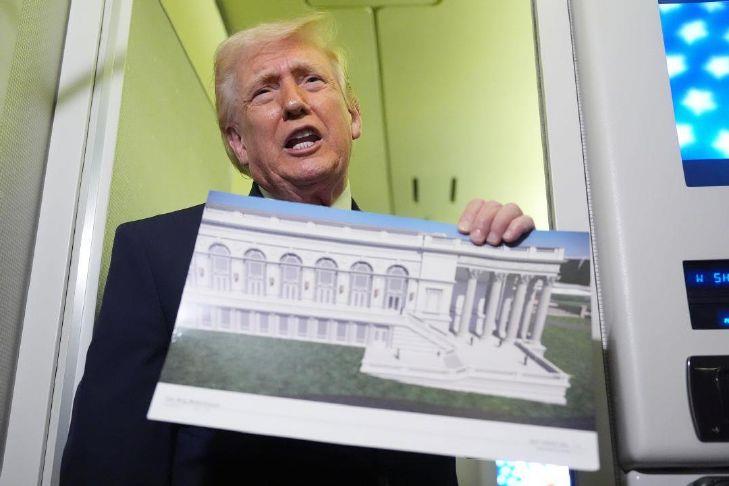
The disclosure that President Donald Trump prioritized a $400 million ballroom project for the White House East Wing signals a distinct shift toward monumental architecture as a tool of executive legacy. While traveling via Air Force One, the President focused on architectural renderings of hand-carved Corinthian columns, a decision that highlights an idiosyncratic management style where aesthetic permanence is weighed against pressing geopolitical tensions and domestic fiscal impasses.
This commitment to capital-intensive infrastructure within the executive residence reflects a preference for private-sector real estate models over traditional public-sector austerity. By seeking to establish the ‘greatest ballroom’ globally, the administration attempted to leverage physical grandeur to enhance the executive branch’s diplomatic and social capital, regardless of the immediate political climate.
Fiscal Dissonance and the Shutdown Context
The $400 million valuation introduced significant fiscal dissonance, occurring simultaneously with a partial government shutdown that impacted the Department of Homeland Security. The juxtaposition of high-luxury capital expenditures against a lapse in essential federal funding created a profound point of friction in national budgeting narratives. This duality—pursuing elite institutional upgrades while operational agencies faced insolvency—serves as a case study in executive prioritization.
Strategic Risk and the Midterm Electoral Landscape
Republican strategists expressed concern that this preoccupation with ‘gilded trappings’ could compromise the party’s messaging ahead of critical midterm elections. The divergence between the President’s focus on architectural grandeur and the GOP’s traditional platform of fiscal conservatism created a rhetorical vulnerability. There is evidence that such high-visibility luxury projects alienate voters concerned with localized economic stability and legislative outcomes.
The ‘Marie Antoinette’ Narrative and Rhetorical Exposure
Democratic opponents successfully weaponized the proposal, utilizing the ‘Marie Antoinette’ archetype to frame the administration as detached from the economic realities of the electorate. By focusing on the hand-carved details and the staggering price tag, critics transformed a renovation project into a symbol of institutional excess. This coordinated framing indicates how aesthetic choices can be converted into potent political liabilities during periods of perceived government dysfunction.
Policy Duality: Tax Reform vs. Elite Infrastructure
A notable contrast emerged during the President’s travel to Las Vegas, where he advocated for tax cuts for tipped workers while concurrently reviewing ballroom renderings. This attempt to balance populist economic reform with the pursuit of elite infrastructure projects creates a challenging messaging environment. Labor stakeholders may perceive the focus on a multimillion-dollar social venue as a secondary priority to the immediate implementation of financial relief for the service sector.
Institutional Legacy and the Evolution of the East Wing
Ultimately, the proposed East Wing expansion represents an attempt at a structural transformation of the White House’s functional capacity. The selection of world-class materials and classical Corinthian motifs suggests a desire to project an image of enduring authority. While the project faces significant budgetary and political hurdles, its existence as a priority underscores the intersection of real estate development expertise and executive power that defines this administration’s approach to institutional management.
Photo by Hans on Pixabay.