
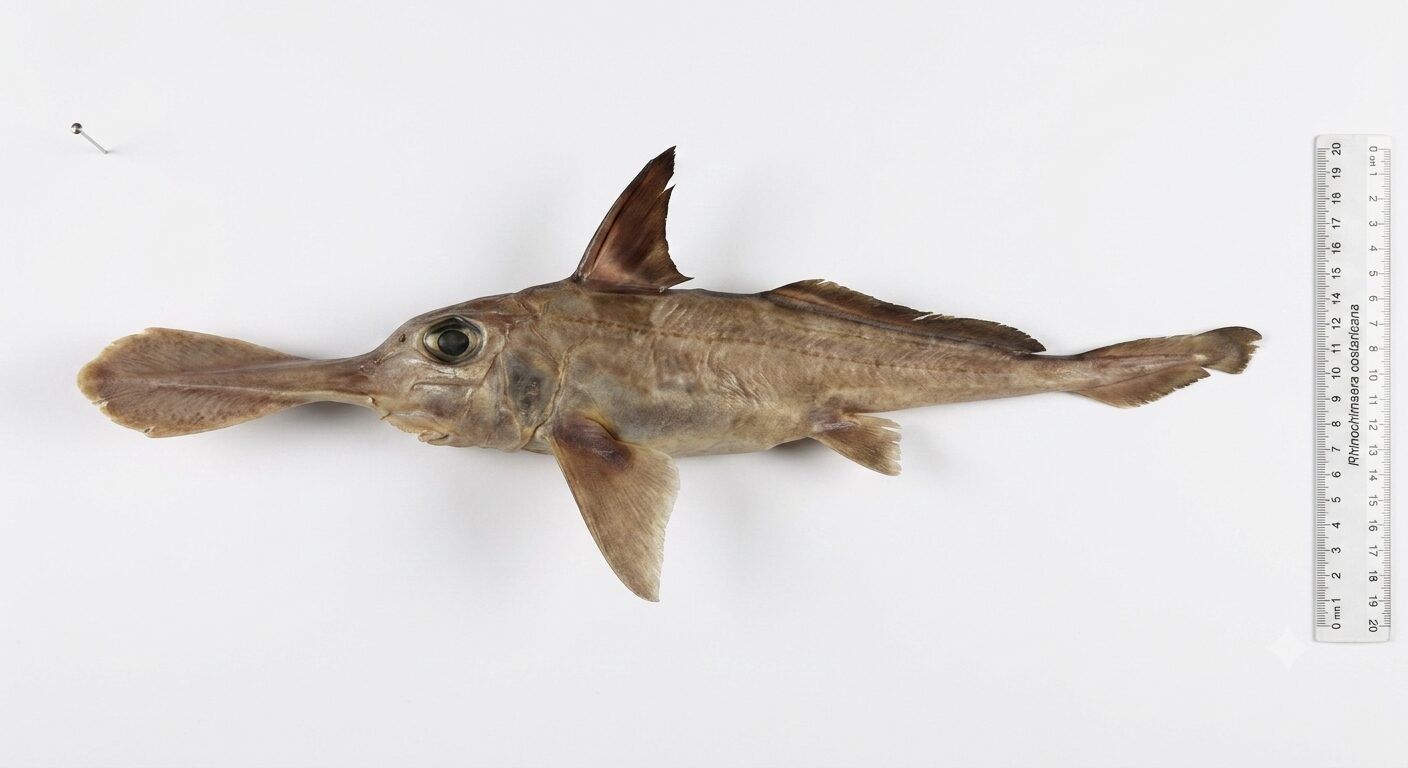
Formal Description of Rhinochimaera costaricana in the Pacific
A collaborative research effort has led to the formal taxonomic description of Rhinochimaera costaricana, a newly identified species of deep-sea cartilaginous fish. Based on specimens collected at depths off Puntarenas, Costa Rica, the findings were published in the peer-reviewed journal Zootaxa. This discovery represents a significant expansion of the known diversity within the order Chimaeriformes, colloquially known as ghost sharks.
Institutional Synergy and Academic Leadership
The identification resulted from a multi-institutional partnership involving the University of Costa Rica (UCR), the Costa Rican Institute of Fisheries and Aquaculture (Incopesca), and the Federal University of Pará, Brazil. Notably, the study was led by Naidely Valeria Vidaurre Quesada, a UCR biology student, signifying a milestone for early-career researchers in the Global South. This collaboration underscores the efficacy of scientific diplomacy and resource-pooling in high-latitude marine exploration.
Taxonomic Significance of the Long-Nose Chimaera
Ghost sharks are a lineage of chondrichthyans that diverged from sharks and rays approximately 400 million years ago. Unlike their more common relatives, chimaeras typically inhabit the bathypelagic and benthic zones, making them difficult to study. Rhinochimaera costaricana adds a critical data point to the evolutionary history of the Rhinochimaeridae family, characterized by elongated snouts containing sensory nerve endings used to detect prey in the lightless deep sea.
Conservation and Policy Implications
The discovery provides essential baseline data for marine resource management. As deep-sea fishing and potential mineral extraction pose increasing threats to benthic ecosystems, the formal cataloging of indigenous species is a prerequisite for informed environmental policy. Incopesca’s involvement ensures that this taxonomic data can be integrated into national fisheries frameworks, potentially leading to the designation of new Marine Protected Areas (MPAs) or the implementation of habitat-specific protections to safeguard vulnerable, slow-growing deep-sea populations.
Conclusion: Strengthening Costa Rica’s Scientific Capital
By positioning Costa Rica as a hub for deep-sea research, this discovery attracts international scientific interest and potential funding for future oceanographic expeditions. The successful publication in Zootaxa validates the nation’s academic infrastructure and highlights the urgent need for continued exploration of the Pacific’s unexplored reaches, where many species likely remain unknown to science.
Photo by tejas08 on Pixabay.