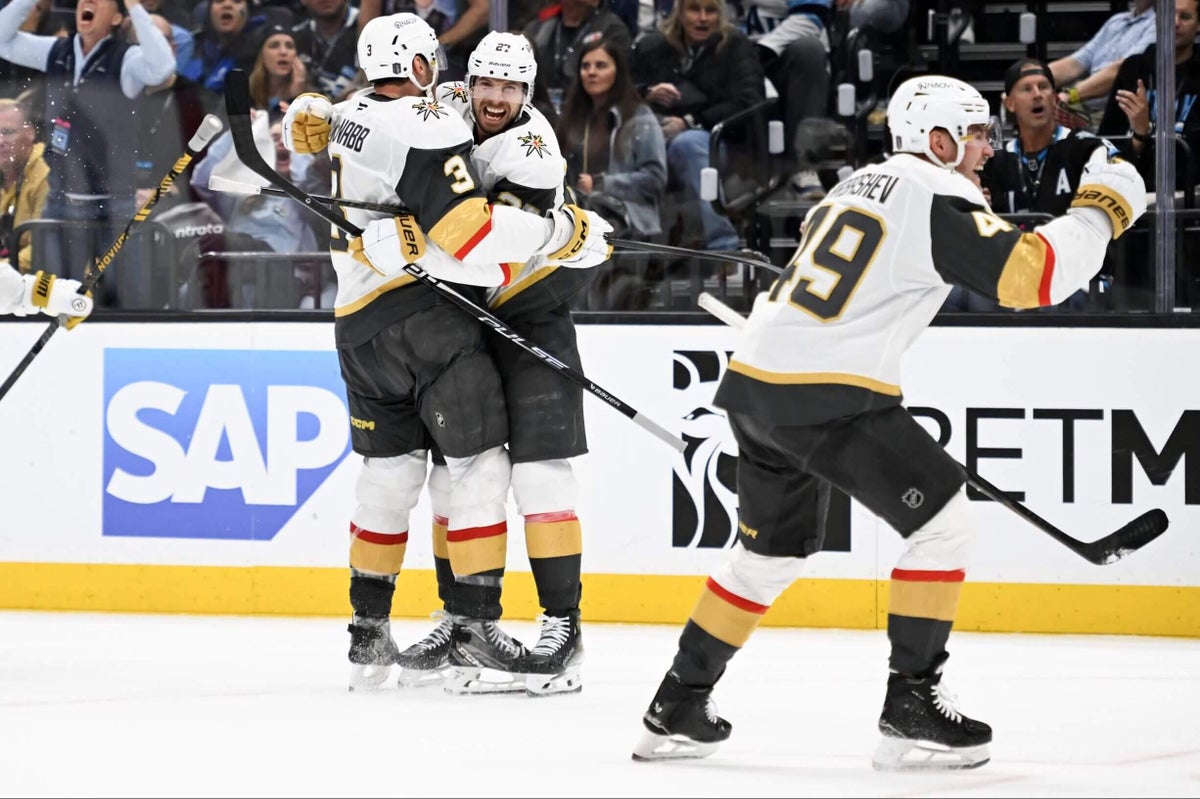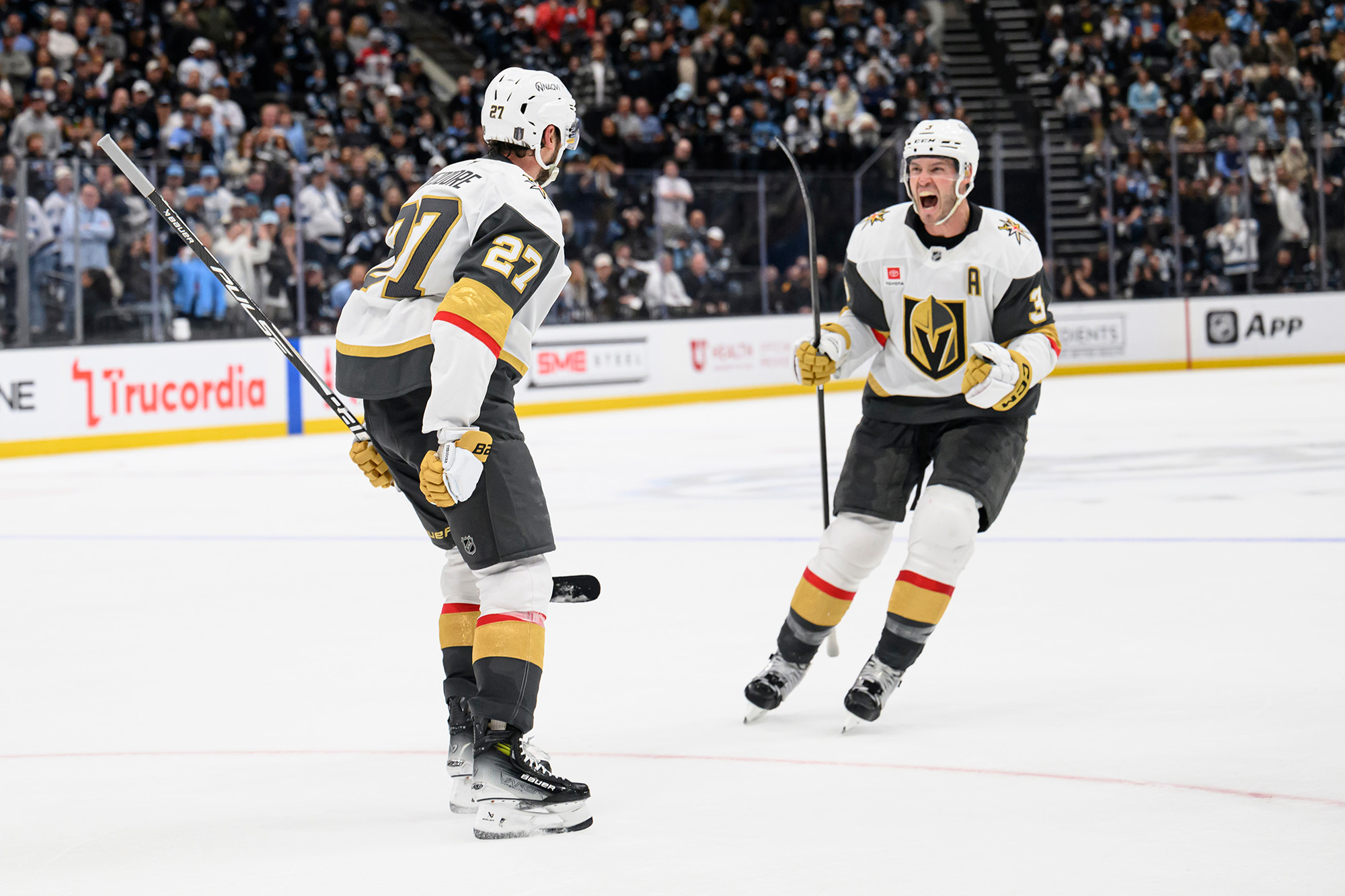
Game 4 of the Western Conference first-round matchup between the Vegas Golden Knights and the Utah Mammoth provided a rigorous examination of postseason psychological durability and structural volatility. By clinching a 5-4 overtime victory, Vegas mitigated the risk of a 3-1 series deficit—a threshold that historically correlates with a low probability of advancement. This result restores competitive equilibrium as the series transitions to a best-of-three format.
Psychological Insulation: The Tortorella Protocol
Vegas leadership initiated a deliberate decoupling from external narratives prior to puck drop. Coach John Tortorella’s 73-second media engagement functioned as a strategic blackout, designed to prioritize internal tactical focus over market speculation. This administrative brevity signaled an urgent need for roster discipline following consecutive losses, effectively shielding players from the mounting pressure of Utah’s emerging market fervor.
This posture transitioned into immediate on-ice efficiency. By minimizing the ‘noise floor’ of the series, Vegas established an early dominance that leveraged their veteran composure against the Mammoth’s high-energy environment. However, the subsequent game flow suggested that while media management succeeded, the on-ice execution remained susceptible to systemic lapses during high-velocity transitions.
Systemic Regression and Defensive Attrition
Vegas initially demonstrated an optimized scoring distribution, securing a 3-0 lead through depth assets like Cole Smith. This offensive output reflected a successful utilization of the bottom-six forward rotation to exploit Utah’s defensive pairings. Statistically, a three-goal margin in the second period typically serves as a definitive win-condition; however, Vegas experienced a severe degradation in neutral-zone integrity.
The ensuing collapse, where Utah erased the deficit within 35 minutes, highlighted a failure in ‘preventative shell’ mechanics. The Mammoth exploited the Golden Knights’ inability to manage pace, utilizing the Delta Center’s verticality and crowd-induced momentum to force turnovers. This period of play served as a case study in how emotional momentum can override established tactical systems, forcing the defending champions into a reactive defensive posture that nearly resulted in a catastrophic series pivot.
Technological Veto and Operational Recovery
The intersection of athletic execution and millimetric surveillance occurred late in regulation. Pavel Dorofeyev’s apparent game-winner was nullified by a video challenge confirming Jack Eichel’s offside entry. This technological intervention imposed a significant ’emotional tax,’ requiring Vegas to reset their psychological baseline after a premature celebration. The reversal underscored the role of precision technology as a structural barrier to momentum in the modern NHL ecosystem.
Resilience in the face of this technical setback was ultimately provided by Shea Theodore. His game-winning goal with 51.5 seconds remaining in overtime capitalized on the breakdown of structured play inherent in extra-period hockey. Theodore’s mobility and situational awareness allowed him to exploit a fatigued Utah defensive core, specifically goaltender Karel Vejmelka, whose physical exhaustion symbolized the immense capital expenditure required to maintain pace with a veteran Vegas roster.
Market Maturation and Strategic Pivot
The Utah Mammoth’s ability to force overtime after a 3-0 deficit validates the NHL’s expansion strategy into Salt Lake City. The franchise has rapidly cultivated a high-leverage home environment that disrupts opponent communications and elevates player work rates. Despite the loss, Utah’s performance confirms their status as a legitimate institutional threat rather than a developmental expansion project.
As the series returns to Las Vegas for Game 5, the Golden Knights must address the structural fragility observed in the second and third periods. While the overtime victory secures series parity, the statistical variance of their defensive performance suggests that future success depends on maintaining operational intensity for the full 60-minute regulation block. The tactical narrative now shifts to home-ice advantage and the optimization of match-ups at T-Mobile Arena.