
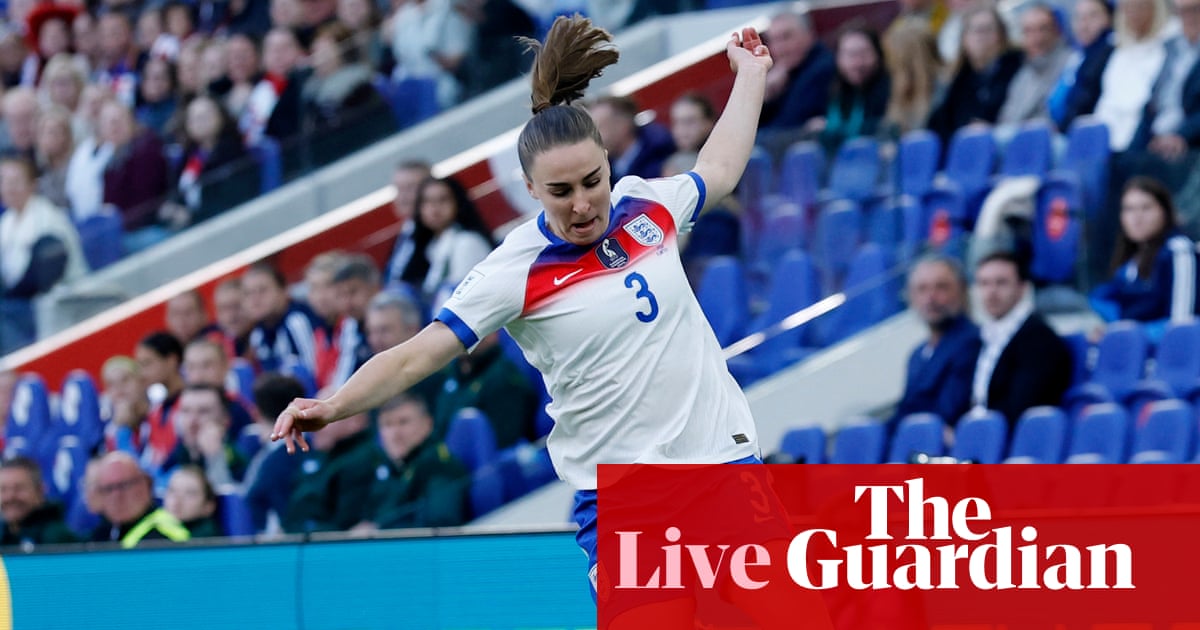
Tactical Realignment Under Performance Pressure
England manager Sarina Wiegman’s decision to integrate Le Tissier, Charles, and Blindkilde Brown into the starting XI for the World Cup qualifier against Ukraine signals a calculated move to rectify recent systemic stagnation. Following a disjointed display against Spain, the inclusion of personnel capable of operating in high-pressure corridors suggests an effort to restore verticality and defensive stability.
By prioritizing Blindkilde Brown, the coaching staff aims to enhance spatial intelligence within the final third. This strategic shift addresses the team’s recent inability to penetrate tight defensive blocks, favoring agile, ball-progressive players over static configurations that have struggled against high-pressing opponents.
Institutional Dynamics and Personnel Selection
The retention of Walsh and Stanway remains a focal point of tactical analysis, balancing the need for an established midfield anchor against the necessity for structural agility. While critics highlight their recent struggles against elite teams, the coaching staff’s reliance on this core reflects a commitment to a specific identity, albeit one currently undergoing rigorous stress testing.
This transition is compounded by the departure of former assistant Arjan Veurink. The loss of his analytical synergy has necessitated a reorganization of internal feedback loops, forcing Wiegman to recalibrate the tactical decision-making process during a critical phase of the qualification cycle.
Performance Metrics and Tactical Adaptability
The recent benchmark performance against Spain exposed weaknesses in defensive transitions and midfield pressing triggers. When standard playmakers are neutralized by organized defensive schemes, the strategic imperative shifts toward disruption. The rotation of the squad serves as an admission that the existing structural architecture requires refinement to maintain competitiveness against versatile international setups.
By injecting younger, less predictable talent into the offensive structure, Wiegman is attempting to diversify England’s tactical portfolio. This approach is essential for preventing the ‘stagnation by familiarity’ that often plagues successful teams during extended qualification windows.
Conclusion: Managing High-Stakes Evolution
Wiegman’s willingness to disrupt the status quo in favor of tactical flexibility indicates an operational pivot toward a more reactive and responsive squad model. As the Lionesses navigate this transitional phase, the successful integration of new voices—both on the pitch and within the coaching hierarchy—will determine the longevity of the team’s current qualification ambitions.

Photo by ExpectBest on Pixabay.