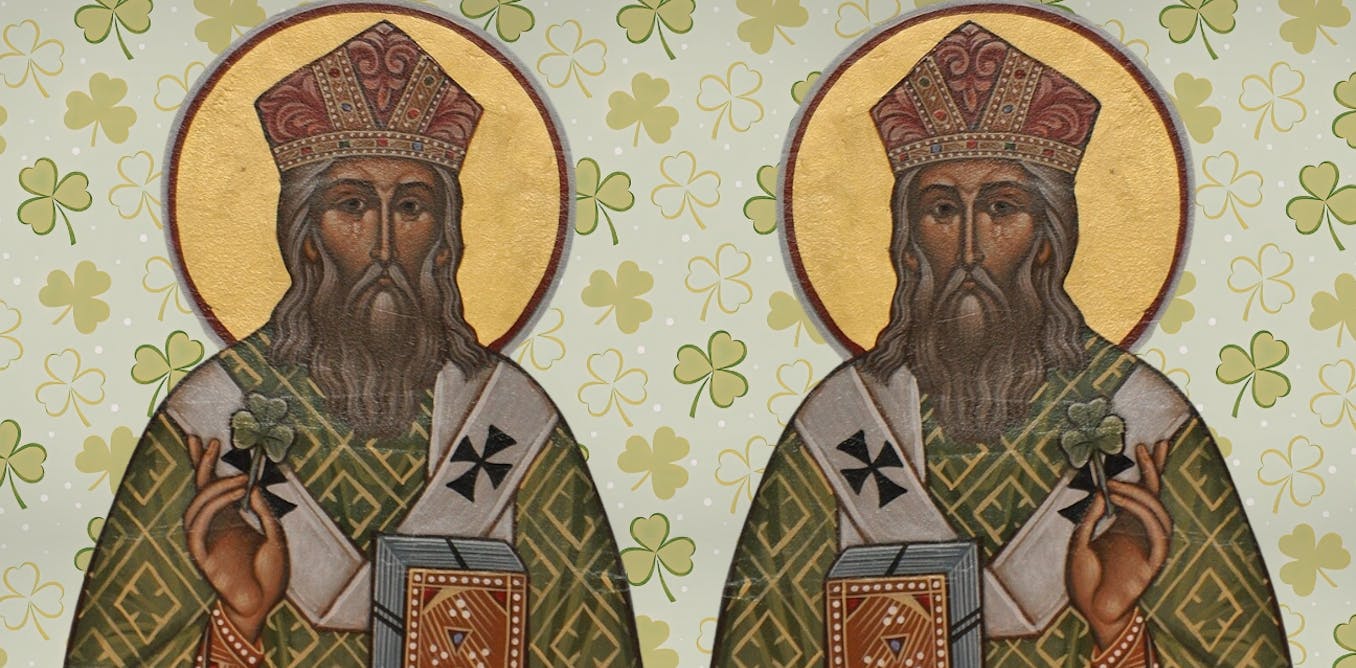
The global observance of March 17 provides a profound case study in the divergence between ecclesiastical record-keeping and secular cultural branding. While widely commemorated as the anniversary of the death of Patrick, a fifth-century bishop, his institutional status as a ‘saint’ is a matter of historical precedent rather than modern formal decree. The Roman Catholic Church’s centralized canonization process—a legalistic framework involving standardized evidentiary review—was established centuries after Patrick’s primary influence. Consequently, his elevation to patron saint status occurred through ‘pre-congregation’ local veneration and historical momentum.
The Evolution of Ecclesiastical Canonization
The absence of a formal canonization for Patrick is a direct consequence of the chronological development of Vatican bureaucracy. During the early medieval period, sainthood was typically conferred via local acclamation or regional episcopal approval. It was not until the central Middle Ages that the Holy See centralized this authority. Today, the Catholic Church manages this legacy through strategic liturgical classification; for instance, in the United States, March 17 is designated as an ‘optional memorial.’ This classification acknowledges Patrick’s cultural gravity while maintaining the integrity of procedural history, allowing for local observance without elevating the feast to a universal mandatory solemnity.
The Two Patricks Theory and Narrative Synthesis
Historical analysis is complicated by the ‘Two Patricks’ theory, which posits that the traditional hagiography is a composite of multiple figures—most notably Patrick and Palladius. Palladius was dispatched by Pope Celestine in 431 AD to minister to the ‘Scots believing in Christ,’ pre-dating Patrick’s mission. The narrative consolidation of these two identities served a vital structural purpose: providing a unified origin story for Irish Christianization. This synthesis simplified complex missionary activities into a cohesive legacy, making it easier to institutionalize and preserve across centuries of political upheaval.
Primary source anchors, specifically Patrick’s *Confessio* and his *Letter to the Soldiers of Coroticus*, offer rare insight into the operational challenges of fifth-century proselytization. These texts reveal a figure navigating a volatile landscape of tribal raiders and shifting social hierarchies during the collapse of Western Roman influence. The tension between the self-described struggles in his writings and the later, miraculous biographies illustrates the evolution of hagiography as a tool for institutional legitimacy and territorial religious claims.
Geopolitical Origins and the Construction of Identity
The assumption of Patrick’s Irish heritage is a historical misconception that obscures the geopolitical realities of the sub-Roman British Isles. Born in Roman Britain to a Christian deacon, Patrick existed within the administrative framework of the late Empire. His initial entry into Ireland was the result of human trafficking—kidnapped by Irish raiders at sixteen. This six-year period of enslavement provided the linguistic and cultural immersion that later facilitated his strategic return. The irony of Ireland’s patron saint being a British-born former slave challenges ethno-nationalist interpretations, suggesting instead a legacy defined by cross-cultural migration and religious expansionism.
Allegorical Displacement vs. Ecological Reality
The legend of Patrick banishing snakes from Ireland lacks any ecological basis; post-glacial Ireland never hosted a snake population. Instead, the narrative functions as a powerful allegorical device representing the displacement of Druidic practices by the burgeoning Christian faith. Similarly, the shift in color association from ‘St. Patrick’s Blue’ to green was a later political development. While blue reflected a formal, regal institutional identity, the transition to green aligned the saint’s image with 18th and 19th-century Irish nationalism. This aesthetic pivot demonstrates how cultural symbols are repurposed to serve contemporary social objectives.
Globalized Branding and Institutional Memory
The transformation of a religious feast into a secular global phenomenon is a testament to the influence of the Irish diaspora. The first recorded festivities occurred not in Ireland, but in the Spanish colony of St. Augustine, Florida, in 1600. In Ireland, the holiday remained strictly religious until the late 20th century—pubs were legally required to close on March 17 until 1970. The modern, commercialized iteration is a cultural export from the United States, repurposed by the Irish state as a tool for soft-power diplomacy and national branding. For stakeholders in the Church and the commercial sector, the persistence of these myths is essential to a brand that prioritizes global recognition over academic rigor.