Institutional Integrity and the Breach of Judicial Protocol
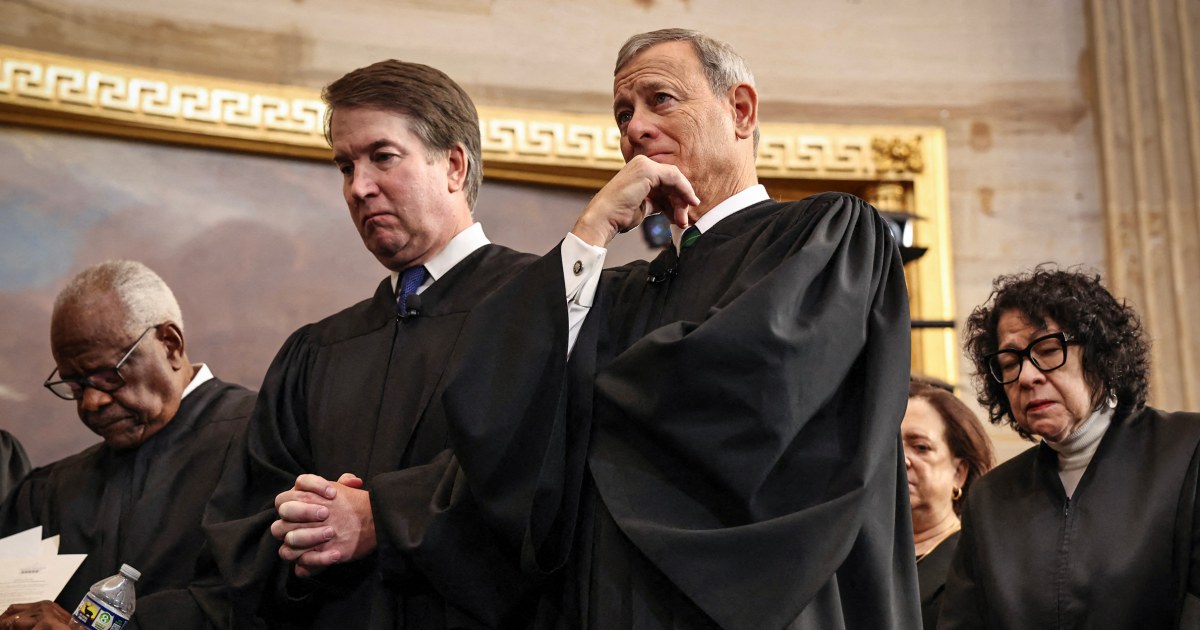
The rare public apology from Justice Sonia Sotomayor to Justice Brett Kavanaugh marks a critical inflection point for the United States Supreme Court. Traditionally, internal disagreements are confined to the rigorous, yet professional, language of written dissents. However, Sotomayor’s remarks at the University of Kansas School of Law—addressing Kavanaugh’s socio-economic background and perceived lack of empathy for the working class—exposed a thinning of the institutional veneer that normally masks personal and ideological divisions. This public admission of ‘inappropriate’ conduct represents a strategic effort to salvage the Court’s reputation for collegiality, a primary source of its perceived legitimacy.
Socio-Economic Critique as a Judicial Flashpoint
The conflict originated from a 6-3 decision regarding the executive branch’s authority to conduct immigration sweeps in Los Angeles. Sotomayor’s dissent was not merely legal but deeply personal, later suggesting that Kavanaugh’s professional upbringing insulated him from the realities of hourly workers. This critique challenges the fundamental premise of judicial impartiality, suggesting that lived experience is a prerequisite for just interpretation. In a court where a conservative supermajority has sidelined liberal influence, such rhetorical shifts toward personal background indicate a move from purely constitutional debates to a broader critique of judicial elitism and class-based perspective.
The Catalyst of Transparency: Media Scrutiny and Accountability
The necessity of the apology was accelerated by a Bloomberg Law report that linked Sotomayor’s anonymous critiques directly to Kavanaugh. This transparency underscores the new reality for the bench: justices are no longer shielded from immediate public accountability for their off-bench remarks. The speed of the Court’s formal response suggests a top-down mandate to contain a narrative that threatened to portray the institution as dysfunctional. For the liberal minority, the incident serves as a cautionary tale regarding the risks of using public forums to vent frustrations that the conservative majority has rendered moot within the courtroom.
Strategic Resilience and the Path Toward De-escalation
Ultimately, Sotomayor’s apology acts as a mechanism for institutional preservation. In a 6-3 environment, the minority’s efficacy relies on maintaining professional leverage and avoiding the total breakdown of conference room relations. While the underlying legal disagreements regarding immigration enforcement and executive power remain unresolved, the apology attempts to compartmentalize personal animosity to ensure operational stability. The incident signals that while the Court’s ideological divide is wider than ever, its leadership remains committed to projecting a facade of unity and mutual respect in an increasingly polarized political landscape.