
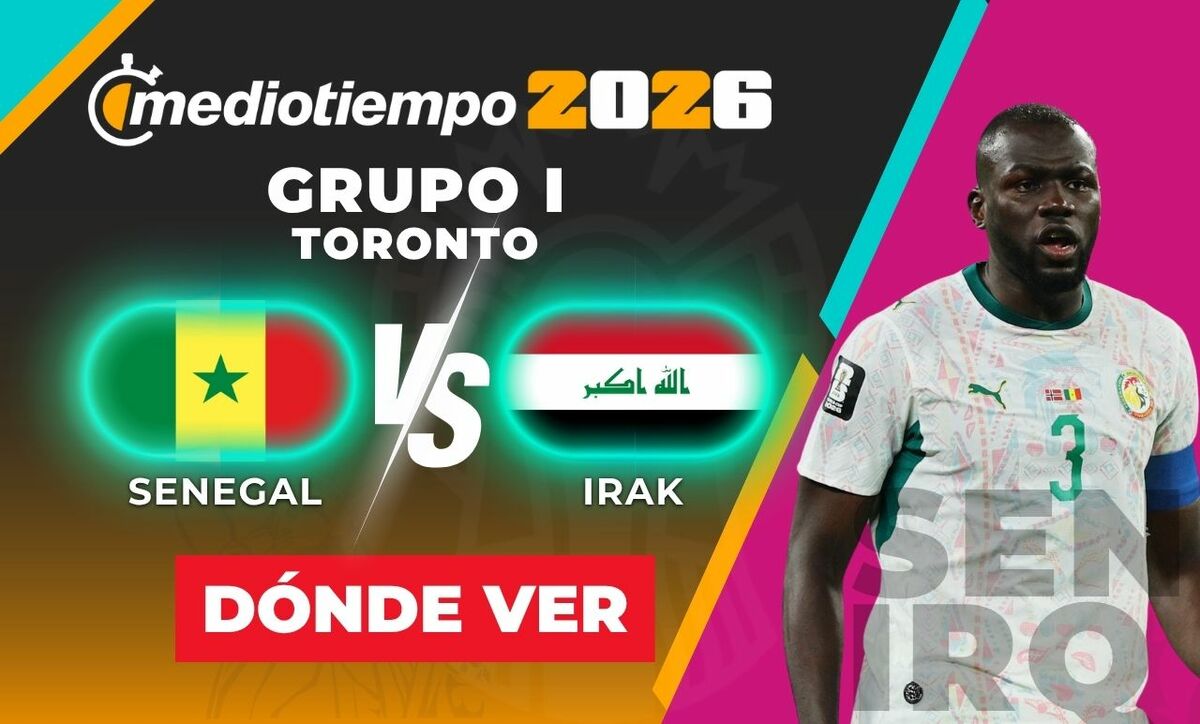
Group I Strategic Context: The Mathematical Imperative at BMO Field
The third matchday of Group I at the 2026 World Cup presented a high-stakes operational challenge for Senegal at BMO Field in Toronto. Having suffered consecutive defeats against France (3-1) and Norway (3-2), Pape Thiaw’s squad entered the fixture with zero points and a negative three goal difference. Under the expanded 48-team tournament format, where only the eight best third-place teams secure knockout-stage berths, Senegal had no margin for error. A mere victory was insufficient; they required a high-margin goal-differential swing to survive the complex tie-breaker matrix.
For Iraq, managed by Graham Arnold, the match was a quest for competitive pride. Having conceded seven goals and scored only once in losses to Norway and France, the Asian representatives were already mathematically eliminated. Tactically, Arnold set up a low-block defensive structure designed to frustrate Senegal’s transitional pace. However, the subsequent 5-0 victory completely altered the Group I landscape, elevating Senegal to three points and a positive two goal difference, while finalizing Iraq’s tournament exit.
Tactical Inflection: The 13th-Minute Red Card and Low-Block Breakdown
The match’s defining tactical pivot occurred in the 13th minute when Iraqi central defender Rebin Sulaka received a straight red card. Sulaka committed a last-man tactical foul to deny Sadio Mané a clear goal-scoring opportunity during a rapid vertical transition. This early dismissal forced Graham Arnold to abandon his initial system, shifting Iraq into an ultra-compact, reactive 4-4-1 defensive shape focused entirely on damage control.
Prior to the expulsion, Senegal had already gained a tactical edge via Habib Diarra’s opener in the fourth minute, which disrupted Iraq’s low-block positioning. Despite their numerical and possession dominance, Senegal struggled to break down Iraq’s deep defensive lines for the remainder of the first half. Senegal’s horizontal ball circulation lacked the tempo required to stretch the ten-man block, leaving the score at 1-0 at the interval and exposing minor inefficiencies in Thiaw’s final-third penetration.
Second-Half Adjustments: Half-Space Exploitation and Verticality
In the second half, Pape Thiaw adjusted Senegal’s build-up play, instructing his team to exploit the half-spaces and accelerate ball circulation. The breakthrough arrived in the 56th minute when Ismaila Sarr doubled the lead. Sarr’s goal acted as a tactical catalyst, forcing an exhausted Iraqi defensive line to stretch and creating vertical passing lanes for Senegal’s central midfielders.
Midfielder Pape Gueye dominated the post-60-minute phase, capitalizing on Iraq’s physical fatigue. Gueye scored two consecutive goals by making late, unmarked runs into the penalty area, exploiting the space vacated by Iraq’s overloaded defensive pivot. Iliman Ndiaye scored Senegal’s fifth goal late in the match, completing a highly efficient offensive display that maximized their goal-difference recovery from minus three to positive two.
Analyzing the Third-Place Wildcard Qualification Matrix
Senegal’s final group stage metrics—three points, eight goals scored, and a positive two goal difference—position them favorably in the wildcard qualification table. In the tie-breaking hierarchy of the 48-team format, goal difference and total goals scored are the primary metrics used to separate third-place teams across the twelve groups. Senegal’s aggressive attacking posture in the final twenty minutes demonstrated highly calculated risk management by Thiaw.
Conversely, Iraq’s campaign ends with zero points, twelve goals conceded, and one goal scored, highlighting a significant physical and tactical deficit when competing against elite opposition. For the Iraqi Football Association, the tournament provides a clear developmental benchmark. For Senegal, the administrative and commercial benefits of reaching the round of 32 remain within reach, pending the final results of the remaining groups.
Photo by Langeweile on Pixabay.