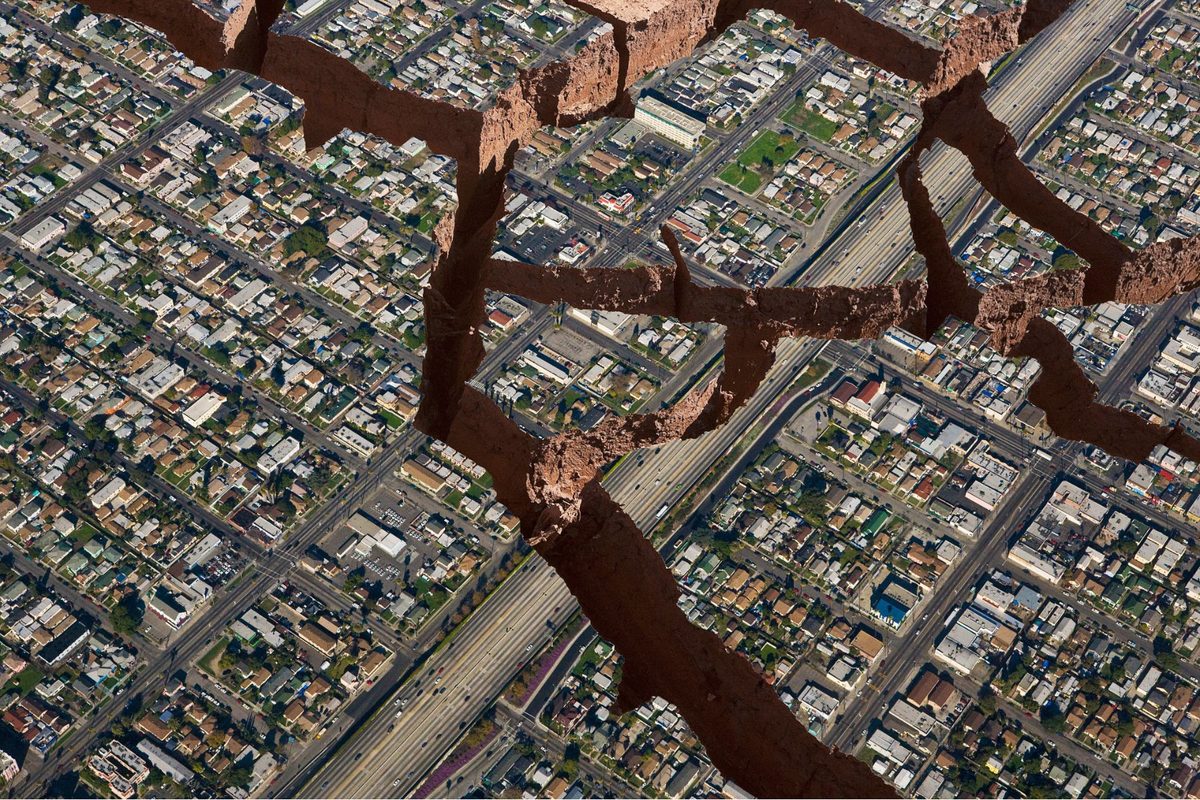
Southern California’s Seismic Crossroads: 1,000-Year Stress Peak on Major Faults
Recent geophysical modeling has identified a significant escalation in tectonic strain along the southern San Andreas and San Jacinto fault systems, reaching a 1,000-year peak in accumulated stress. This condition, characterized by researchers as a ‘critically loaded state,’ indicates that the mechanical thresholds of these fault segments are now at or above historical maximums recorded over the last millennium. This fundamental shift in the seismic cycle demands a urgent reassessment of regional vulnerability and infrastructure resilience across Southern California.
The study, led by Liliane Burkhard at the University of Hawaiʻi at Mānoa and published in the Journal of Geophysical Research: Solid Earth, emphasizes that current stress levels are not merely elevated but signal a transition to potential mechanical instability. This insight, derived from advanced computer simulations mapping stress evolution over a millennium, reveals that the current state is an anomaly compared to seismic patterns of the past ten centuries, providing a data-driven basis for heightened concern.
Cajon Pass: The Critical Earthquake Gate for Through-Going Ruptures
Cajon Pass serves as a pivotal tectonic junction where the Mojave South segment of the San Andreas Fault meets the San Jacinto Fault system. Research identifies this area as an ‘earthquake gate,’ a structural bottleneck that dictates the scale and trajectory of potential ruptures. The behavior of this gate is determined by the synchronization of stress levels between the two fault systems, which currently show a high degree of alignment.
When this gate is ‘open,’ it allows a rupture to propagate across both systems simultaneously, potentially resulting in a ‘through-going event’ of significantly higher magnitude and broader impact than a single-fault rupture. The current data suggests that the conditions required to open this earthquake gate are now present, as stress levels on multiple segments have reached their highest values in the past 1,000 years. This synchronization drastically increases the probability of a multi-fault rupture, an event that would bypass traditional limits of individual fault segments and create a far larger seismic footprint.
A Century of Stress Accumulation: The 1906 Precedent and Tectonic Peacetime
A critical factor contributing to the current stress accumulation is the historical divergence between the northern and southern sections of the San Andreas Fault. While the magnitude-7.9 San Francisco earthquake of 1906 released massive amounts of energy along the northern fault, it provided no relief for the southern systems now under scrutiny. This lack of regional stress transfer has allowed the southern San Andreas and San Jacinto faults to continue storing energy for decades, and in some areas, centuries.
This prolonged period, often termed ‘tectonic peacetime,’ has fostered rapid urban development and population growth in areas directly adjacent to the fault lines. This expansion has occurred during a time of deceptive tectonic calm, creating a false sense of stability while underlying tension accumulated to unprecedented levels. The research indicates that the southern segments are now carrying more pent-up energy than at any point in the last millennium, making the century-long absence of a major rupture a significant risk factor rather than a sign of safety.
Operational and Infrastructure Exposure in Southern California
The proximity of this high-stress junction to major urban centers presents an immense operational challenge for regional stakeholders. Located just 50 miles from downtown Los Angeles, the Cajon Pass sits at the heart of a densely populated corridor where infrastructure exposure is at its highest. A large through-going rupture involving both the San Andreas and San Jacinto systems would impact critical transportation, utility, and communication networks that pass through or near this vital bottleneck.
The concentration of stress in this specific geographic area means any failure at the earthquake gate would have immediate and cascading effects on the logistics and economic stability of Southern California. The research suggests that the region is now capable of a large-scale event that could overwhelm existing mitigation strategies designed for smaller, single-fault earthquakes. This transition to a critically loaded state necessitates a profound shift in how institutional and private sectors evaluate long-term capital exposure and ensure operational continuity in the region.
Conclusion: Redefining Seismic Preparedness for a New Era of Risk
The findings from the University of Hawaiʻi at Mānoa represent a fundamental shift in the understanding of Southern California’s seismic landscape. By establishing that the San Andreas and San Jacinto faults have reached a 1,000-year stress peak, the study provides a clear signal that the region has entered a period of heightened vulnerability. The focus on the Cajon Pass as a strategic earthquake gate highlights specific geographic points where the risk is most concentrated, underscoring the potential for a through-going rupture to exceed previous expectations based on single-fault models.
As stress levels remain at or above historical maximums, the necessity for data-driven preparedness, updated building codes, revised insurance models, and enhanced structural resilience becomes paramount. The current state of the southern fault systems serves as a stark reminder that tectonic processes operate on timescales far exceeding human historical memory, requiring a constant re-evaluation of the inherent risks in America’s most seismically active region.