
The Anatomy of a Franchise Turnaround
The Boston Red Sox have executed one of the most remarkable performance shifts in modern Major League Baseball history. Having lost only three games since July 3, the club secured its 27th victory in a thirty-game span with a commanding 13-1 win over the Athletics. This ascent elevated the team’s record to 64-51, erasing memories of an early-season trough that saw the club languishing at 37-48.
This surge places the franchise alongside elite company in baseball history. The club joined the 1947 Yankees, 1953 Yankees, 1977 Kansas City Royals, and 2017 Cleveland Indians as the only teams since integration to win 27 of 30 games. Furthermore, the 2026 iteration established a Major League Baseball record by moving from 14 games under .500 to 13 games over in a span of just 44 days.
Front Office Resilience Amid Early Turmoil
The current competitive altitude contrasts sharply with the organizational instability that characterized the early months of the calendar year. Leadership departures, including the April firing of manager Alex Cora and intense external scrutiny directed toward chief baseball officer Craig Breslow, created severe operational headwinds. The subsequent stabilization under interim manager Chad Tracy highlights the volatility of professional sports management and the rapid shifts in institutional valuation.
Within professional sports administration, early-season underperformance frequently triggers severe calls for structural overhauls. The resilience demonstrated by the Red Sox front office under pressure underscores the complex variables governing roster construction and player development. Rather than succumbing to demands for a total teardown, the franchise maintained its foundational asset strategy, yielding historic dividends as the summer progressed.
Rookie Contributions and Tactical Execution
On-field performance during this nine-game winning streak has been anchored by exceptional individual outputs, most notably from rookie starting pitcher Payton Tolle. Tolle delivered a historic performance against the Athletics, recording 14 strikeouts across six innings while surrendering just two hits and one run. Such performances from emerging talent provide critical cost-controlled leverage, altering the financial and competitive dynamics of the roster.
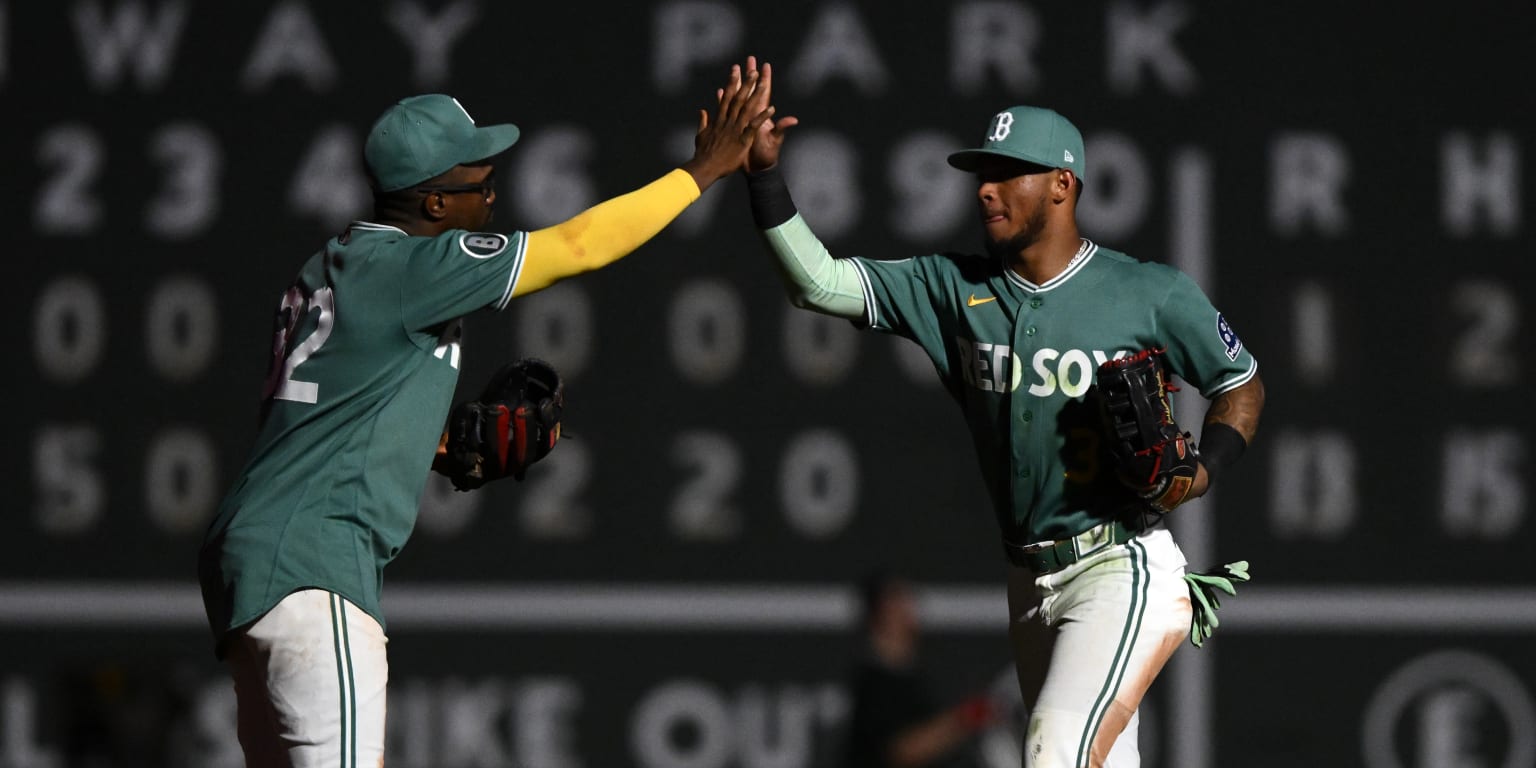
Defensive excellence has complemented the pitching dominance, exemplified by center fielder Ceddanne Rafaela. Positioned to contend for his second consecutive Gold Glove Award, Rafaela continues to suppress opposing offense through elite spatial coverage and routine execution of high-difficulty plays. Left fielder Jarren Duran and interim manager Chad Tracy noted the routine brilliance of Rafaela’s defensive contributions, which consistently neutralize high-leverage scoring opportunities.
Strategic Implications for the American League East
The competitive ramifications of this sustained excellence extend directly to the American League East standings and the broader postseason race. By drawing even with the New York Yankees for second place in the division and securing a hold on the top wild-card spot, the Red Sox have rewritten their competitive outlook. This positioning alters the strategic calculus for potential playoff matchups and shifts the commercial outlook for the franchise as fan engagement surges to sellout levels.
Maintaining momentum through the remainder of the regular season requires navigating the physical and mental demands inherent in an accelerated competitive schedule. As the franchise leverages its historical 15-game winning streak and current nine-game run, the focus shifts to sustaining operational efficiency. The convergence of rookie breakthroughs, veteran stability, and elite defensive metrics establishes a formidable baseline for the remainder of the competitive campaign.