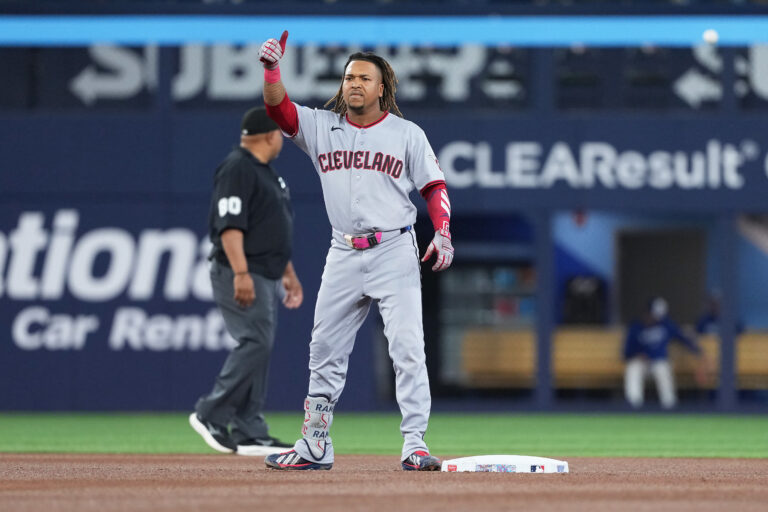
Rays Seek to Extend Streak Against Emerging Guardians Pitcher
The Tampa Bay Rays (16-11) begin a three-game series against the Cleveland Guardians (15-14) at Progressive Field on Monday at 6:10 PM ET. The series opener is defined by a stark contrast in pitching narratives: veteran Steven Matz for the Rays, facing the ascendant left-hander Parker Messick for the Guardians.
Steven Matz (3-1, 4.81 ERA) takes the mound for the Rays, who arrive on a four-game winning streak. Despite an early-season surge, Matz has shown recent vulnerability. His last two starts have been concerning, including a brief outing against the Cincinnati Reds where he surrendered four earned runs and three home runs, raising questions about his current reliability in critical matchups.
The Rays’ offensive engine is driven by Yandy Diaz, who leads the team with a .337 batting average and a .425 on-base percentage. Diaz’s consistent production is a foundational element for the Rays’ lineup as they aim to extend their winning streak.
On the Guardians’ side, 25-year-old Parker Messick (3-0, 1.76 ERA) has been a revelation. In his first 12 career starts, he has posted a 2.30 ERA and demonstrated remarkable consistency, never pitching fewer than five innings. His performance metrics, including a 48% ground ball rate and strong strikeout-to-walk ratio, highlight his operational efficiency and potential for sustained dominance.
Messick’s home-start record is particularly strong (3-1, 2.75 ERA, 0.97 WHIP in six outings), and he has enjoyed success against the Rays previously, going 2-0 with a 1.03 ERA over 13 innings. This history suggests a favorable matchup for the young Guardians pitcher against a potent Rays lineup.
With only eight games scheduled across MLB on Monday, this particular matchup garners heightened analytical focus. Potential rain impacting other games further concentrates attention on the Rays-Guardians contest, positioning pitching performance as a critical determinant of immediate competitive advantage.
Messick’s emergence as a Pitcher Quality Start – Dominant (PQS-DOM) candidate in three of his five starts underscores his strategic value. His ability to limit earned runs (six total across five starts) while maintaining excellent strikeout-to-walk rates (18% K-BB%) demonstrates a command and control profile that challenges opposing offenses and allows the Guardians to control game tempo.
For the Guardians, Messick’s strong performance validates their player development systems and signals a competitive outlook. This contrasts with the Rays, who rely on veteran acquisition and management, exemplified by Matz. Their ability to secure early-season wins and establish divisional momentum carries financial implications, influencing potential future roster investments and fan engagement.
The Rays’ offensive strategy will likely involve aggressive approaches against Messick, aiming to disrupt his rhythm. Their reliance on hitters like Diaz underscores a focus on sustained pressure and run production to compensate for potential pitching instability.
The Guardians’ game plan hinges on Messick’s ability to neutralize the Rays’ offense. His propensity to induce ground balls suggests defensive alignments designed to prevent extra-base hits and limit baserunner opportunities, conserving bullpen resources.
This pitching duel is a key narrative for the series, framing Messick’s continued development against the experienced Matz. Such matchups influence public perception, betting markets, and potentially the long-term valuation of each player.
Strategic decisions leading into this series would have factored in these specific pitching matchups. Rays’ management assessed Matz’s recent form against the Guardians’ offensive tendencies, while the Guardians weighed Messick’s home-field advantage and historical success.
The Guardians’ competitive leverage lies in Messick’s current form and his demonstrated success against the Rays. A strong outing could elevate his profile and contribute to future team success.
The Rays, conversely, leverage their team’s overall momentum and offensive firepower. Their strategy relies on collective strength, expecting their lineup to overcome pitching challenges, indicative of their organizational depth.
The broader market implications are tied to early-season performance. Strong showings can attract investment in merchandise, media rights, and sports betting, influencing the economic ecosystem of MLB.
The institutional context of player development is evident. Messick’s success validates the Guardians’ scouting and development, while Matz reflects the Rays’ approach to managing veteran talent. These contrasting paths highlight different routes to competitive success.
The potential for rain impacting other games introduces unpredictability, potentially affecting bullpen usage in preceding or subsequent games and creating cascading effects on player availability.
Live streaming and broadcast information, including Fubo, highlight the increasing importance of digital platforms in sports consumption and their impact on sponsorship and revenue.
The historical context of divisional rivalries adds significance, as each series is crucial for playoff positioning and seeding.
The Rays’ performance leverage is their current winning streak, a psychological and statistical advantage that can influence close games and critical junctures.
For the Guardians, leverage comes from home-field advantage and Messick’s strong performance, creating a favorable environment for success against a more established opponent.
The strategic decision to feature Messick emphasizes his importance to the Guardians’ pitching staff and their immediate game-planning.
The Rays’ reliance on Diaz highlights a strategic imperative for offensive consistency, with his performance acting as a catalyst for the entire lineup.
The competitive landscape is characterized by such pitching duels. The ability to consistently identify and develop effective pitchers like Messick, or acquire veteran talent like Matz, is a primary determinant of long-term viability.
The financial underpinning of these strategies is substantial, with player salaries, operations, and marketing influenced by on-field performance and fan interest.
The institutional commitment to player development is evident in Messick’s rise, validating the Guardians’ scouting and development systems for long-term sustainability.
The strategic implications of Matz’s recent struggles necessitate greater reliance on the Rays’ bullpen and potential offensive adjustments, impacting operational efficiency.
The competitive exposure for both teams is high, with wins providing morale boosts and losses potentially requiring strategic re-evaluation.
Downstream effects of this series could influence divisional standings, playoff seeding, and future player transactions, contributing to larger team trajectories.
Operational execution of game plans, from pitching adjustments to defensive positioning, will be critical, particularly in potentially low-scoring affairs.
The financial leverage of a strong start can translate into increased revenue streams through ticket sales, concessions, and broadcast rights, reinforcing the importance of early-season performance.
The Guardians’ strategic positioning with a developing ace like Messick suggests a long-term vision prioritizing sustainable success, contrasting with more immediate win-now strategies.
The competitive implications of Matz’s recent performance are a reminder of baseball’s volatility; even established pitchers can slump, requiring robust contingency plans.
Institutional understanding of player performance curves is crucial. The Guardians bet on Messick’s upward trajectory, while the Rays manage Matz’s current phase, highlighting different organizational philosophies.
The operational challenge for the Rays is to maintain offensive momentum against a pitcher who has historically performed well against them, requiring disciplined at-bats.
The financial impact of a successful series for the Guardians could include increased fan attendance and a more optimistic outlook for season ticket renewals, directly affecting revenue projections.
The strategic advantage of a young, cost-controlled pitcher like Messick is immense, allowing for greater financial flexibility and a stable foundation for team building.
The competitive pressure on Matz to rebound from recent outings is significant, with his performance closely scrutinized.
The institutional approach to managing pitcher workloads, especially for young arms like Messick, impacts the Guardians’ future competitive outlook.
The operational execution of the Rays’ bullpen strategy will be key, especially if Matz struggles, requiring efficiency to preserve leads.
The financial implications of a strong start for the Guardians, driven by players like Messick, can lead to increased media attention and endorsement opportunities for their emerging stars.
The strategic decision to rely on Diaz underscores a Rays team philosophy that values consistent hitters who can get on base and drive in runs.
The competitive exposure for Messick is the opportunity to solidify his reputation as a top-tier pitcher against a playoff-contending team, potentially influencing future contract negotiations.
The institutional framework of scouting and player evaluation is tested by emerging talents like Messick, validating the Guardians’ analytical models.
The operational challenge for the Guardians is to consistently support Messick’s pitching with timely hitting and solid defense.
The financial leverage of a successful series for the Rays, extending their winning streak, can attract greater media coverage and sponsorship interest.
The strategic importance of this series opener sets the tone for the matchup and has ripple effects on divisional standings and team confidence.