
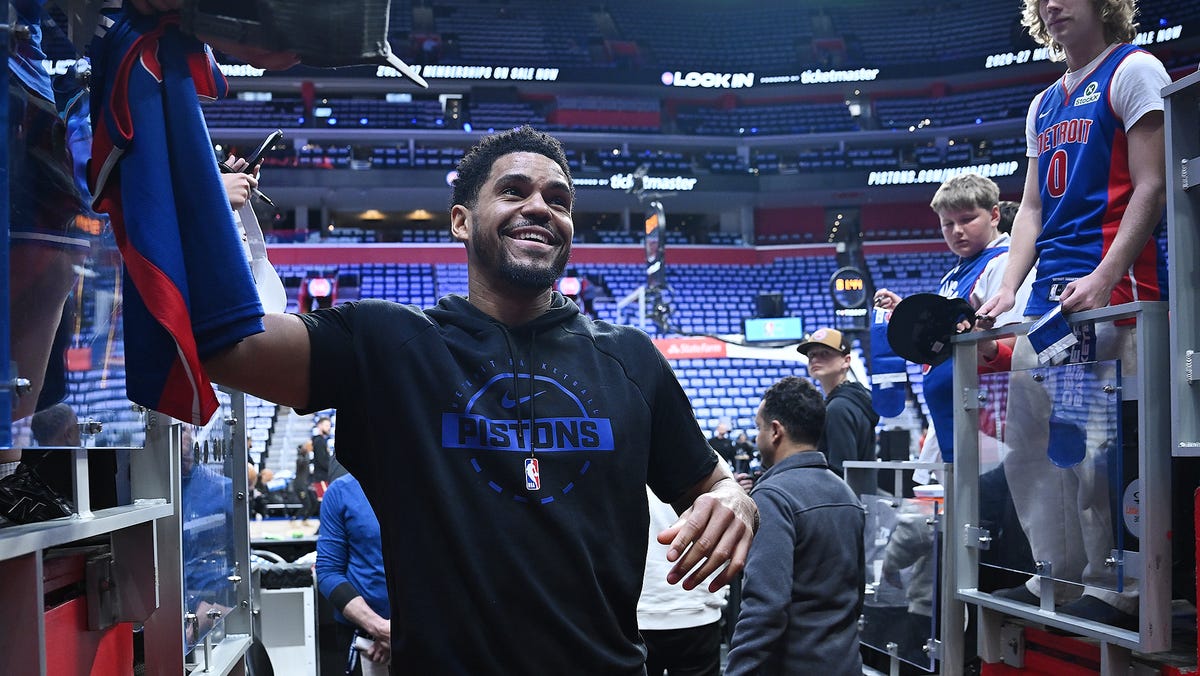
Pistons Seek Dominance as Cavs Grapple with Foul Discrepancy
The Detroit Pistons are poised to extend their Eastern Conference Semifinals lead to 2-0 against the Cleveland Cavaliers following a hard-fought Game 1 victory. This series, featuring the top-seeded Pistons against the fourth-seeded Cavaliers, represents a critical juncture where early momentum can significantly dictate the best-of-seven outcome.
Detroit’s Game 1 triumph, punctuated by a decisive 18-8 run in the final five minutes, highlighted their late-game execution and resilience. This performance secured their fourth consecutive playoff win and marked a psychological boost, being their first playoff victory against Cleveland since 2007, potentially shifting the historical narrative of this matchup.
The Cavaliers, conversely, face immediate pressure to equalize the series before it shifts to their home court. Their Game 1 performance was hampered by turnovers and significant foul trouble for key players like Jarrett Allen, issues that directly impeded their ability to maintain momentum and execute their game plan in crucial late-game situations.
Free Throw Disparity Fuels Strategic Scrutiny and Debate
A central point of contention emerging from Game 1 is the stark difference in free throw attempts, with Cleveland awarded 16 attempts compared to Detroit’s 35. This significant imbalance, amplified by postgame comments from Cavaliers’ Donovan Mitchell, suggests a potential strategic advantage for the Pistons in drawing fouls and converting free points, a factor that could disproportionately influence subsequent game outcomes.
The officiating and its impact on game flow and scoring opportunities are under intense scrutiny. For the Cavaliers, addressing this disparity is paramount, requiring tactical adjustments to either draw more fouls themselves or limit Detroit’s opportunities to reach the free-throw line, thereby neutralizing a key offensive weapon for the Pistons.
This free throw imbalance directly affects the operational efficiency of both teams. The Pistons can leverage this advantage to control tempo and build scoring leads, while the Cavaliers must adapt their defensive schemes and offensive aggression to prevent such a wide margin in free throw opportunities, potentially impacting player rotations and defensive intensity.
Broadcast Strategy Underscores Series Importance
The scheduling of the Eastern Conference Semifinals, with Game 2 set for Thursday, May 7, on Prime Video, and subsequent games across NBC/Peacock, reflects a strategic approach by the NBA and its broadcast partners to maximize viewership. The early placement on a major streaming platform for Game 2 signals its perceived importance in establishing the series narrative.
The broadcast distribution across different platforms, including a mix of streaming and traditional television for Games 3 and 4, aims to cater to a broad audience while highlighting the growing significance of digital platforms in sports consumption. This strategy ensures key matchups reach a wide demographic.
Competitive Landscape and Playoff Positioning
As the No. 1 seed, the Detroit Pistons are demonstrating expected dominance, aiming to solidify their position as Eastern Conference contenders. Their late-game execution in Game 1 reinforces their status and sets a high bar for their opponents.
The Cleveland Cavaliers, as the No. 4 seed, must overcome perceived disadvantages, such as the free throw disparity, to advance. Their ability to adapt and overcome these challenges will be a key indicator of their championship potential and their capacity to upset higher-seeded opponents.
The outcome of this series will not only determine which team advances but also influence the perception of both franchises and their standing within the league’s competitive hierarchy. A 2-0 deficit would place significant pressure on the Cavaliers, potentially impacting their confidence and strategic outlook.
Strategic Implications of Early Series Performance
Early performance metrics, like turnover rates and foul accumulation, are critical indicators of tactical discipline under playoff pressure. For the Cavaliers, reducing turnovers and improving defensive discipline to avoid costly fouls are essential operational adjustments.
Detroit’s consistent ability to draw fouls suggests a well-executed offensive strategy that exploits defensive vulnerabilities. This approach to generating high-percentage scoring opportunities from the free-throw line is a sustainable advantage Cleveland must counter.
The psychological impact of a 2-0 series lead in the playoffs cannot be overstated. For the Pistons, such a lead provides a significant confidence boost, while for the Cavaliers, it necessitates a dramatic shift in momentum and performance to avoid an early exit.

Photo by admomediaoffice on Pixabay.