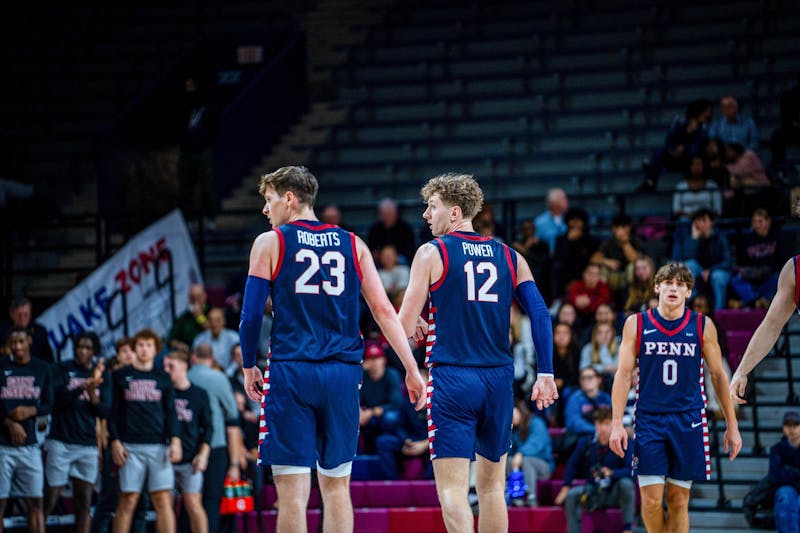
The operational viability of the No. 14 seed Penn Quakers in the NCAA Tournament is critically dependent on the acute health status of forward TJ Power, whose illness forced him to miss essential pre-game practice sessions before the clash with No. 3 seed Illinois. This instability is severely compounded by the confirmed season-ending injury to senior guard/forward Ethan Roberts, the team’s leading scorer, removing a foundational offensive component.
Deconstructing Penn’s Strategic Vulnerability
Penn enters as a significant underdog (24½ points), a gap exacerbated by personnel deficits that shift the team’s reliance from momentum to overcoming an operational imbalance. Coach Fran McCaffery’s cautious optimism—stating belief Power will play despite missing practice—indicates a high-leverage internal assessment where Power’s perceived floor impact outweighs standard preparation protocols.
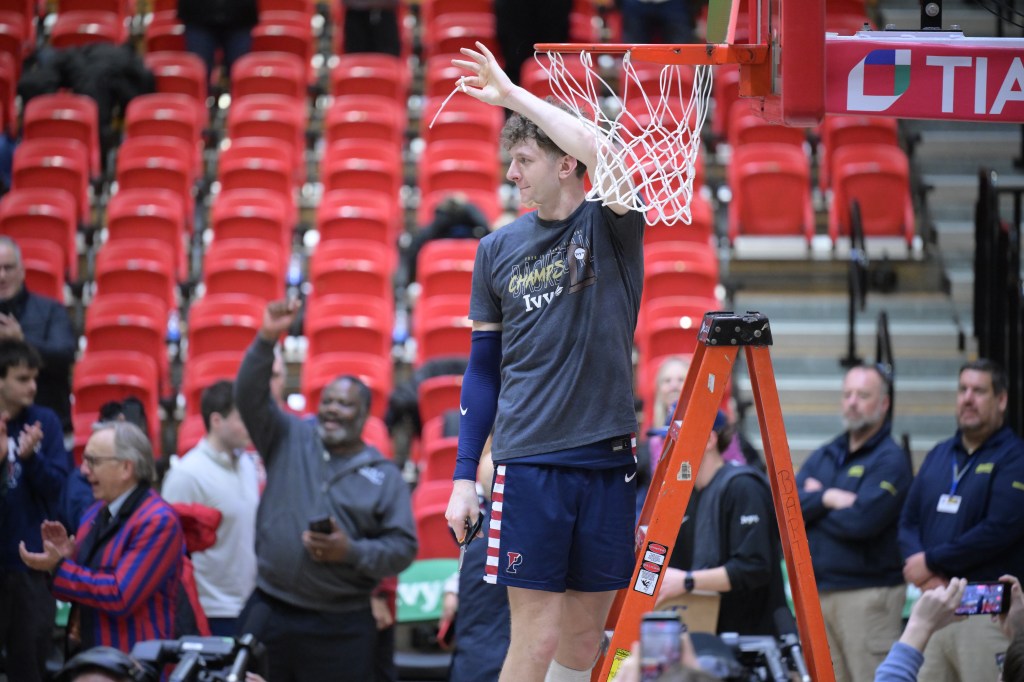
Power’s recent performance established him as the indispensable catalyst: his 44 points and 14 rebounds in the Ivy League Championship secured the March Madness bid. His pedigree, stemming from transfers at Duke and Virginia, confirms a high talent baseline, making his sudden absence a systemic disruption.
The Limits of ‘Next-Man-Up’ in Single Elimination
Conventional ‘next-man-up’ narratives fail in high-leverage, single-elimination formats where elite individual output dictates survival. For a No. 14 seed, the margin for error is zero. Losing Roberts necessitates an unproven redistribution of scoring load, which Power’s potential absence would render catastrophic.
Illinois coach Brad Underwood’s acknowledgment, even if framed competitively, confirms strategic awareness: Power is the primary threat vector. Underwood’s reference to playing through illness signals preparedness for compromised elite performance, underscoring Power’s game-altering potential.
Performance Benchmarks and Institutional Leverage
Power’s 44-point Ivy Madness final—ranking second in Division I conference tournament finals over three decades—sets a performance benchmark that transcends typical team contribution. This singular performance linked the program’s return to the NCAA Tournament (since 2018) directly to his physical condition, amplifying external pressure.
His consistent regular season averaging 16.8 PPG and unanimous All-Ivy first-team selection contrast sharply with the acute uncertainty of his current health. Furthermore, his MVP performance leading Penn through overtime victories demonstrates a proven capacity to elevate performance under maximum competitive stress.
Cascading Effects on Illinois’s Defensive Planning
Illinois’s defensive schemes must pivot from neutralizing a known scorer (Power) and secondary threat (Roberts) to managing an ambiguous offensive structure. Power’s uncertainty forces Illinois to maintain a broader defensive posture, potentially diluting focus on specific matchup advantages. Conversely, his absence allows Illinois to concentrate defensive capital entirely on mitigating redefined secondary threats.
McCaffery’s direct quote, “That’s a game changer,” confirms that the entire competitive strategy against Illinois was predicated on Power operating at peak capacity.
Program Valuation and Competitive Asymmetry
NCAA Tournament performance directly impacts institutional capital flow, including donor engagement and future athletic budgeting, particularly for non-Power Five programs. High-profile exposure magnifies the cost of injury; an early exit due to key absences affects the perceived ceiling of the program’s competitive trajectory for the next recruiting cycle.
Power, a former five-star recruit, signals success in attracting external talent, a process heavily reliant on demonstrating a viable pathway to competitive success.
Illness vs. Injury: Administrative Complexity
Roberts’s fixed, known void allows for strategic planning, whereas Power’s acute illness demands continuous medical assessment, creating administrative friction moments before tip-off. The visual of Power shooting alone underscores the institutional investment in maximizing marginal gains—a compromised Power is deemed strategically superior to the next available reserve.
This scenario highlights the structural reality in low-resource environments: performance ceilings are determined by the health of outlier talents, not roster depth.
Media Framing and Risk Assessment
The media narrative has shifted from celebrating Penn’s first tournament appearance in years to focusing exclusively on Power’s health status. Teammates’ effusive praise amplifies the perceived loss. Should Penn underperform, the narrative defaults to the injury impact, overriding simple competitive failure against a superior seed.
The national broadcast slot (Thursday, 9:25 p.m. on TNT) places these operational constraints under immediate scrutiny by scouts, alumni, and potential recruits.
McCaffery’s Calculated Risk
McCaffery’s belief that Power will play despite skipping practice is a calculated risk assessment balancing game readiness against potential long-term health. Withholding a star from practice signals that the perceived value of his presence (even compromised) outweighs the tactical benefit of a final rehearsal. The reliance on this hope underscores the structural gap between Penn and an elite program like Illinois.
Roster Construction Implications
The simultaneous loss of the leading scorer (Roberts) and the tournament catalyst (Power) exposes critical vulnerability: insufficient high-end scoring depth. This forces the coaching staff to demand immediate, high-leverage production from players previously assigned supporting roles, testing the efficacy of the developmental pipeline under extreme duress.
McCaffery’s statement, “We really won’t know until tomorrow,” confirms that institutional medical clearance, rather than purely tactical coaching decisions, dictates strategic deployment.
Competitive Leverage and Program Analysis
Underwood’s commentary strategically applies psychological pressure, confirming that even a physically compromised Power commands respect. This forces Penn to manage both Power’s physical recovery and the psychological burden on remaining players in a radically altered hierarchy. The program’s ability to navigate this acute crisis will be analyzed by peers regarding talent retention and contingency planning against elite competition.