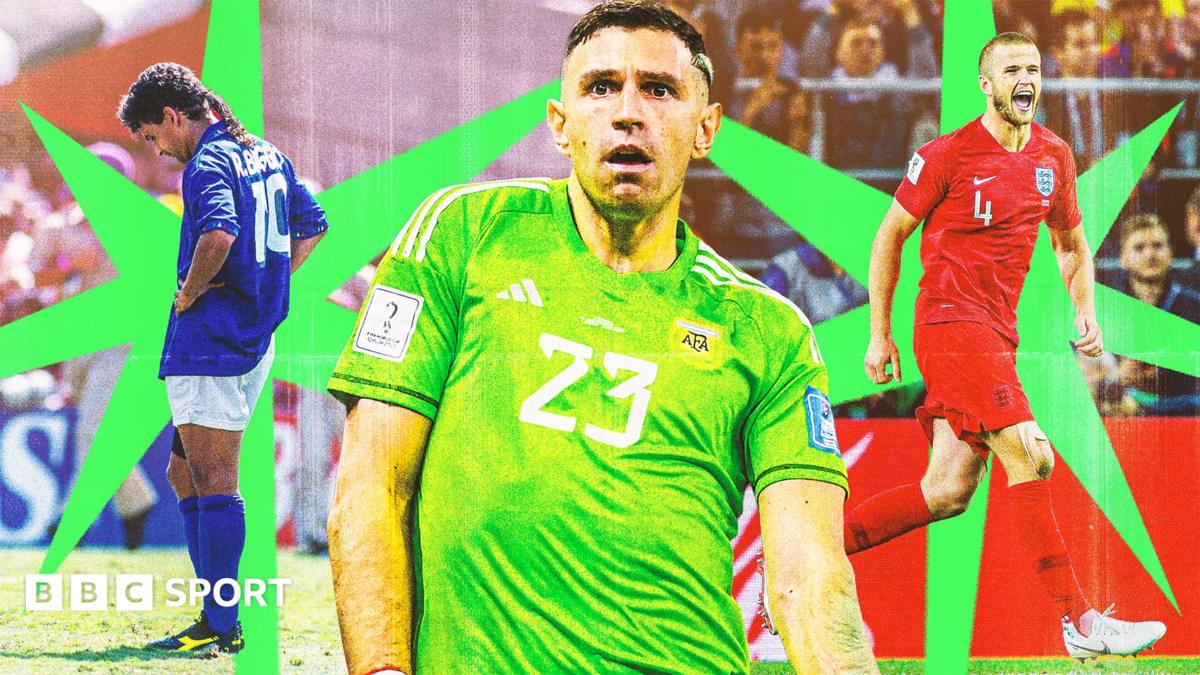
The expansion of the FIFA World Cup to a 48-team format in 2026 introduces a 32-team knockout bracket, fundamentally altering the tournament’s competitive architecture. By doubling the number of single-elimination matches from 16 to 32, the governing body has mathematically heightened the probability of matches being decided by penalty shootouts. This structural shift transforms the shootout from an anomalous contingency into a highly probable operational reality, forcing national federations to treat spot-kick preparation as a core performance metric with multi-million-dollar financial and reputational implications.
During the 2022 tournament in Qatar, a record five shootouts occurred, culminating in a dramatic 3-3 final where Argentina defeated France 4-2 on penalties. For technical directors designing preparation protocols, the cumulative dataset of 320 spot-kicks across 35 shootouts since 1982 serves as a statistically significant foundation for optimizing strategic outcomes under extreme cognitive load.
The Mathematical Volatility of the Round of 32
Expanding the knockout phase increases tournament volatility and compounds physical and psychological fatigue. In a sudden-death bracket, the margins of error are razor-thin. Historical analysis indicates that shootout success is heavily correlated with institutional preparation rather than random distribution. Federations that integrate empirical data into their tactical frameworks secure a measurable competitive edge over those relying on intuitive or unstructured methodologies.
Institutional Divergence in Historical Conversion Rates
Historical data reveals profound performance disparities among elite football nations, illustrating how psychological pressure and systemic frameworks dictate outcomes. Spain holds the record for the most missed penalties in World Cup shootout history with nine failures, culminating in their 2022 round-of-16 exit to Morocco where they failed to convert any of their three attempts. This brought Spain’s overall shootout record to four losses in five contests.
England exhibits a historically similar vulnerability, registering eight missed penalties and three shootout losses over the decades. These repetitive failures point to systemic difficulties in managing the unique cognitive load of the spot-kick. Conversely, Argentina has optimized its shootout performance, winning six of their seven World Cup shootouts. Germany boasts near-flawless execution, converting 17 of 18 individual attempts and winning all four of their historic shootouts. Croatia has similarly established a perfect four-from-four record. Conversely, nations such as Japan, Mexico, and Romania have struggled significantly, each losing both of their contested shootouts.
Game Theory and the Strategic Leverage of the Coin Toss
A critical tactical decision occurs before execution begins: the pre-shootout coin toss. Landmark research analyzing matches from 1970 to 2003—prior to FIFA’s rule modification—showed that teams kicking first won 60.5% of shootouts, driven by the psychological pressure of trailing on the scoreboard. However, the 2003 regulatory amendment allowing the coin-toss winner to choose the kicking order altered this dynamic.
Subsequent data shows that winning the coin toss itself yields a 60% win rate, compared to a 51% win rate for the team that actually kicks first. This divergence indicates that controlling the sequence allows captains to align the order with their squad’s psychological profile. For example, a team with an elite shot-stopper may select to defend first to leverage goalkeeper confidence, while others choose to kick first to establish immediate scoreboard pressure. These figures dictate that the coin-toss decision must be a calculated tactical choice rather than an arbitrary preference.
Biomechanical Precision and Cognitive Regulation
At the individual execution level, sports science highlights the critical role of run-up pacing. A rushed run-up is a common physiological response to sympathetic nervous system arousal (anxiety), which correlates with a higher rate of execution errors. A deliberate, controlled approach allows the kicker to maintain gaze fixation and execute their pre-determined placement strategy.
Advanced training regimens must simulate these conditions. Standard practice at the end of a training session fails to replicate the cardiovascular exhaustion and cognitive demands of a World Cup match. Leading associations now utilize heart-rate variability (HRV) monitoring and biofeedback to train athletes to regulate physical and psychological states before initiating their approach.
Commercial and Systemic Implications for National Federations
The financial impact of advancing in a World Cup makes shootout optimization a commercial necessity. Early elimination results in lost prize money, diminished sponsorship valuation, and reduced brand equity. This reality has accelerated investment in specialized performance units, including cognitive scientists, biomechanists, and visual tracking analysts. As the 2026 tournament approaches, the divide between data-driven federations and those relying on legacy paradigms will likely determine who achieves international success.