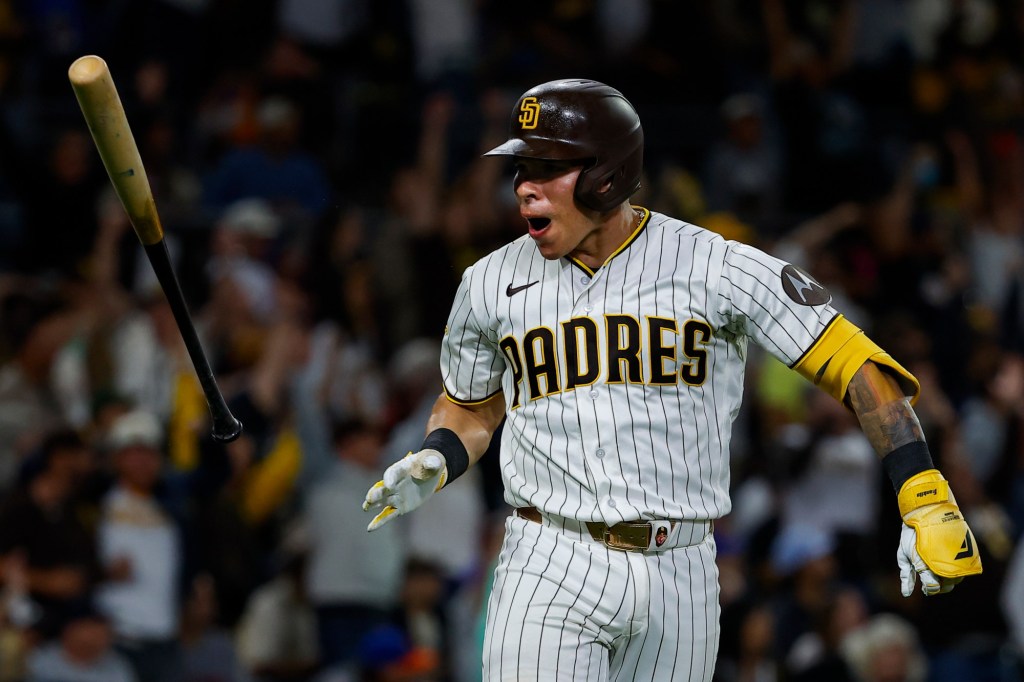
The San Diego Padres’ 3-2 victory over the New York Mets on June 5, 2026, functioned less as a dominant performance and more as a high-variance reprieve for a franchise navigating the repercussions of aggressive roster engineering. While Freddy Fermin’s first home run of the campaign provided the decisive margin, the win underscored a persistent structural tension: the trade-off between immediate operational stability and long-term pitching depth.
The Opportunity Cost of Catching Stability
President of Baseball Operations A.J. Preller’s 2025 acquisition of Freddy Fermin was a reactive measure to a catastrophic offensive vacuum at the catching position. By replacing the underperforming Elias Diaz and Martin Maldonado tandem, the Padres sought a floor-raising stabilizer. However, the cost—two young, controllable right-handed starting pitchers—represents a significant ‘desperation tax’ that continues to limit the organization’s current pitching rotation.
This deficit in internal depth has forced a heightened reliance on veteran arms like Griffin Canning. During the June 5 contest, Canning’s second-inning struggles highlighted the razor-thin margins defining the San Diego rotation. When controllable pitching assets are liquidated for veteran stopgaps, the roster loses its insulation against performance volatility, forcing the team to rely on tactical perfection rather than structural strength.
The 0-for-30 Drought and the Bridge-Player Dilemma
Fermin’s 99.3 mph drive to left field ended a profound 0-for-30 slump that had become a microcosm of the Padres’ offensive stagnation. For a player acquired to provide consistency, such a prolonged drought creates a cascading pressure on the top of the order. Fermin’s role is ostensibly that of a ‘bridge’ to top prospect Ethan Salas; however, when the bridge fails to produce, the front office faces an institutional dilemma: accelerate a prospect’s timeline or absorb negative WAR from a struggling veteran.
While Fermin’s celebration signaled a release of individual pressure, the underlying metrics remain concerning. His first home run since late 2025 provides a temporary reprieve from scrutiny, but the long-term ROI remains questionable as the Kansas City Royals—who subsequently signed former Padre Elias Diaz—continue to benefit from the pitching assets surrendered in the exchange.
High-Variance Outcomes and Institutional Volatility
The mechanics of the victory revealed a team currently reliant on fortuity. The game-tying run in the third inning—a Fernando Tatis Jr. hit that redirected off second base—illustrates the role of ‘lucky bounces’ in masking offensive inefficiencies. This reliance on high-variance outcomes, complemented by Sung-Mun Song’s opportunistic hitting, suggests the Padres’ current model lacks the consistent operational dominance required for a deep postseason run.
Ultimately, the Fermin trade is a case study in Preller’s high-frequency trading philosophy. By prioritizing immediate marginal gains over prospect retention, the Padres have constructed a top-heavy roster that is exceptionally vulnerable to individual slumps. Whether the win over the Mets marks a genuine pivot or a statistical anomaly depends on whether the catching position can provide sustainable production without the assistance of fluke bounces and atmospheric conditions.