
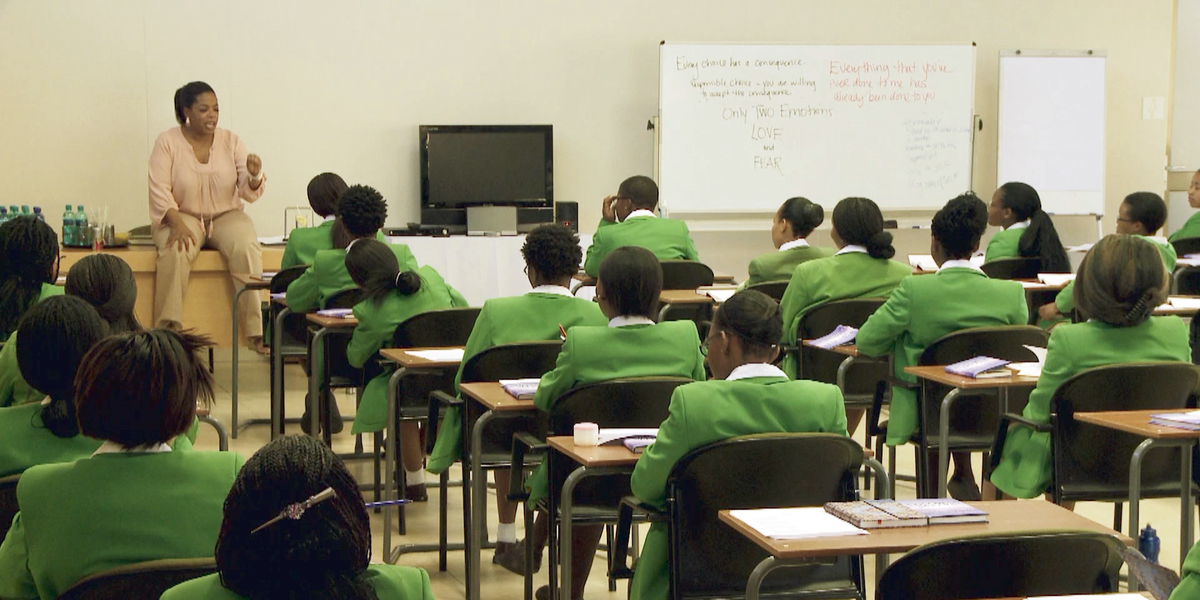
US media proprietor Oprah Winfrey has announced the planned closure of the Oprah Winfrey Leadership Academy for Girls (OWLAG) in South Africa, concluding a nearly two-decade operational cycle for the residential campus. Established following discussions with anti-apartheid icon and former South African President Nelson Mandela in 2002, the institution was built at a cost of $40 million in Henley-on-Klip, south of Johannesburg. Representatives and the Oprah Winfrey Leadership Academy Foundation confirmed the boarding school will formally end operations following the completion of the 2027 academic year.
The structural transition is anchored in the original partnership agreement between the foundation and local authorities. Upon conclusion of the operational timeline, the residential campus will be handed over to the Gauteng Department of Education. Affected students who will not have graduated prior to the closure will receive full scholarships and continuous academic and financial support elsewhere.
Strategic Shifts in Philanthropic Models
Dissolving the physical academy in favor of an expanded scholarship program reflects an evolution in philanthropic capital deployment. Operating a high-cost residential campus involves significant fixed overhead relative to the total student census achieved over 20 years. By dismantling the centralized facility, the foundation aims to double the number of young women receiving educational access through direct financial sponsorship.
This strategic pivot moves away from capital-intensive real estate management toward flexible resource allocation across decentralized educational institutions. Transitioning to scholarship-based funding decouples philanthropic impact from physical property management, mitigating long-term institutional liabilities associated with campus maintenance while maximizing direct human capital investment.
Operational Realities and Legacy
Since welcoming its inaugural class in 2007, the academy has educated over 1,000 students from underprivileged socioeconomic backgrounds. Alumni have advanced into medicine, law, engineering, executive management, and entrepreneurship. Representatives have explicitly dismissed rumors attributing the closure to financial mismanagement, reiterating that the shift is driven entirely by an ambition to broaden educational outreach.
Transferring the facility to the Gauteng Department of Education ensures the architectural and operational footprint of the initial $40 million investment continues to serve the local community under state governance. Meanwhile, the foundation refocuses its capacity on administering decentralized scholarships.
Systemic Implications for Private Philanthropy
The reconfiguration of OWLAG highlights structural considerations in large-scale private educational philanthropy. Establishing standalone institutions creates immense initial visibility but presents complex questions regarding long-term scalability. As philanthropic organizations mature, trustees frequently reassess whether centralized capital assets generate higher returns compared to distributed funding mechanisms.
The scheduled 2027 transition provides a benchmark for evaluating how private entities disengage from physical infrastructure projects. The success of the subsequent scholarship model will depend on administrative capacity to support students within diverse external educational environments.