
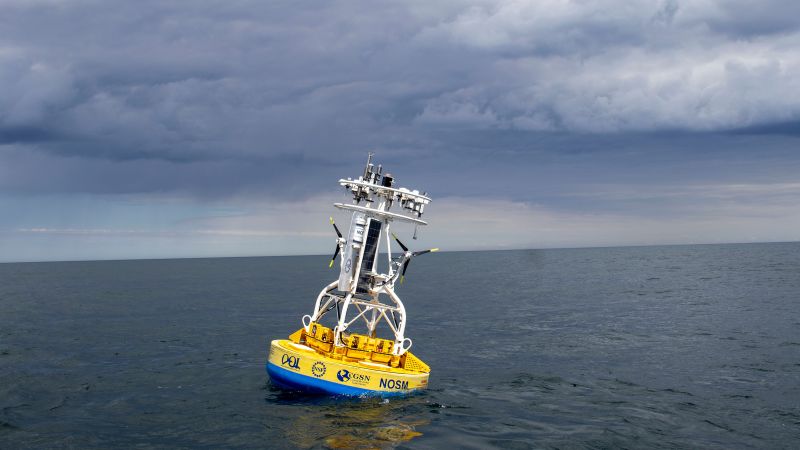
Strategic Decommissioning of the Ocean Observatories Initiative
The U.S. National Science Foundation (NSF) has commenced the systematic dismantling of the Ocean Observatories Initiative (OOI), a $368 million deep-sea monitoring network. As of May 21, 2026, the 15-month decommissioning schedule mandates the retrieval of critical infrastructure from four primary arrays off the coasts of Alaska, Washington, and Oregon.
Launched in 2016 with a 30-year operational horizon, the OOI provided continuous longitudinal data essential for observing deep-ocean biogeochemical cycles. Its termination signals a significant contraction in the U.S. capacity for sustained, in-situ marine ecosystem monitoring.
Impact on Climate Modeling and Oceanographic Research
The network comprises approximately 900 high-pressure, corrosion-resistant instruments. By providing real-time telemetry on water chemistry and current velocity, these sensors were central to climate model validation. The removal creates a ‘data vacuum,’ particularly concerning the Atlantic Meridional Overturning Circulation (AMOC). Given the AMOC’s status as a critical tipping point in global climate stability, the loss of these real-time streams degrades the scientific community’s ability to monitor early-warning indicators of systemic oceanic collapse.
Administrative Governance and Institutional Shifts
The OOI reduction follows the dissolution of the National Science Board, suggesting a broader realignment of federal environmental data priorities. This trend of network contraction mirrors previous cuts, including the 2018 closure of the Global Argentine Basin Array and the 2020 removal of the Global Southern Ocean Array. These actions represent a pivot away from multi-decadal, high-capital environmental research toward more transient monitoring models.
Economic and Scientific Implications
While the NSF cites budgetary constraints as the primary driver, the premature decommissioning represents a loss of critical sunk capital. The shift toward intermittent data sources introduces systemic risk for fisheries management and coastal predictive modeling, where high-fidelity, real-time data is essential for assessing marine food web dynamics.
Systemic Risks of Data Gaps
The decommissioning coincides with record sea-surface temperatures and increasing volatility in global ocean-atmosphere interactions. By reducing its observational footprint in the Pacific and Atlantic, the U.S. diminishes its capacity to contribute to global climate monitoring at a historical inflection point, leaving a strategic blind spot in the understanding of deep-sea environmental change.