
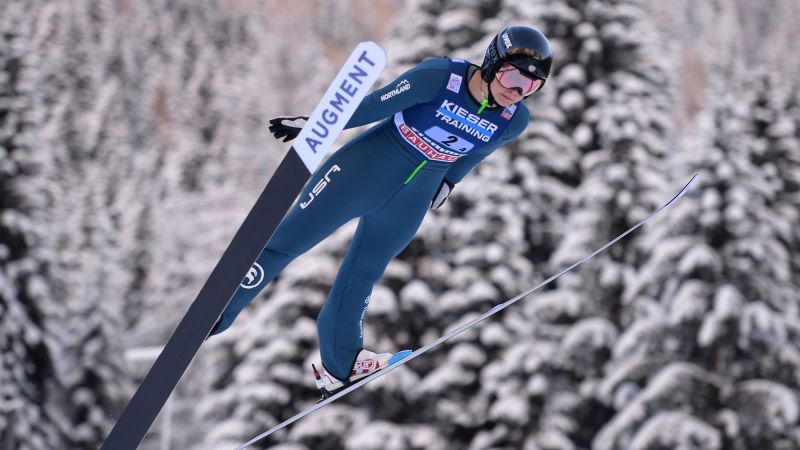
Structural Instability Facing Historic Olympic Sport
Nordic Combined, recognized as one of the longest-standing disciplines within the Winter Olympic program, is currently confronting significant challenges that threaten its continued inclusion in major international sporting events.
This specific discipline integrates two distinct Nordic skiing disciplines: ski jumping and cross-country skiing, demanding a unique combination of aerial precision and sustained endurance from its participants. The current institutional framework surrounding the sport appears to be facing pressure, exemplified by recent outcomes affecting high-level athletes.
For instance, information derived from reports indicates that athletes, including the sibling tandem Annika and Niklas Malacinski, alongside Nathalie Armbruster and Daniela Dejori, received notification in June 2022 regarding their non-qualification for the 2026 Winter Olympics. This notification occurred shortly before the commencement of the 2026 Games, underscoring a critical period of administrative decision-making affecting athlete trajectories.
The Constraint of Gender Inclusion and Olympic Mandates
A primary driver of the sport’s precarious standing appears rooted in the evolving requirements set forth by the International Olympic Committee (IOC) regarding gender representation across all disciplines.
While the IOC has characterized the approaching 2026 Winter Olympics as a ‘landmark’ occasion for achieving gender equality in the overall structure of the Games, Nordic Combined is noted as a specific exception where full integration of female participation has not yet been realized.
The structural constraint here involves the alignment of a traditional, established sport with contemporary mandates for equitable representation. Governing bodies within the Olympic movement place increasing emphasis on disciplines demonstrating a pathway toward, or already possessing, full gender parity in competition offerings.
The delay or failure to incorporate a fully recognized women’s event places Nordic Combined at a distinct disadvantage when vying for limited quota spots within the overall Olympic program structure. This is not merely a matter of competitive scheduling but a strategic assessment of institutional relevance and compliance with overarching policy directives aimed at modernizing the Games.
Implications for Sport Sustainability and Administrative Strategy
The continuity of any Olympic sport is intrinsically linked to its administrative viability, which includes securing requisite broadcast interest, sponsorship appeal, and—critically—athlete pool depth across genders.
When a sport maintains a significant structural barrier to the inclusion of half the global athletic population, its administrative capacity to sustain momentum, attract future generations of diverse competitors, and satisfy contemporary media demands is inherently diminished.
The lack of a formalized women’s competitive structure creates a constraint on the development pipeline. If elite female participation is not integrated at the Olympic level, the institutional incentive for national federations to invest in comprehensive development programs for female athletes within that specific discipline is consequently reduced.
This cycle can lead to a demonstrable decline in the overall competitive mass of the sport, contributing to the perception that the discipline is ‘fizzling out,’ as suggested by external commentary on the situation.
Process and Notification Frameworks
The timing of administrative decisions is a crucial element in the operational integrity of elite sports. The notification provided to athletes such as the Malacinski siblings, occurring in June 2022 regarding the 2026 Games roster implications, highlights the long lead time required for Olympic qualification cycles.
Such determinations, often based on established performance metrics or quota allocations determined by international federations and ratified by the IOC, must be communicated well in advance to allow athletes to adjust training regimens or focus on alternative competitive pathways.
The context mentioned—athletes dialing into administrative updates from a World Cup event in Austria—illustrates the globalized nature of elite winter sports logistics, where administrative decisions directly intersect with ongoing competitive obligations across continents.
The Institutional Role of Olympic Status
Maintaining Olympic status confers immense institutional prestige, financial support potential, and global visibility that is unattainable outside that framework. For smaller sports like Nordic Combined, this status is essential for financial solvency and relevance in national sporting budgets.
The threat of removal or non-inclusion is therefore an existential administrative concern, forcing governing bodies to engage in complex institutional negotiations regarding program structure.
The core policy mechanism at play involves the IOC’s regular reviews of the Olympic program, designed to ensure the Games remain youthful, relevant, and balanced. Sports that fail to adapt to evolving societal expectations regarding representation risk being marginalized in favor of newer, more gender-balanced disciplines.
Therefore, the documented situation surrounding Nordic Combined serves as a case study in how adherence to historical tradition must be balanced against modern administrative imperatives for structural equity within the multi-sport event framework. The resolution of this sport’s inclusion will depend heavily on the speed and scope with which its governing structure can implement comprehensive and recognized pathways for female participation that satisfy the IOC’s baseline requirements for the subsequent Olympic cycle.

Photo by mikkelwejdemann on Pixabay.