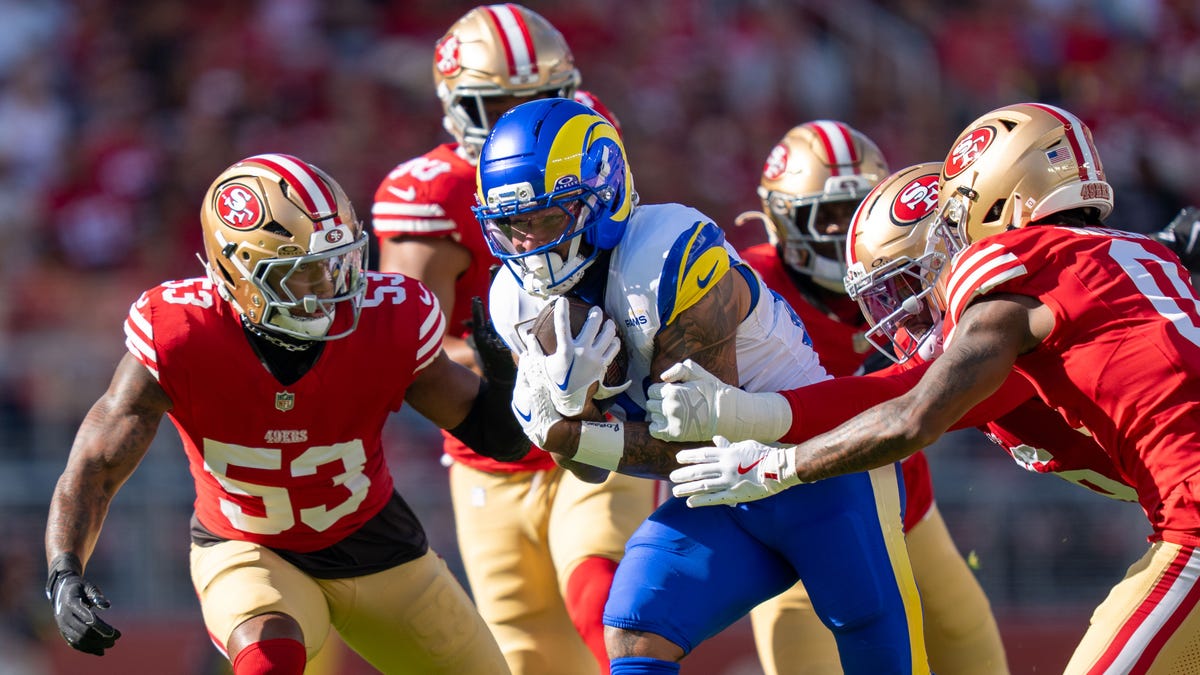
The NFL’s deployment of a Week 1 NFC West rivalry to the Melbourne Cricket Ground (MCG) signals an aggressive pivot in the league’s Global Markets Program. By staging the San Francisco 49ers versus the Los Angeles Rams in Australia, the league is simultaneously testing the elasticity of domestic viewership and the logistical limits of trans-Pacific franchise operations.
Media Rights Disruption: The Netflix Strategic Carve-Out
This matchup marks a watershed moment in sports broadcasting. Netflix’s role as the primary streaming partner for the ‘NFL Melbourne Game’ highlights a calculated fragmentation of media rights. Positioned outside the standard Amazon Thursday Night Football exclusivity—which begins in Week 2—this game serves as a standalone proof-of-concept for Netflix’s high-concurrency live sports infrastructure.
For the consumer, this represents a shift toward a hybrid distribution model. While local markets retain linear access via NBC and KNTV-TV, the broader global audience is funneled into Netflix’s tiered ecosystem ($8.99 to $26.99). This allows the NFL to bypass traditional cable bottlenecks while leveraging Big Tech’s global reach to capture a wider Total Addressable Market (TAM) in the Oceania region.
Tactical Asymmetry: Roster Reinforcements vs. Defensive Volatility
The competitive landscape for the Melbourne game is defined by contrasting personnel strategies. The San Francisco 49ers enter the contest with peak performance leverage; the return of foundational stars Nick Bosa, George Kittle, and Fred Warner from season-ending injuries restores their structural integrity. This veteran core provides a stabilizing force against the environmental disruptions of an international venue.
In contrast, the Los Angeles Rams have adopted a risk-mitigation strategy regarding their defensive interior. Aaron Donald’s absence—due to a focused conditioning program following a brief retirement—leaves a significant tactical vacuum. By keeping Donald in the U.S., the Rams are prioritizing late-season durability over immediate divisional positioning, potentially conceding the line of scrimmage to a fully healthy 49ers offensive unit.
Logistical Friction and the NFC West Standings
The scheduling of this international fixture introduces unique operational burdens. Playing on Friday morning locally to align with U.S. Thursday night primetime forces athletes to navigate extreme circadian disruptions. This friction is exacerbated by the Seattle Seahawks’ early-week victory over New England, which places immediate pressure on both Melbourne participants to keep pace in the division.
The institutional decision to expand the Week 1 footprint to include Wednesday and Thursday games maximizes advertising inventory but compresses recovery windows. The winner of this contest validates their organizational sports science programs; the loser returns to a domestic schedule with a 0-1 deficit and a physically depleted roster.
Institutional Implications for the Global Calendar
Beyond the scoreboard, the MCG venue—with its unique cricket-oriented dimensions—requires specialized field engineering to maintain player safety standards. The success of this operational experiment will dictate the NFL’s 2026 expansion strategy and influence future negotiations for international-only digital rights packages.
As the league concludes this unconventional opening sequence, the data points gathered from Melbourne—ranging from streaming latency on Netflix to player recovery metrics—will redefine the intersection of professional football and global digital media.