
NFL Draft Fallout: Veteran WRs Face Heightened Uncertainty Amidst League-Wide Youth Movement
The 2026 NFL Draft’s unprecedented 36 wide receiver selections have triggered a substantial recalibration of league-wide rosters, placing numerous veteran players in a precarious position. This influx of cost-effective, high-potential talent compels franchises to re-evaluate their receiver corps, leading to strategic decisions regarding potential trades, extensions, and roster cuts. Teams are prioritizing future growth and financial flexibility, directly challenging the value proposition of established veterans.
This league-wide trend creates intense competitive pressure for veteran wide receivers. Their current contracts and performance metrics are under increased scrutiny as teams pivot towards younger, cheaper talent. The sheer volume of drafted players means that even moderately performing recent draft picks are now at risk of being supplanted, creating a cascading effect across depth charts and salary cap management.
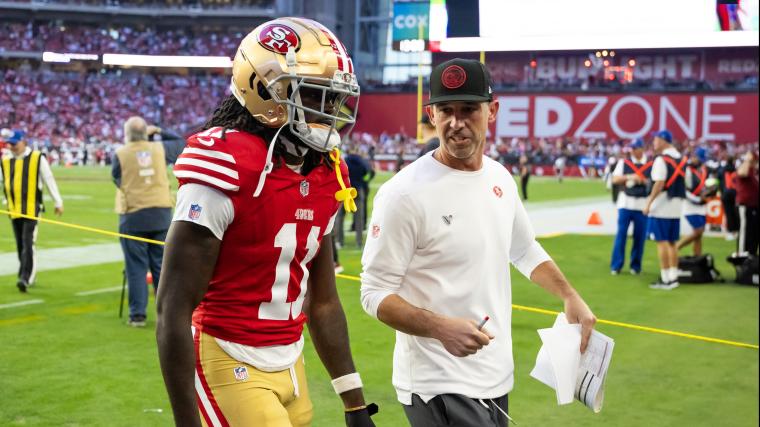
San Francisco 49ers’ Strategic Leverage in Brandon Aiyuk Situation
The San Francisco 49ers are employing a deliberate, leverage-based strategy concerning Brandon Aiyuk’s contract. Their reluctance to expedite a resolution stems from a desire to avoid facilitating his immediate departure, particularly following his prior absence from team activities. By controlling the timeline, the 49ers leverage their contractual rights and Aiyuk’s past actions to maintain negotiation power.
This approach suggests a calculated effort to maximize value or enforce specific team-aligned outcomes rather than succumbing to external pressures. Insider reports, such as those from Matt Maiocco, indicate a persistent stalemate, with no significant developments since Aiyuk’s placement on the reserve/left squad list. The widely circulated sentiment that he is unlikely to play another game for the 49ers underscores the deep division and potential finality of his tenure, irrespective of future transaction scenarios.
This protracted situation exemplifies a common negotiation tactic where teams utilize a player’s contractual status and conduct as leverage. The 49ers’ firm stance highlights their commitment to organizational principles and a willingness to manage prolonged uncertainty, potentially influencing how other franchises approach similar contract disputes with high-profile players.
Philadelphia Eagles’ Proactive Strategy with A.J. Brown and Makai Lemon
Speculation surrounding A.J. Brown’s potential trade from the Philadelphia Eagles to the New England Patriots is amplified by the Eagles’ proactive selection of Makai Lemon in the 2026 NFL Draft. Analysts widely interpret this move as direct preparation for Brown’s eventual departure, signaling a forward-thinking approach to roster management.
General Manager Howie Roseman’s draft-day trade-up for Lemon underscores a clear intent to secure a potential successor capable of filling Brown’s role. This strategic talent acquisition aims to mitigate the impact of losing a key offensive weapon while simultaneously injecting youth and realizing cost efficiencies. The open discussion of this potential trade may also serve to signal Eagles’ intentions to the league, potentially influencing market dynamics and fostering a smoother transition.
The strategic implications for the Eagles involve replenishing draft capital and reducing future salary cap commitments. For the Patriots, it presents an opportunity to acquire an established, high-impact receiver. This scenario exemplifies the intricate financial and strategic calculations underpinning high-stakes player transactions in the NFL.
Los Angeles Chargers’ Internal Focus and Disinterest in Brandon Aiyuk
The Los Angeles Chargers have consistently projected strategic confidence in their existing wide receiver unit, despite external perceptions of a need for a marquee pass-catcher. Decisions such as exercising Quentin Johnston’s fifth-year option and anticipating expanded roles for Ladd McConkey, Tre’ Harris, and KeAndre Lambert-Smith reflect a deliberate internal assessment of their offensive capabilities.
The addition of Brenen Thompson in the fourth round further solidifies the Chargers’ commitment to internal development. This approach suggests the team views its offensive arsenal as sufficiently complete, prioritizing roster growth and strategic depth over acquiring a high-profile veteran receiver. Despite persistent speculation linking the Chargers to wide receivers, including Brandon Aiyuk, the organization has maintained a public stance of disinterest.
This consistent lack of engagement with players like Aiyuk, whose relationship with the 49ers is reportedly strained, indicates a clear strategic direction that does not prioritize such acquisitions. The Chargers’ approach highlights a divergence between media and fan expectations and the team’s internal strategic planning. Their focus on cultivating existing talent and making targeted, cost-effective draft selections suggests a long-term vision optimized for risk management and future financial flexibility.
Broader Implications of the 2026 Wide Receiver Draft Class
The significant number of wide receivers drafted in 2026 serves as a potent indicator of the NFL’s evolving player development and roster construction philosophies. An increasing prioritization of youth and cost-efficiency at this position directly challenges the market value and job security of veteran players.
This demographic shift creates a hyper-competitive environment where established players must demonstrate consistent, high-level performance to justify their contracts. The availability of numerous rookie contracts allows teams to cycle through talent more rapidly, maximizing salary cap efficiency and competitive windows. The fallout from this draft class will likely extend beyond individual player transactions, influencing team-building strategies and contract negotiations league-wide.
Teams that successfully integrate young talent may gain a significant competitive advantage, while those heavily reliant on veteran contracts could face financial constraints and performance plateaus. Ultimately, the 2026 NFL Draft’s impact on veteran wide receivers underscores the cyclical nature of professional sports, necessitating strategic adaptation and a keen understanding of market dynamics for all stakeholders.
Photo by jorono on Pixabay.