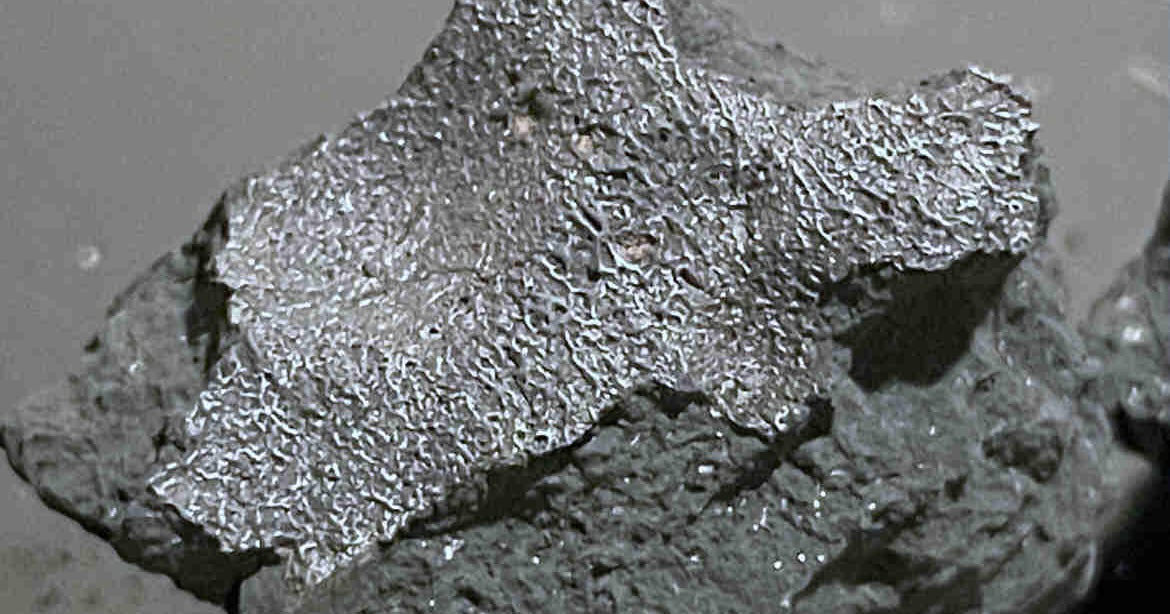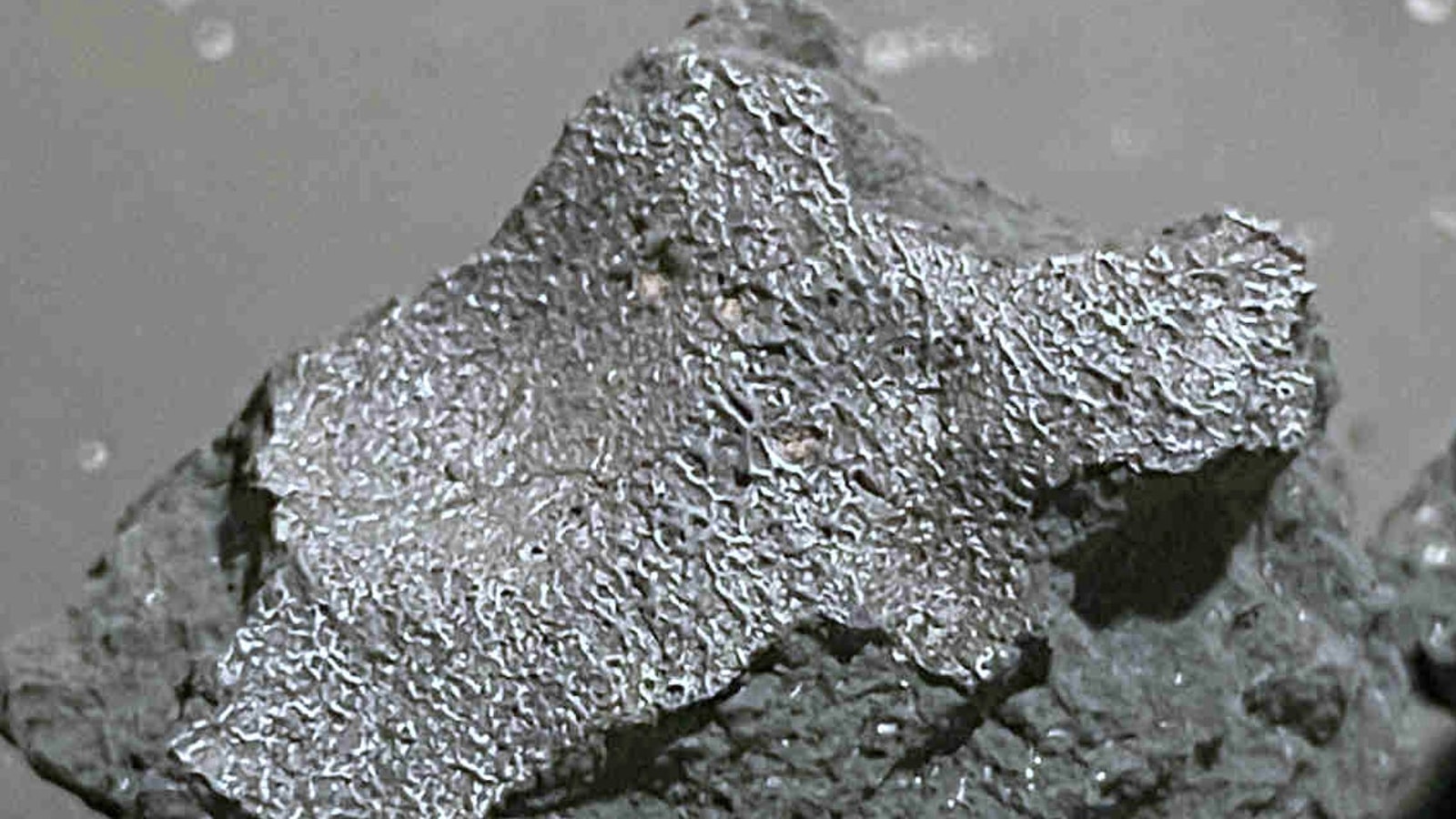
Hillsborough Meteorite: A Pristine Window to Early Solar System Chemistry
On July 16, 2024, a meteor streaked across the New York City sky, culminating in a dramatic sonic boom and the impact of a meteorite through a residential roof in Hillsborough, New Jersey. This extraordinary event immediately garnered global scientific attention, not merely for its rare occurrence as an observed fall, but for the unprecedented scientific value of the recovered material. The meteorite’s pristine condition and unique composition promised critical insights into the early solar system’s chemical evolution, setting the stage for a re-evaluation of established models of proto-planet development and the cosmic distribution of organic matter.
The Analytical Edge: CM1/2 Classification & Unprecedented Preservation
Forensic examination quickly identified the Hillsborough meteorite as a CM1/2 carbonaceous chondrite, a classification denoting an exceptionally rare and primitive type of extraterrestrial material. These meteorites originate from asteroids that have undergone minimal thermal or aqueous alteration since their formation, preserving a unique chemical record of the solar system’s nascent stages, making them invaluable for planetary science. This event marks only the second observed fall of a CM1/2, dramatically amplifying its strategic importance for astromaterial research.
The scientific community’s ability to extract groundbreaking data was critically enhanced by the homeowner’s immediate and judicious actions. By meticulously preserving the fragments using disposable gloves, aluminum foil, and glass jars, the resident prevented contamination and degradation. This exemplary rapid response ensured the material remained in a state described by NASA’s Mike Zolensky as among the “most pristine CM1/2 meteorites we know of.” Such meticulous handling is an operational imperative for extraterrestrial samples, directly influencing the fidelity of subsequent laboratory analyses and the reliability of scientific conclusions drawn from these primordial fragments.
Revolutionary Discoveries: Primitive Brines & Prebiotic Chemistry
Two pivotal findings from the international research team, including experts from the SETI Institute and NASA, have significantly advanced our understanding. First, the presence of concentrated salty fluids, or brine, within the meteorite’s parent asteroid was a revelation. This extensive aqueous alteration involving brines on a primitive asteroid was previously unknown for this specific proto-planet type. This discovery fundamentally challenges existing astrophysical models of early asteroid evolution, necessitating a re-evaluation of the thermal and chemical environments prevalent in the early solar system. It provides new leverage for understanding the complex interplay of water, salts, and silicates in planetesimal formation, potentially reshaping our understanding of where and how volatile compounds were distributed.
Second, further analysis confirmed the meteorite contained a rich suite of prebiotic molecules and other fundamental “building blocks of life.” This finding directly supports the hypothesis of exogenous delivery, suggesting that extraterrestrial sources contributed essential organic compounds to early Earth. The presence of these complex organic compounds within a pristine CM1/2 chondrite significantly strengthens the argument for this mechanism in seeding planetary surfaces with the chemical precursors necessary for abiogenesis. This insight holds profound implications for astrobiology, directly influencing future research into the universality of life’s chemical origins and the search for life beyond Earth.
Strategic Impact on Astromaterial Science & Exploration
The comprehensive study of the Hillsborough meteorite underscores the necessity of international and inter-institutional collaboration. The involvement of a diverse team, leveraging specialized infrastructure from organizations like the SETI Institute and NASA’s Ames and Johnson Space Centers, enabled a multi-faceted approach, from spectroscopy to isotopic analysis. The subsequent publication in *Science Advances* reflects the rigorous validation inherent to the scientific ecosystem.
This event also highlights the disproportionate scientific value of “observed falls” – meteorites recovered rapidly after impact – over “finds.” Observed falls offer an unparalleled opportunity to study extraterrestrial material before significant terrestrial contamination or weathering, preserving original chemical and isotopic signatures. This distinction is critical for confidently attributing observed compounds like brines and organics to extraterrestrial processes. The rarity of such pristine, well-documented events emphasizes the strategic importance of global meteor detection networks and public awareness for rapid recovery.
Furthermore, the detailed analysis of the Hillsborough meteorite provides invaluable context for ongoing and future space exploration, particularly sample return missions to asteroids and comets. Data derived from this pristine terrestrial recovery directly informs mission design, instrument selection, and sample handling protocols for spacecraft like OSIRIS-REx and Hayabusa. This meteorite effectively serves as a natural, unscheduled sample return, offering a benchmark against which planned extraterrestrial retrievals can be contextualized and optimized for maximum scientific yield.
Catalyzing Future Research and Public Engagement
The findings from the Hillsborough meteorite are poised to influence long-term research trajectories in astrobiology and planetary science. The discovery of novel aqueous alteration processes on primitive asteroids will stimulate new theoretical modeling and experimental work. Confirmed presence of pristine prebiotic molecules will continue to fuel investigations into life’s chemical universality and its potential on exoplanets. Ongoing study of these fragments, utilizing increasingly sophisticated analytical techniques, promises iterative refinements in our understanding of the cosmos.
Finally, the dramatic circumstances of the meteorite’s arrival generated significant public and media attention, offering a unique opportunity for scientific outreach. Such events foster public engagement, demonstrating the tangible connection between celestial phenomena and terrestrial understanding. The homeowner’s role in preserving the sample also underscores the potential for citizen science to contribute meaningfully to high-impact research, reinforcing the importance of public awareness and responsible action in rare scientific opportunities.