
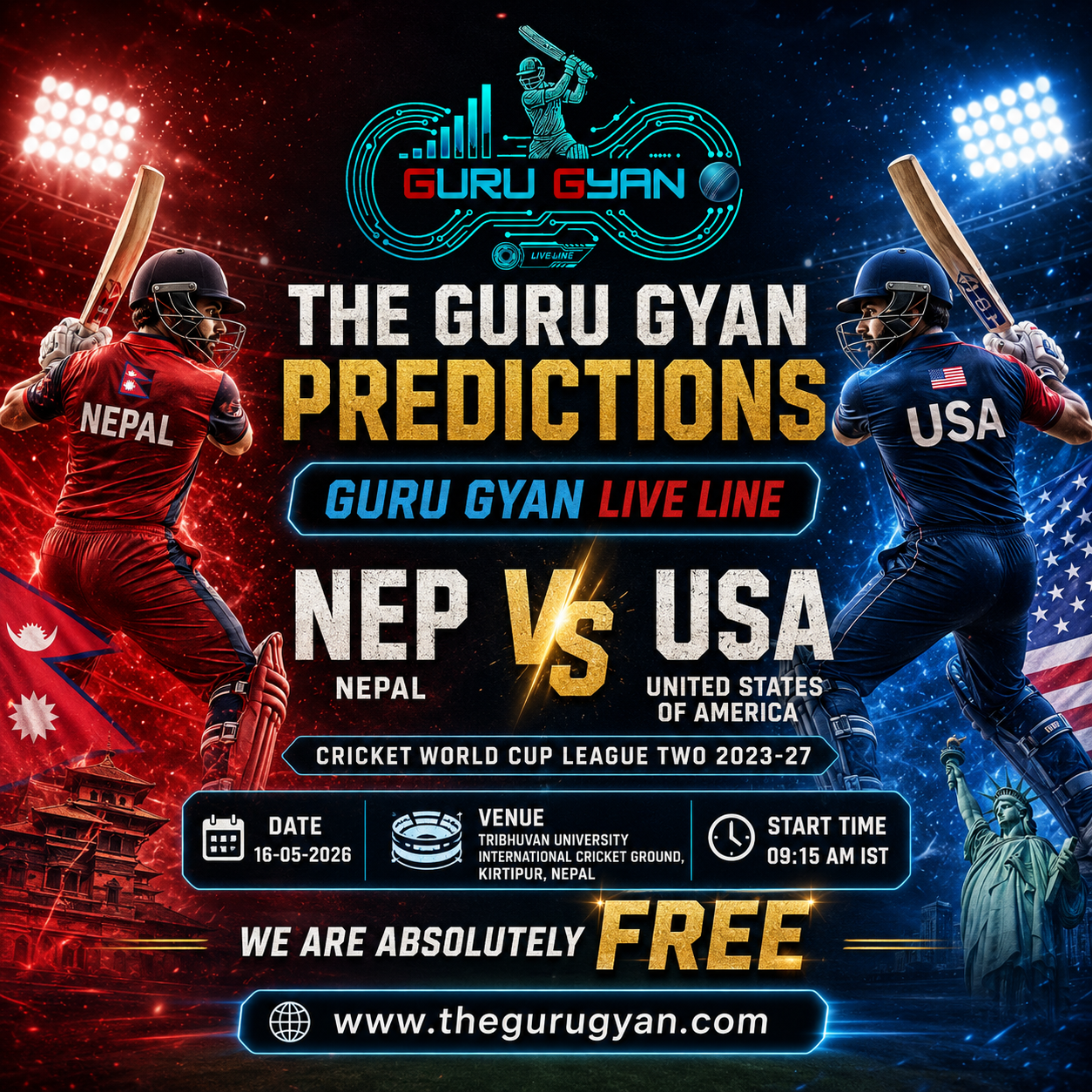
Macro-Institutional Context: The 2023-27 Cycle
Match 106 of the ICC Cricket World Cup League 2 is a pivotal inflection point in the 2023-2027 cycle, a period governing the financial and competitive hierarchies of Associate Member nations. For the United States, currently holding second place, this fixture serves as a litmus test for operational consistency in idiosyncratic away environments. The league’s structural design prioritizes sustained performance, where final standings dictate access to global qualifiers and subsequent ICC development funding allocations.
Strategic positioning within the upper tier offers a performance buffer, allowing for tactical experimentation and squad rotation. The U.S. has capitalized on this margin, securing 18 victories against 7 losses. This record signals a mature organizational framework that successfully translates individual statistical output into a cohesive competitive strategy, aiming for high-leverage outcomes in the global hierarchy.
Geospatial and Operational Variables of Kirtipur
The Tribhuvan University International Cricket Ground presents a distinct operational challenge characterized by historical scoring suppression. With a first-innings average of 215 and a second-innings average of 195, the venue necessitates a departure from high-velocity aggression. Data indicates a surface that rewards disciplined line-and-length bowling and surgical run accumulation over explosive power-hitting.
For visiting squads, the strategic pivot involves high-efficiency middle-over management. The statistical drop in second-innings totals suggests pitch deterioration, elevating the toss to a high-leverage event that dictates the match’s tactical framework. Nepal’s familiarity with the atmospheric density and soil behavior at Kirtipur provides a structural advantage, requiring opponents to adapt technical approaches within the opening powerplay to mitigate unfamiliar bounce and spin deviation.
Statistical Core: Performance Leverage
The U.S. competitive edge is anchored by the record-breaking output of Milind Kumar, who has amassed 1,020 runs in this cycle. This provides a reliable statistical floor, enabling the batting unit to absorb pressure. Kumar’s role as an anchor is critical in Kirtipur, where low par scores place a premium on wicket preservation. Complementing this is the efficiency of Saurabh Netravalkar; his 37 wickets represent a cornerstone of the USA’s defensive capability.
The synergy between Kumar’s accumulation and Netravalkar’s strike rate creates a performance leverage that is difficult to disrupt. Netravalkar’s economy rate is particularly vital in low-scoring environments, as disciplined opening spells can neutralize an opponent’s scoring potential before spin-heavy phases begin. However, this reliance introduces a strategic vulnerability should these key performers be neutralized early.
Tactical Resilience: Post-Scotland Recalibration
The USA’s recent two-run DLS loss to Scotland—where Scotland posted 321/6 in a rain-shortened 47-over innings—serves as a case study in weather-affected match management. Despite the defeat, maintaining competitiveness until the final delivery highlighted significant tactical resilience. The encounter exposed the challenges of defending against high-velocity scoring when standard tactical plans are disrupted by external environmental factors.
Recovering from a DLS-governed setback requires psychological and strategic recalibration. The coaching staff must optimize chase logic under revised targets and refine death-bowling efficiency. Integrating these lessons into the Kirtipur strategy will be decisive in maintaining their second-place standing against a Nepal side bolstered by intense local support and organic infrastructure growth.
Downstream Implications and Market Growth
The outcome in Kirtipur will have immediate effects on the league table volatility. A USA victory would consolidate their position as a top-tier Associate nation capable of winning in hostile conditions, while a Nepal win would tighten the standings for top-four contenders. Beyond the pitch, these results drive sports commerce; consistent USA performance increases the commercial viability of cricket in North America, attracting institutional capital and sponsorship.
Similarly, Nepal’s performance remains a primary driver of domestic sports markets. The high attendance at Kirtipur demonstrates a robust consumer base attractive to regional stakeholders. Ultimately, Match 106 is more than a contest; it is a data point in the shifting power dynamics of global cricket, signaling the narrowing gap between professionalized Associate nations and lower-ranked Full Members.

Photo by Wolfgang-1958 on Pixabay.