North Dakota State University’s (NDSU) formal entry into the Mountain West Conference signifies a pivotal structural evolution in collegiate football. This transition, marked by the Bison’s September 12, 2026, road game at Falcon Stadium, integrates a perennial FCS powerhouse into the FBS landscape.
The matchup against the Air Force Falcons is a critical early test of NDSU’s competitive viability and the Mountain West’s inherent balance. Facing a service academy renowned for its disciplined, run-heavy offense presents NDSU with a unique tactical challenge, setting the stage for their conference trajectory.
Strategic Imperatives of NDSU’s FBS Ascent
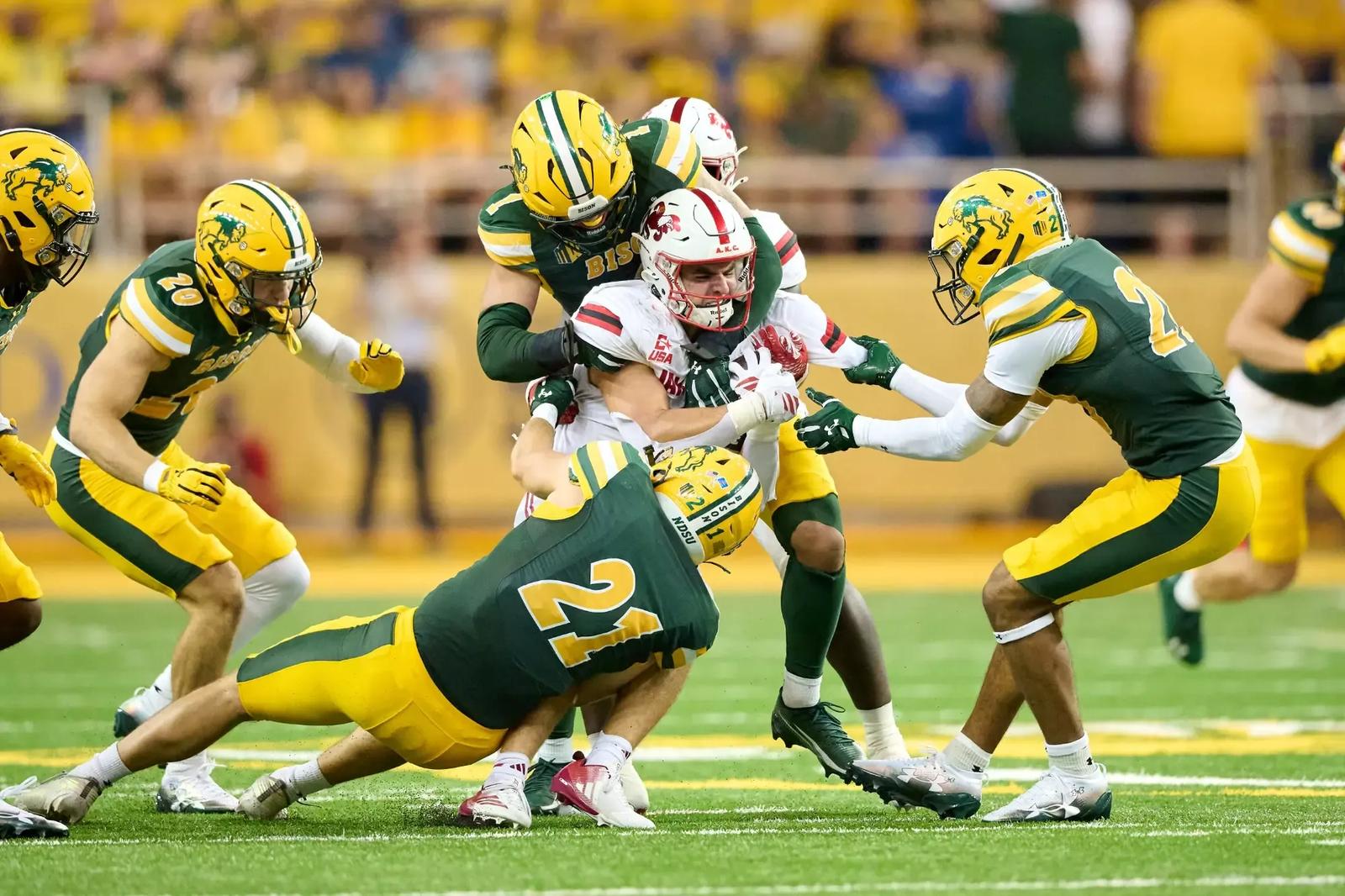
NDSU’s early 2026 season performance, highlighted by a 2-0 start and a commanding 38-0 shutout of Fordham, showcases immediate defensive efficiency. The Bison defense has emerged as a high-leverage unit, leading the nation in defensive and special teams touchdowns and forcing four interceptions, underscoring its opportunistic nature.
This defensive playmaking serves as a strategic buffer, mitigating the inherent risks of FBS transition. By generating turnovers and non-offensive scores, NDSU lessens the offensive burden required to sustain drives against superior FBS depth and talent.
The Bison’s demonstrable roster depth, evidenced by player rotation during shutouts against Jacksonville State and Fordham, suggests a program meticulously prepared for this elevation, with a developmental pipeline aligned with FBS demands.
Air Force’s Ground-and-Pound Philosophy
The Air Force Falcons, fresh off a 34-0 shutout of Duquesne, exemplify a deliberate, ground-controlled offensive identity. Amassing 431 rushing yards on 58 carries while attempting only 19 passes highlights a strategic focus on clock management and physical dominance.
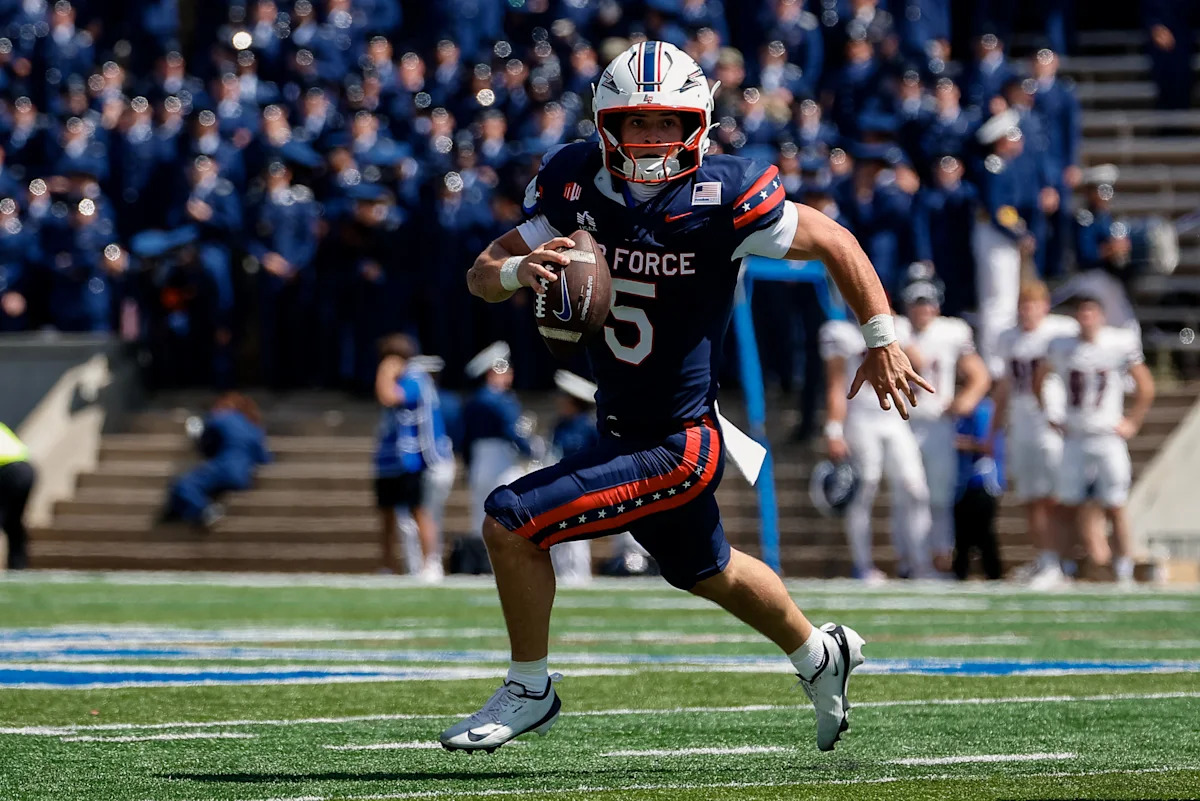
Quarterback Liam Szarka’s dual-threat capability, contributing two rushing touchdowns, is central to the Falcons’ triple-option execution. This offensive system necessitates exceptional defensive discipline from opponents, as any lapse can result in substantial gains on the ground.
For NDSU, the tactical challenge is to leverage its turnover-forcing defense against an Air Force offense designed to minimize passing opportunities, thereby limiting potential turnovers. This creates a fundamental clash between defensive opportunism and offensive risk aversion.
Media Footprint and Financial Integration
The broadcast of this debut on FS1 (Fox Sports 1) underscores NDSU’s immediate media value to the Mountain West. National exposure, a key driver of conference realignment, is amplified by the 10 p.m. ET kickoff, designed to capture a broad audience.
NDSU’s extensive regional media presence, broadcast through the 25-station Pioneer Seeds Bison Sports Network, complements national coverage. This integrated approach supports the program’s transition and enhances its commercial and promotional reach.
Further embedding NDSU within the conference’s media ecosystem, the Bison Football Coaches Show will air on the MW+ digital platform, supporting expanded recruiting efforts and maximizing the financial benefits of their FBS elevation.
Market Valuation and Competitive Parity
Oddsmaker sentiment, reflected by DraftKings, designates NDSU as a 2.5-point road favorite, indicating belief in their immediate FBS readiness. This valuation positions NDSU not as a typical newcomer, but as a program expected to compete at a high level from the outset.
The posted total of 47.5 points suggests an anticipated defensive struggle, consistent with both teams’ recent shutout victories. The narrow moneyline spread (-134 NDSU, +110 Air Force) signifies high competitive parity, implying the game hinges on marginal execution differences.
Betting markets often anticipate institutional strength, and NDSU’s favorite status at Falcon Stadium reflects perceived structural advantages rooted in their historic winning culture and recent defensive metrics.
Institutional Stakes and Conference Realignment
NDSU’s successful integration is crucial for the Mountain West’s standing within the competitive Group of Five landscape. The Bison add significant brand equity, a dedicated fanbase, and championship pedigree to the conference during a period of extensive realignment.
The selection of Air Force as the debut opponent is strategically astute, pairing NDSU against a stable, well-coached program. A Bison victory would immediately signal championship aspirations, while an Air Force win would reinforce existing conference hierarchies and highlight the challenges of FBS transition.
This game also serves as a benchmark for the Mountain West’s scheduling strategy, placing a high-profile entrant in a challenging road environment to maximize engagement. The outcome will likely influence future scheduling decisions and media rights valuations.
Key Tactical Matchups
NDSU quarterback Nathan Hayes, who delivered an efficient 18-of-22 for 210 yards and two touchdowns against Fordham, must manage the game effectively against an Air Force defense that also recorded a shutout. His poise will be tested against a disciplined unit.
The Falcons’ defense, while secondary to their rushing attack, demonstrated fundamental execution by holding Duquesne scoreless. The NDSU offensive line and Hayes’ ability to distribute the ball will be crucial in generating consistent drives against this stoic unit.
The effectiveness of NDSU running back DJ Scott, who scored twice against Fordham, will be vital in controlling possession and limiting Air Force’s offensive opportunities. Establishing a complementary run game is key to neutralizing the Falcons’ time-of-possession advantage.
Environmental and Logistical Considerations
Playing at Falcon Stadium in Colorado Springs introduces altitude as a significant environmental factor. The physiological demands of performing at nearly 7,000 feet can impact fourth-quarter stamina, testing NDSU’s conditioning.
The 10 p.m. ET kickoff (8 p.m. local time) creates a distinct prime-time atmosphere, potentially benefiting the home team. Falcon Stadium’s capacity of 39,441 provides a substantial home-field advantage, challenging NDSU’s communication and composure in their first FBS conference road contest.
These external factors often prove decisive in closely contested games. NDSU’s adaptability to altitude and a hostile environment will be a strong indicator of their readiness for a full FBS conference schedule.
Conclusion: A New Era Dawns
With both teams entering undefeated and boasting dominant defensive performances, this game transcends a typical early-season matchup. It heralds a new chapter for NDSU and a critical juncture for the Mountain West Conference as it navigates realignment.
Key performers, from NDSU’s interception-return specialist Marion Moore to Air Force’s triple-option architect Liam Szarka, will be central figures in this high-stakes strategic narrative. The September 12 result will provide the first definitive data on NDSU’s ability to translate FCS success to the FBS Mountain West.
Ultimately, the game’s significance lies at the confluence of tradition and transformation. NDSU’s capacity to counter Air Force’s methodical offense while maintaining its own defensive scoring efficiency will shape immediate conference power dynamics and set the tone for the 2026 season.