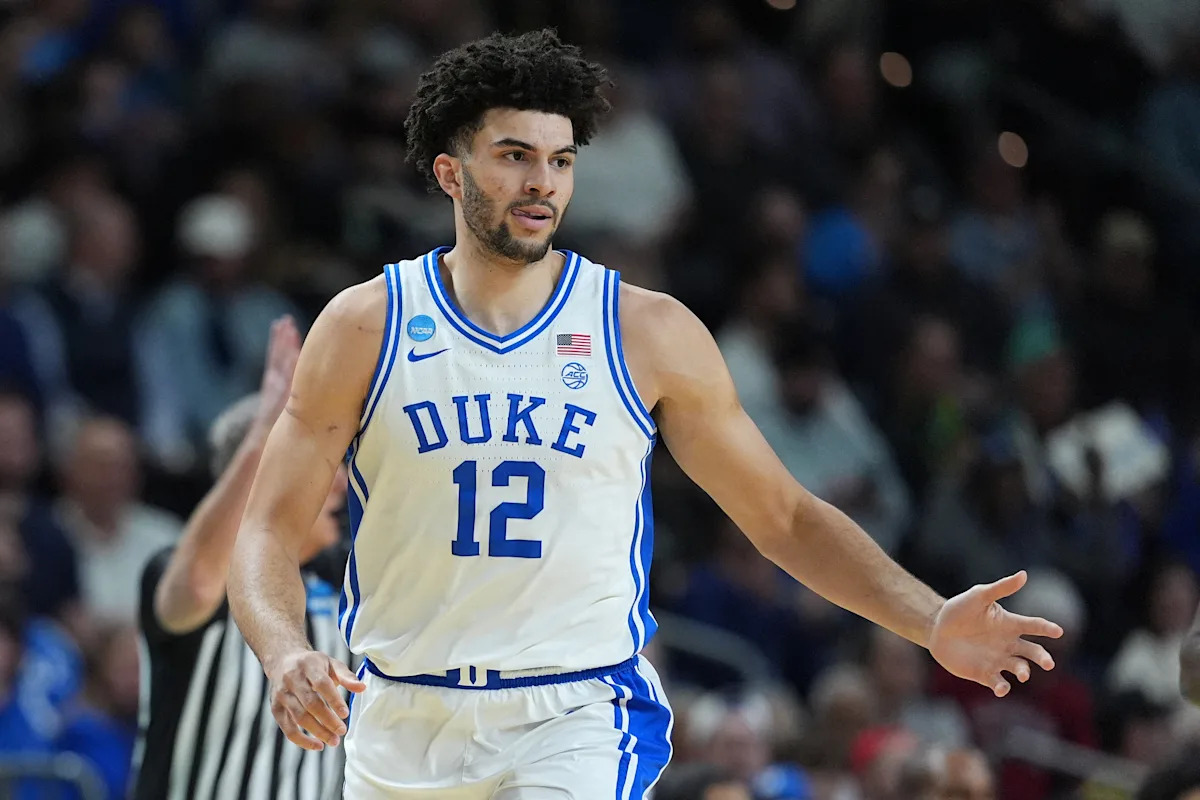
The conclusion of the NCAA Men’s Basketball Tournament’s second round has finalized the Sweet 16 participants, providing concrete data on seed performance and the strategic advantages that translate into high-stakes single-elimination success.
Seed Compression and Upset Kinetics
The advancement of elite seeds (No. 1 Duke, No. 2 Houston, No. 3 Michigan State) confirms institutional stability at the highest tiers. However, the elimination of No. 3 Gonzaga by No. 11 Texas significantly demonstrates the structural compression within seeding models; a two-seed gap offers minimal insulation against superior execution over 40 minutes.
Texas’s progression immediately impacts predictive models and betting markets by validating the efficacy of lower seeds capable of generating matchup advantages. This outcome signals a critical failure in Gonzaga’s ability to manage the variance introduced by a lower seed employing an effective tactical game plan.
The Termination of Cinderella Narratives
The journey for No. 11 VCU ended against No. 3 Illinois, illustrating the ceiling for momentum-driven teams facing defensively sound, tactically mature programs. Illinois’ decisive second-half surge (outscoring VCU by 23 points over 23 minutes) indicated superior roster depth and mid-game strategic adaptability, overpowering VCU’s tactical stalling.
Conversely, No. 12 High Point’s survival maintains significant narrative leverage heading into their matchup with No. 4 Arkansas. High Point has already exceeded baseline expectations, shifting the pressure calculus entirely onto the higher seed to avoid the punitive institutional signaling associated with a Round of 32 exit.
Operational Excellence in Margin-of-Error Contests
The Nebraska vs. Vanderbilt game served as a case study in operational execution, where possession management determined progression. Nebraska’s late transition layup by Braden Frager, securing a 74-72 lead with two seconds left, underscores the premium placed on end-of-possession decision-making when fatigue compromises defensive integrity.
Vanderbilt’s earlier momentum swing, neutralized by a crucial defensive lapse preceding Frager’s score, highlights the necessity of high-efficacy scoring options to prevent opponent runs in compressed timeframes. Such tight contests expose structural weaknesses in end-of-game coaching strategies, often overriding seed-derived talent advantages.
Sweet 16 Strategic Implications
The confirmed No. 3 Illinois vs. No. 2 Houston pairing sets a strategic tone: Illinois’ demonstrated offensive scalability against varied defenses will test Houston’s historically dominant defensive identity. Illinois’ proven ability to accelerate pace after halftime suggests an offensive profile less reliant on external defensive disruption.
For the remaining underdog, High Point, their extended run demands immediate recalibration of scouting reports by Arkansas, as their high-leverage survival against the Round of 64 competition yields crucial, immediate performance data superior to historical seeding projections.
Institutional Signaling and Stakeholder Value
The success of No. 11 Texas directly influences its recruitment leverage, providing tangible evidence of overcoming higher-seeded challenges—a key differentiator in attracting elite prospects. For Gonzaga, elimination at this stage imposes a negative ROI calculation on donor confidence and media narrative expectations for consistent deep tournament runs.
Advancing programs like Duke and Michigan State reinforce the market’s preference for institutional infrastructure capable of absorbing the logistical and psychological demands of sustained elite performance. Mid-major programs like VCU, despite competitiveness, demonstrate the persistent barrier of rotational depth against established national powers.
Market Dynamics and Narrative Capital
The intensity of media coverage around single-elimination volatility fuels significant capital investment in real-time narrative construction. Focus on individual contributions (e.g., Andrej Stojakovic’s scoring output for Illinois) generates immediate, marketable storylines essential for viewership and sponsorship valuation.
The duality of outcomes—dominant victories versus razor-thin margins—appeals to both segments of the market: those valuing predictable dominance and those financially engaged in high-tension variance.
Strategic Context of Tiered Performance
The performance disparity among top seeds—from Duke’s seemingly efficient win over No. 9 TCU to closer battles elsewhere—suggests variations in matchup difficulty or systemic preparation alignment, not uniform strength across the No. 1 seed cohort.
The presence of No. 12 High Point outside the top-four expected seeds in its quadrant signifies a major structural shift, forcing opponents to prioritize analysis of recent, high-stress performance data over preseason projections. This analytic pivot heavily favors institutions with robust internal data processing capabilities.
Capital Flow and Investment Validation
The sustained advancement of No. 2 Houston and No. 3 Michigan State validates long-term institutional investments in recruiting pipelines and program infrastructure, yielding compounding returns in high-stakes performance.
The zero-sum dynamic of upsets dictates that every lower-seed win directly reduces the perceived prestige and potential revenue stream tied to the eliminated higher seed, impacting budget forecasting across the bracket. VCU’s exit reinforces the barrier: momentum is insufficient against teams possessing systemic depth needed for multi-round success.
Evolving Bracket Calculus
As the field contracts to the Sweet 16, analysis shifts from identifying surprises to evaluating tactical resilience against opponents proven capable of winning ‘ugly’ and adapting under pressure.
Illinois’ demonstrated ability to manipulate tempo against VCU suggests a strategic maturity ready for the defensive imposition characteristic of Houston. The remaining bracket demands preparation against teams that have already validated their ability to execute under maximal duress.
The presence of No. 12 High Point and No. 11 Texas elevates the uncertainty coefficient for Elite Eight projections, driving media focus toward these emergent, non-traditional narratives. This outcome validates the core tenet of single-elimination sports: immediate execution resilience often supersedes long-term statistical projection, necessitating continuous risk reassessment based on verifiable performance metrics.