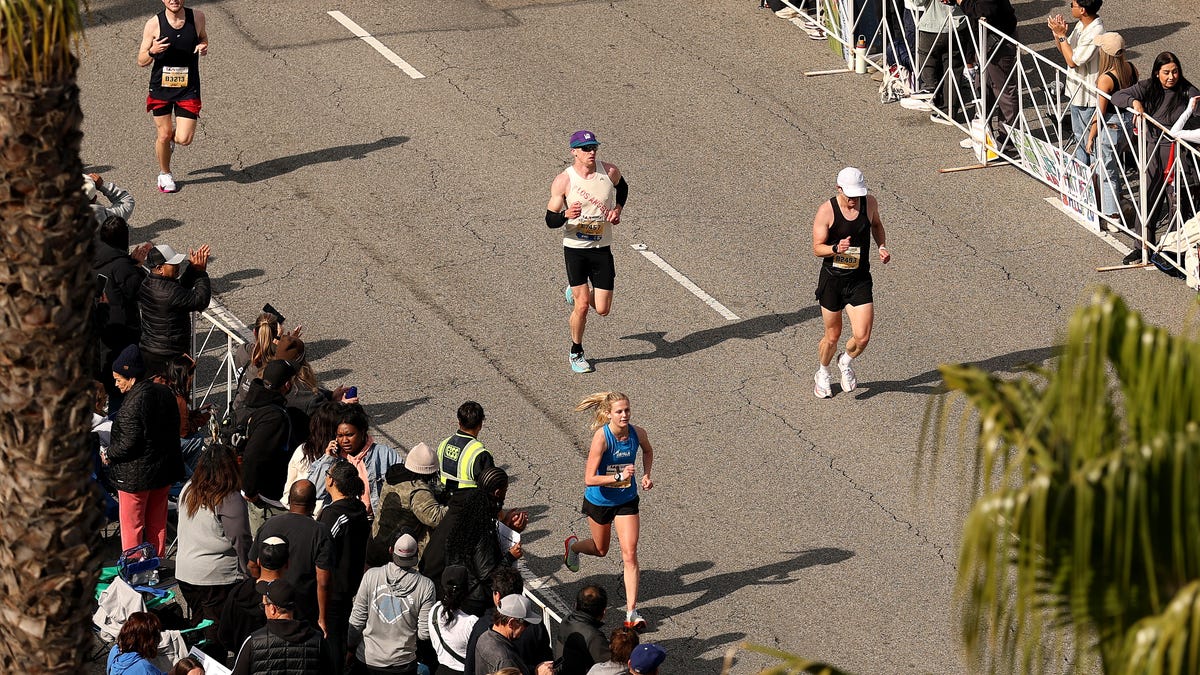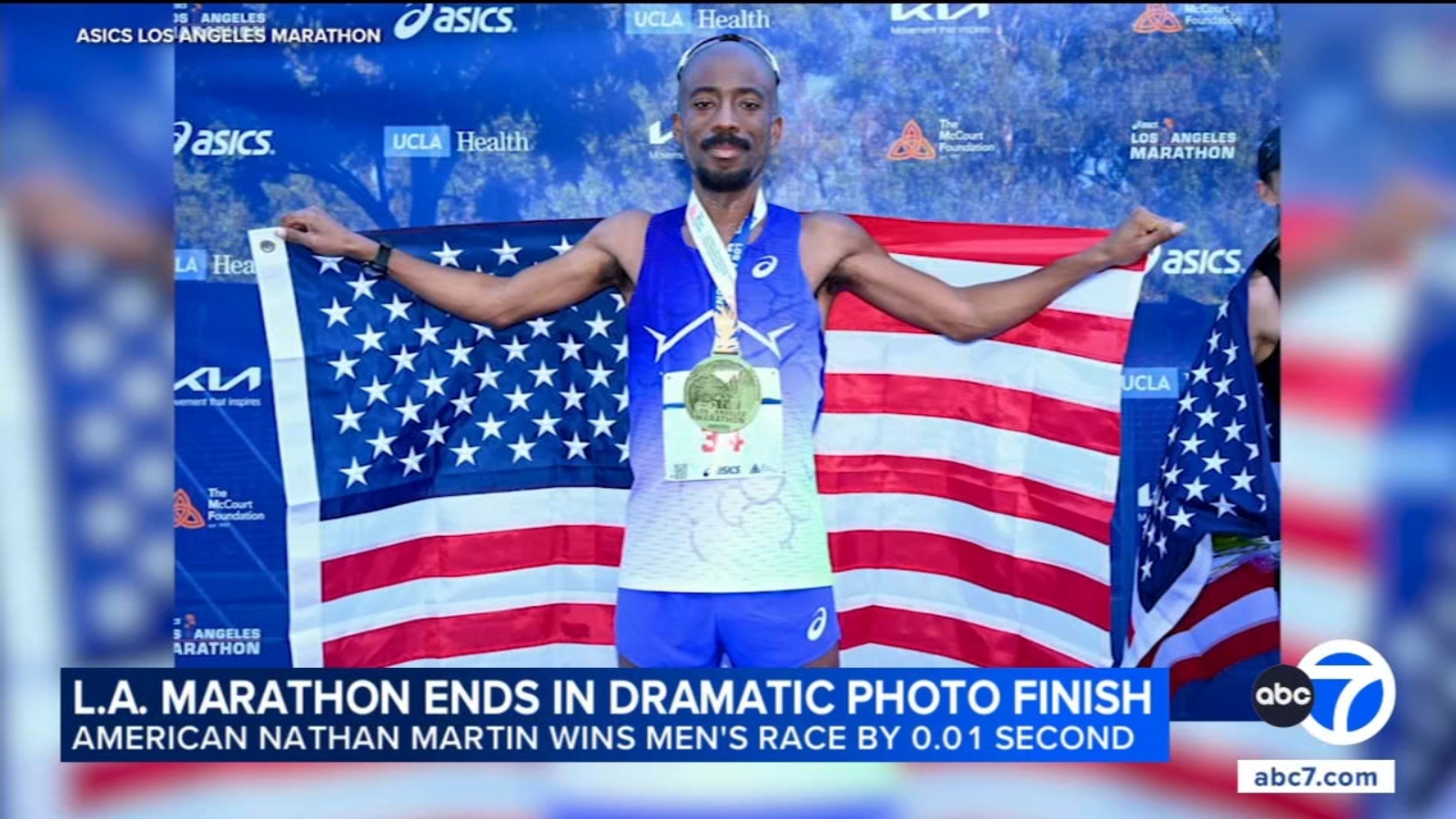
The 41st Los Angeles Marathon concluded with a statistical anomaly that redefines the margins of elite distance running. American Nathan Martin secured a victory over Kenya’s Michael Kimani Kamau by a recorded 0.01 seconds—the narrowest margin in the event’s history. This finish highlights a critical shift in tactical execution, where anaerobic capacity in the final sprint phase superseded the traditional aerobic attrition of the preceding 26 miles.
Martin’s performance, clocked at 2:11:16.50, underscores the escalating competitiveness of the domestic elite field. It marks the second consecutive year an American male has claimed the top podium spot. The race was decided by a high-intensity surge on Santa Monica Boulevard, where Kamau’s physical collapse at the tape illustrated the extreme physiological toll of maintaining pace under immediate pursuit.
The Marathon Chase and Financial Incentives
The operational success of the event was further defined by the ‘Marathon Chase,’ a staggered-start format pitting the elite women against the men with a 15:45 head start. Priscah Cherono of Kenya utilized this structural advantage to cross the finish line first overall in 2:25:18.31, securing a $10,000 performance bonus. This incentive structure successfully prioritizes aggressive front-running over conservative pack tactics.
At age 45, Cherono’s victory challenges conventional assumptions regarding the peak performance window for elite female marathoners. Her ability to maintain a 2:25 pace after a significant pandemic-era hiatus suggests that veteran athletes may possess strategic advantages in pacing and recovery that compensate for a decline in raw explosive speed. American Kellyn Taylor finished second in 2:27:36, reinforcing the depth of the current U.S. women’s distance roster.
Strategic Implications of the Photo Finish
The 0.01-second differential suggests a convergence in global training methodologies that has flattened the performance curve between international and domestic athletes. By overtaking a fading leader in the final meters, Martin demonstrated a superior capacity for late-stage anaerobic output. For Kamau, the loss highlights the risks of front-running strategies that fail to account for the psychological momentum of a closing pursuer.
The presence of Ethiopia’s Enyew Nigat in third (2:14:22.22) rounds out a podium representing the three major powers in global distance running: the U.S., Kenya, and Ethiopia. This geographic diversity ensures the LA Marathon remains a premier destination for international talent seeking to build professional profiles in the North American market.
Logistical Infrastructure and Urban Impact
Organizers staged the 41st edition a week earlier than usual to de-conflict with the Academy Awards. This strategic scheduling ensured adequate security and transportation infrastructure, as both events demand significant municipal resources. The route from Dodger Stadium to Century City served as a functional corridor through Los Angeles’s economic centers, requiring massive coordination to manage 27,000 participants and avoid the gridlock associated with high-profile Hollywood ceremonies.
Ultimately, the 2026 results serve as a benchmark for both athletes and organizers. The narrow margin of victory may prompt a re-evaluation of finish-line technology and officiating protocols to ensure absolute precision in future high-stakes finishes.