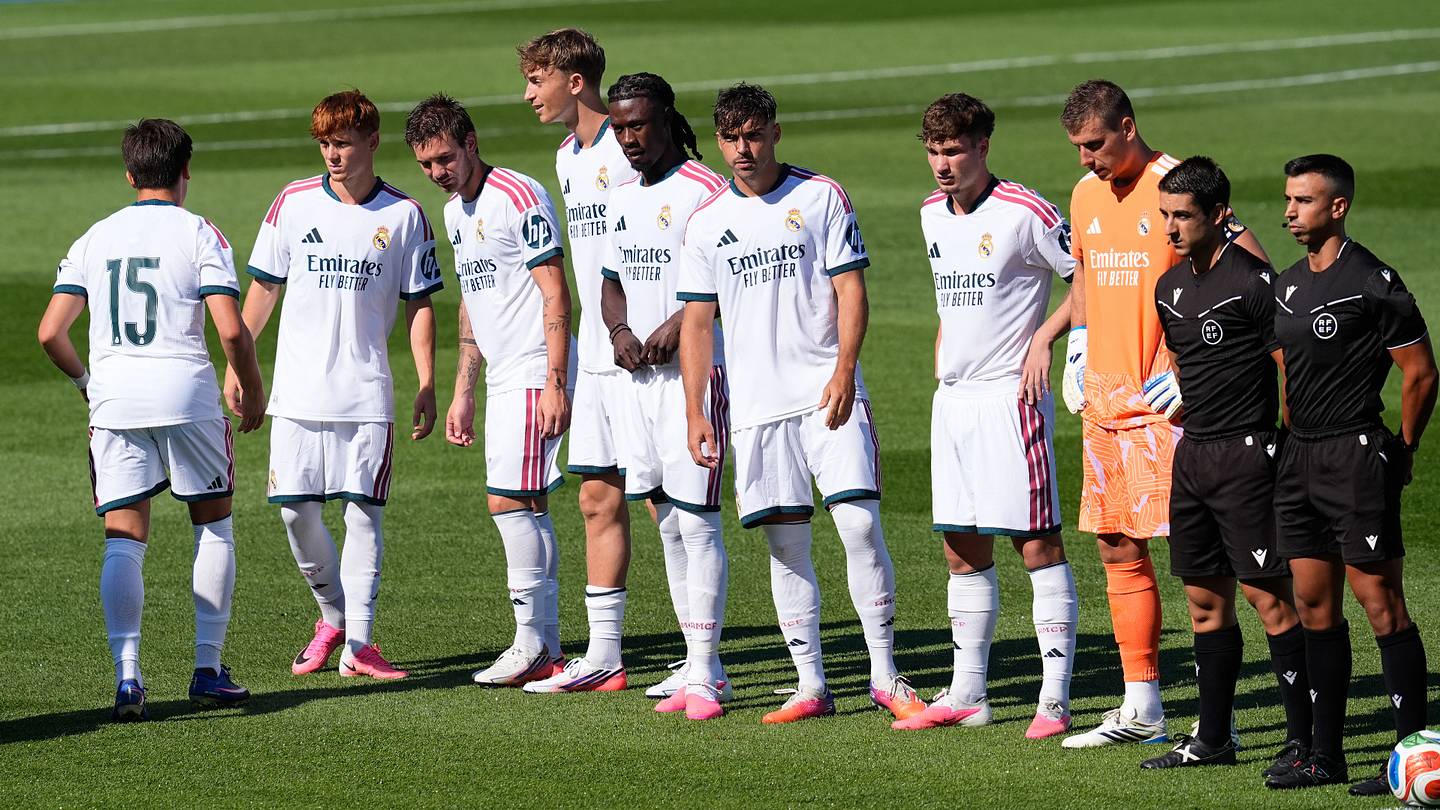
The reappointment of José Mourinho at Real Madrid signifies a decisive institutional pivot by Florentino Pérez, designed specifically to disrupt the domestic hegemony established by Hansi Flick’s Barcelona. This second tenure is characterized by a return to strict operational secrecy, prioritizing tactical re-engineering over the traditional commercial obligations of a global preseason.
The Strategic Utility of Information Asymmetry
The media blackout imposed for the friendly against Leganés at Valdebebas—limiting broadcast access to twenty minutes—is a calculated effort to preserve an information advantage. By restricting visibility, the technical staff can implement structural adjustments and defensive transitions away from rival scouting and the immediate, often reactionary, scrutiny of sports journalism. This controlled environment facilitates high-intensity experimentation, allowing Mourinho to integrate senior veterans with academy prospects without the pressure of public performance metrics.
This level of privacy serves as a strategic asset for a manager seeking to redefine his tactical identity. It provides a buffer to manage the squad’s evolution following the 2026 FIFA World Cup, ensuring that early-stage errors remain internal lessons rather than permanent media narratives.
Load Management and Midfield Leadership
Kylian Mbappé’s absence from the Leganés fixture reflects sophisticated load management protocols essential in a post-World Cup cycle. Avoiding the financial and operational risk of a premature return, the coaching staff has prioritized long-term availability. In contrast, Fede Valverde’s transition into the captaincy provides a vital tactical anchor. His return to the starting XI signals the beginning of the integration phase for the core leadership group, essential for translating Mourinho’s rigid instructions to younger talents like Raúl Asencio and Daniel Yáñez.
Institutional Pressures and Competitive Benchmarking
Following a period of domestic silver medals and Champions League frustrations, Pérez’s reliance on Mourinho is a return to a proven counter-insurgency model. The objective is clear: neutralize Flick’s tactical consistency and restore Real Madrid to the pinnacle of European football. While the 1-0 victory over Alcorcón was functional, the Leganés match serves as a high-stakes laboratory. With Trent Alexander-Arnold and Andriy Lunin among the ten first-team players involved, the focus shifts to testing the compatibility of world-class profiles with a more disciplined, reactive system.
Brand Scarcity and Financial Imperatives
The “Special One” brand continues to generate immense value, paradoxically heightened by this strategy of exclusivity. By limiting access, the club increases its perceived brand value through scarcity. However, the financial viability of this hermetic approach hinges on competitive success. Real Madrid requires immediate results to sustain a significant wage bill and future market maneuvers, making these private sessions at the Estadio Alfredo Di Stéfano the literal foundation of the club’s 2026-27 fiscal and sporting trajectory.
Conclusion: The Performance-First Paradigm
The friendly against Leganés is a microcosm of the new era: a balance between player welfare, tactical secrecy, and institutional urgency. As August approaches, the success of these private experiments will be validated on the global stage. For now, the focus remains on the granular details of positioning and psychological conditioning, as Mourinho attempts to convert a media blackout into a competitive masterclass.