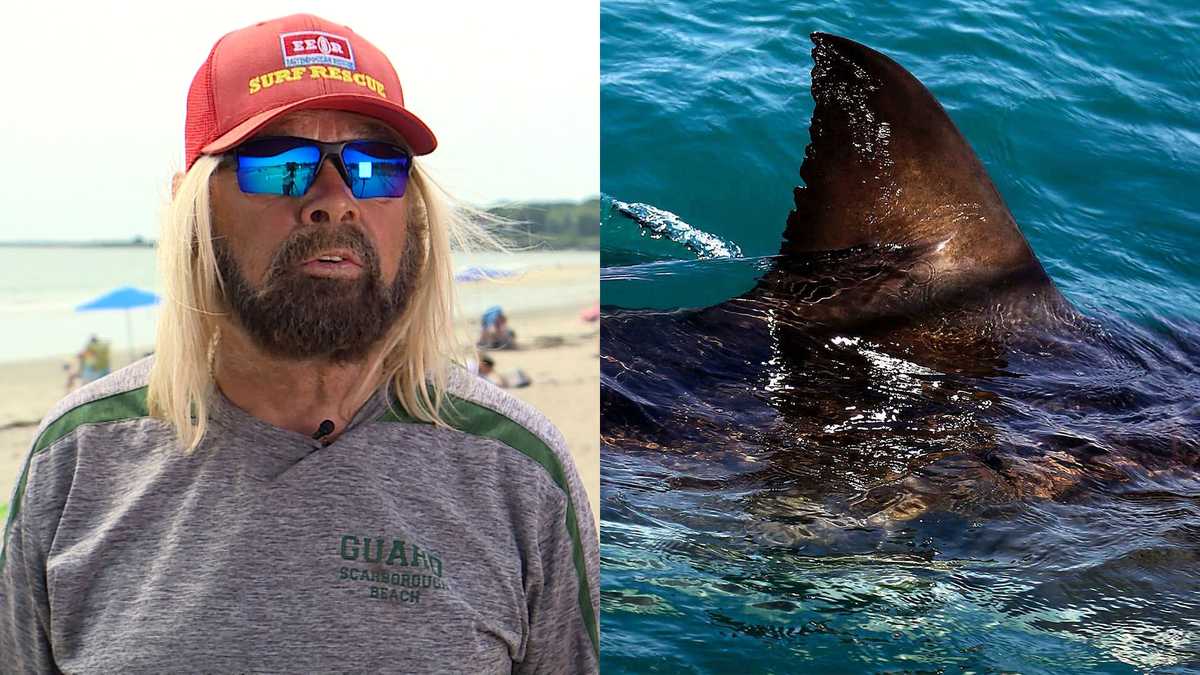
A recent encounter where a Maine lifeguard was pulled underwater by a great white shark off Scarborough Beach illustrates a growing trend of increased marine predator activity closer to shore along the East Coast. The lifeguard, Greg Wilfert, described being submerged by the shark’s grip on his rescue torpedo, an experience that initially felt like a boat propeller. This event at a popular family beach destination raises immediate concerns for public safety and beach management protocols.
Marine resources officials confirm a significant increase in shark sightings in areas not typically associated with such high numbers. Daryen Granata, a Scarborough marine resources officer with over 30 years of experience, stated that current sighting volumes are substantially higher than previously recorded, suggesting potential shifts in marine ecosystems. This impacts operational considerations for coastal authorities and recreational safety measures.
The rise in shark presence is partly attributed to successful conservation efforts that have led to a resurgence in marine life populations. While ecologically positive, this recovery presents new challenges for human interaction with apex predators, necessitating a recalibration of risk assessments for beachgoers and enhanced surveillance and public advisement strategies by local and state agencies.
Wilfert, also the park manager at Scarborough Beach State Park, extricated himself from the device and returned to shore unharmed. However, the psychological impact of such a close encounter, described by Wilfert as “frightening,” underscores the inherent risks of coastal recreation amidst ecological changes. The incident serves as a stark reminder of marine wildlife’s unpredictable nature and the importance of adhering to safety guidelines.
The Town of Scarborough, Maine Harbor Master and Marine Resources confirmed their response, noting the incident occurred during suspected shark patrol activities. This indicates proactive monitoring, yet the direct engagement highlights the difficulties in fully mitigating risks. Operational responses involve immediate rescue, monitoring, public communication, and potential beach closures.
The broader economic implications for coastal tourism, which relies on perceived safety, are significant. While no injury occurred, the narrative of an attack can deter visitors, impacting local businesses. This requires strategic communication from authorities to balance risk awareness with reassurance about safety measures, influencing marketing and visitor management.
Documented increases in shark sightings along the East Coast, beyond Scarborough, point to a regional phenomenon driven by factors like prey availability and oceanographic conditions. This transforms human-shark interaction management into a multi-jurisdictional issue requiring coordinated efforts and data sharing.
Organizations like the Atlantic Shark Institute, actively tagging sharks off the Rhode Island coast, provide crucial data on migration and population dynamics. This scientific research informs policy and develops effective conservation and public safety strategies, aiding in predicting high-risk areas and optimizing resource deployment.
Coastal management agencies face the challenge of balancing ecological protection with public safety mandates. This necessitates investment in advanced monitoring technologies, enhanced lifeguard training for shark encounter protocols, and refined public education campaigns. Long-term institutional success depends on adapting to environmental shifts and maintaining public trust through transparent risk management.
The competitive landscape for coastal destinations may shift. Communities demonstrating robust safety protocols and effective communication amidst increased shark activity could gain a reputational advantage. Conversely, those perceived as less prepared might face visitor decline, prompting strategic re-evaluations of tourism promotion and safety infrastructure.
Capital investment in this sector may increase for shark deterrent technologies, advanced surveillance systems, and enhanced emergency response capabilities. Public funding for marine research and conservation may also grow due to heightened public awareness, driving critical capital allocation for sustainable solutions.
Performance for beach management entities will be measured by their ability to minimize incidents, communicate risks effectively, and maintain public confidence. This requires integrating scientific data, operational preparedness, and public relations, ultimately determining the long-term viability of coastal tourism.
Institutional responses to such events involve complex scientific assessment, regulatory adjustment, and public communication. The current trend necessitates a proactive, adaptive management framework prioritizing predictive and preventative strategies through closer collaboration between marine biologists, emergency services, and local government.
Media framing significantly influences public perception and policy. Balanced reporting that provides context and promotes responsible behavior is crucial for fostering understanding of ecological shifts and supporting conservation and safety initiatives.
Long-term consequences of increased shark presence could lead to permanent shifts in coastal management, potentially including sophisticated early warning systems, designated monitored swimming zones, or seasonal restrictions, representing a fundamental recalibration of human-environment interactions in coastal ecosystems.
Strategic implications for marine conservation bodies include renewed focus on mitigating human-wildlife conflict despite positive population increases. Ongoing research into shark behavior, habitat use, and deterrent effectiveness is critical to meet conservation goals without compromising public safety.
Substantial capital investment is required for comprehensive shark monitoring and public safety infrastructure, potentially necessitating new funding models like public-private partnerships. Economic viability for coastal communities hinges on securing and effectively utilizing resources to manage evolving risks.
Performance for beach safety organizations will increasingly rely on integrating technological solutions with traditional lifeguard services, leveraging data analytics for optimized patrols and response times. The effectiveness of these integrated approaches will be key to future operational success.
Coastal management agencies’ institutional memory and adaptive capacity are being tested. Historical shark activity patterns may not predict future trends in a changing climate, demanding continuous learning, data collection, and flexible policy implementation for long-term effectiveness.
Cultural implications of increased shark sightings may foster broader societal re-evaluation of ocean relationships, promoting greater appreciation for marine ecosystems and cautious recreational approaches through enhanced education and public awareness campaigns.
The structural logic of coastal safety management is evolving from a focus on human-generated hazards to incorporating natural ecological dynamics, requiring a holistic approach integrating environmental science, risk management, and community engagement for resilience.
Competitive positioning of beach destinations will increasingly depend on their demonstrated capacity to manage complex ecological and safety challenges. Proactive investment in research, technology, and public education will be crucial for attracting visitors and maintaining economic vitality.
Capital allocation for marine research and conservation will face increased scrutiny, demanding demonstrable outcomes in ecological health and public safety, driving innovation in methodologies and technologies.
Performance leverage will be measured by the efficacy of warning systems, response speed, and communication clarity, alongside incident absence. Adaptability to new information and protocol adjustments will be critical indicators of organizational effectiveness.
The institutional framework for coastal safety must become more agile and collaborative, breaking down silos between scientific, governmental, and community stakeholders for a unified approach to mitigation. Long-term sustainability of coastal recreation depends on this integrated, adaptive governance model.
Responsible media reporting, emphasizing scientific context and safety recommendations, can foster a more informed public, crucial for maintaining support for conservation efforts and safety measures.
Structural implications extend to the insurance industry, potentially requiring reassessment of risk models for coastal properties and activities. Liability concerns for beach management entities may rise, prompting reviews of operational procedures and insurance coverage.
Competitive dynamics in tourism will favor destinations that effectively communicate safety protocols and demonstrate environmental stewardship, integrating destination management for visitor attraction and retention in an era of heightened ecological awareness.
Capital investment in marine research and monitoring technology is poised to increase, driving innovation in areas like acoustic tagging and predictive modeling to enhance coastal management capabilities.
Performance leverage for lifeguard services will be enhanced by advanced training and technological integration, with rapid situational assessment, protocol implementation, and public communication being critical for safety and confidence.
The institutional imperative is to foster continuous improvement and adaptation within coastal management agencies through ongoing research, regular protocol review, and open communication, building resilience and ensuring the long-term viability of coastal recreation.
Broader societal impacts may influence educational curricula, promoting greater awareness of marine ecosystems and conservation, fostering a generation more informed and respectful of the natural world.
Structural challenges necessitate a robust, adaptive governance framework integrating scientific expertise, operational readiness, and public engagement to manage human-ecosystem interactions, crucial for successful coastal management in evolving environmental realities.