The Church of Jesus Christ of Latter-day Saints concluded its 196th Annual General Conference on April 5, 2026, with significant leadership announcements impacting its global operations. These changes, presented during sessions from Salt Lake City, underscore a systematic approach to organizational development and succession planning.
Primary Presidency Transition
A new General Presidency for the Church’s Primary organization, which serves children, was sustained on Saturday, April 4. President D. Todd Christofferson, second counselor in the First Presidency, presented the new leaders, who will assume their full responsibilities on August 1, 2026. This change directly influences the pedagogical and administrative direction for millions of children within the Church’s worldwide educational framework.
Rosemary K. Chibota was sustained as the new Primary general president, with Nina M. Garfield called as first counselor and Theresa A. Collins as second counselor. They will succeed the outgoing presidency comprising President Susan H. Porter and counselors Amy A. Wright and Tracy Y. Browning, whose service concludes on August 1. This structured succession ensures continuity while integrating new perspectives.
President Chibota, 58, brings a professional background as a human resources generalist for the Church and prior experience within the Quorum of the Seventy office. Her master’s degree in management and leadership suggests a strategic approach to organizational administration. Her Malawian heritage and upbringing in Zimbabwe offer a diverse global perspective to this worldwide leadership role.
Strategic Implications for Global Programs
The sustained leadership of the Primary presidency carries substantial implications for curriculum development, volunteer teacher training, and program implementation across diverse cultural and economic contexts. President Chibota’s international experience and HR expertise are expected to inform the development of scalable and adaptable strategies for child engagement globally, crucial for an organization reliant on standardized materials adapted for local relevance.
These leadership changes represent a strategic investment in the foundational spiritual development of the Church’s youth. The incoming presidency’s professional and academic backgrounds are poised to influence doctrinal instruction and value-based learning, potentially impacting long-term member engagement. This leadership infusion is vital for maintaining the Church’s institutional momentum and its mission objectives.
Sustaining of General Authorities
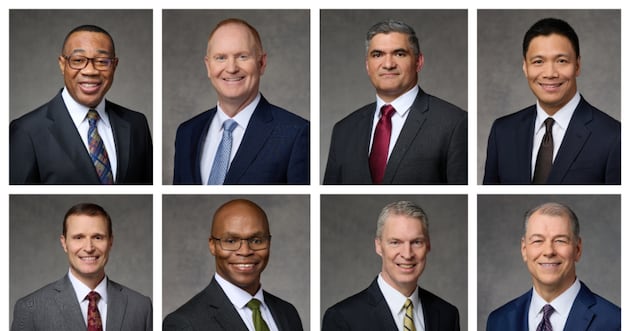
The April 2026 General Conference also featured the sustaining of eight new General Authority Seventies, critical members of the Church’s global administrative structure responsible for overseeing Church affairs across continents. These appointments are vital for managing the Church’s expanding international presence and its diverse membership.
President D. Todd Christofferson presided over the sustaining of these new General Authority Seventies during the Saturday afternoon session. This process formally affirms individuals called to significant leadership roles, highlighting the Church’s hierarchical decision-making and collective affirmation.
Elder Benjamin M. Z. Tai, 53, from Hong Kong, was sustained as a new member of the Presidency of the Seventy, effective August 1, succeeding Elder S. Mark Palmer. Elder Tai’s prior service includes roles as Assistant Executive Director of the Missionary Department and Area Assistant in the North America Southeast Area. His recent position as President of the Asia Area demonstrates extensive experience in managing Church operations across a major international region.
Presidency of the Seventy: Key Administrative Cadre
Elder Tai’s appointment to the Presidency of the Seventy places him in a key administrative echelon, tasked with overseeing all General Authority Seventies and supporting the First Presidency and Quorum of the Twelve Apostles. His background in the Missionary Department and as an Area President suggests a strategic understanding of global evangelization and administrative efficiency, which will be crucial in his new capacity.
This transition includes the release of Elder S. Mark Palmer from the Presidency of the Seventy, where he served since 2021. His release, along with seven other General Authority Seventies moving to emeritus status, signifies a structured rotation of leadership responsibilities, allowing for new energy and perspectives in key roles while acknowledging the service of seasoned leaders.
Emeritus Status and Leadership Rotation
Seven General Authority Seventies, including Elder S. Mark Palmer, were released and granted emeritus status, effective August 1. This designation honors their years of dedicated full-time service and transitions them to a status of continued, though different, engagement within the Church community.
The granting of emeritus status is a formal recognition of significant service, ensuring predictable and orderly succession and the continuous development of administrative leadership. This process allows experienced leaders to transition gracefully while retaining their institutional knowledge.
The individuals granted emeritus status are Elders Craig C. Christensen, William K. Jackson, Brook P. Hales, Eduardo Gavarret, Erich W. Kopischke, Peter F. Meurs, and S. Mark Palmer. Their collective service has contributed significantly to the Church’s global expansion and operational development.
Institutional Continuity and Global Strategy
These leadership appointments and emeritus releases are integral to the Church’s strategy for maintaining global reach and operational continuity. General Authority Seventies are essential in administering Church affairs worldwide, supporting local leadership, and ensuring consistent policy application.
Elder Tai’s elevation to the Presidency of the Seventy, alongside the introduction of new General Authority Seventies, indicates a strategic focus on enhancing the Church’s administrative capacity in vital global regions. His prior experience equips him with a deep understanding of the challenges and opportunities in expanding the Church’s footprint and engaging diverse populations, crucial for navigating international religious administration and fostering spiritual growth.
The sustained leadership changes, from the Primary general presidency to the General Authority Seventies, reflect a deliberate, systematic approach to organizational management. These transitions are part of a larger framework ensuring effective governance, programmatic consistency, and the ongoing spiritual development of members globally, underpinning the Church’s long-term institutional stability and its global mission.