The confirmation of two fatalities and eleven subsequent cases of invasive meningococcal disease (IMD) linked to student populations in Canterbury, Kent, has triggered a high-level mobilization of the UK public health infrastructure.
The UK Health Security Agency (UKHSA) response involves targeted chemoprophylaxis for close contacts and deep operational collaboration with the University of Kent. This scenario acutely stresses containment capabilities against a fast-moving bacterial pathogen within a high-density, transient demographic.
Pathogen Containment in Higher Education Hubs: Strategic Failure Points
This public health event immediately pressures institutional liability frameworks, specifically concerning mandated student welfare, proactive health screening protocols, and emergency response readiness for communicable diseases.
For the University of Kent, the mandatory public confirmation of a student fatality while simultaneously managing national health coordination constitutes a severe reputational challenge, directly threatening future enrollment viability and undermining institutional trust metrics.
The logistical undertaking of administering preventative antibiotics to an estimated 2,000 individuals represents significant unplanned capital expenditure, diverting critical operational funds toward emergency epidemiological control mandates.
Leverage Points in Crisis Communication and Cognitive Capture
Media framing, utilizing high-salience terminology like “race to stop meningitis spreading” and reports of “campus terror,” immediately translates a localized clinical event into a pervasive national risk perception narrative.
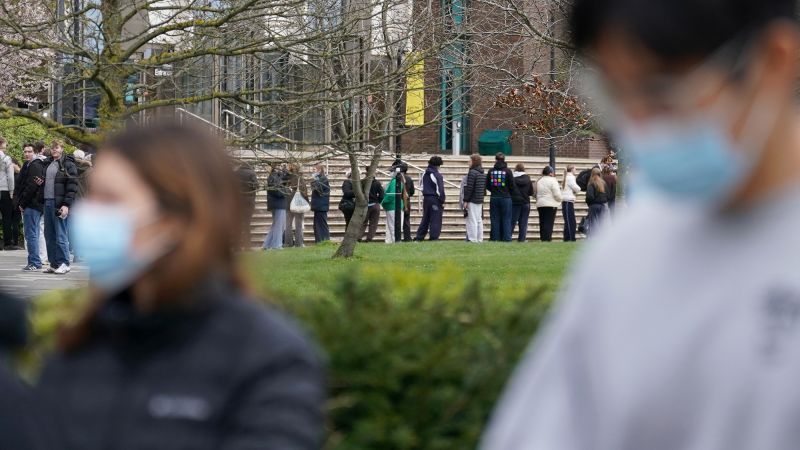
This intense scrutiny, amplified by individualized victim narratives and extensive public queues for prophylactic treatment, forces health authorities into a dual mandate: clinical intervention concurrent with aggressive anxiety management, which can impede compliance with public health directives.
The competitive media environment necessitates that the severity of the health crisis continuously fights for cognitive space against established entertainment narratives, often leading to information dilution despite the gravity of the situation.
Operational Strain and Jurisdictional Complexity
Case identification extending beyond the University of Kent to include Queen Elizabeth’s Grammar School in Faversham indicates transmission vectors breaching defined campus boundaries, demanding a wider, multi-jurisdictional public health cordon.
The administrative burden placed on local educational leadership, confirmed by the involvement of the secondary school headteacher in public statements, highlights systemic friction when threats cross demographic and institutional affiliations.
IMD requires immediate diagnostic and therapeutic intervention; the severity observed suggests potential diagnostic latency or systemic gaps in initial symptom recognition within the student cohort or primary triage pathways.
Sectoral Risk Exposure: Finance and Recruitment
For the UK Higher Education (HE) sector, outbreaks introduce quantifiable risk into institutional financial modeling, primarily via reputational damage affecting international student recruitment—a vital revenue stream.
The necessity for immediate assurance protocols, including enhanced sanitation and monitoring, forces unplanned capital reallocation, potentially delaying scheduled infrastructure investments.
Financial stakeholders, including bondholders and regulatory oversight bodies, will scrutinize existing risk mitigation efficacy, likely resulting in stricter financial covenants and increased liability premiums for institutions situated in densely populated settings.
Prophylaxis Strategy and Public Trust Efficacy
Mass antibiotic distribution is a high-stakes intervention, balancing transmission halt imperatives against the risks of promoting antimicrobial resistance or causing adverse reactions in a large, otherwise healthy population.
The success of this mass prophylaxis hinges on high uptake rates, directly correlated with the perceived credibility of the issuing health authorities and the precision of risk communication delivery.
When public messaging is compounded by tangential media narratives—such as parental anxieties linking vaping to susceptibility—it introduces informational noise that undermines the precision required for effective public health adherence.
Systemic Vulnerabilities in Student Health Pathways
The involvement of young adults, a demographic frequently underemphasized in severe outcome messaging, exposes a critical vulnerability in standard preventative health campaigns.
The UKHSA’s reliance on institutional cooperation for contact tracing underscores that trace efficacy is directly proportional to student self-reporting transparency and institutional data fidelity.
This event serves as a high-fidelity stress test for the integration points between university health services, local Primary Care Networks (PCNs), and national infectious disease surveillance systems, illuminating friction points impeding rapid containment.
Benchmarking Crisis Management Response
Other HE institutions are actively benchmarking their own infectious disease preparedness against the Kent response, specifically evaluating the velocity of residency lockdown protocols and the efficiency of UKHSA liaison mechanisms.
The public expression of distress by educational leaders, while necessary for empathetic connection, establishes an immediate benchmark for future crisis communication, where perceived institutional care is a key determinant of stakeholder confidence recovery.
The aggressive antibiotic strategy implies initial epidemiological modeling projected a high reproductive number (R0) or significant asymptomatic carriage within the student body, necessitating population-level intervention over standard case management.
Long-Term Regulatory Implications for HE Security
If outbreak trajectory mandates prolonged academic continuity disruption, regulatory bodies may be compelled to mandate standardized, auditable health security protocols across all publicly funded universities, superseding current voluntary guidelines.
Differentiating between cases (university vs. secondary school) forces health agencies to navigate complex, distinct educational governance structures simultaneously.
This incident provides empirical data for policymakers assessing the resilience of the UK’s public health architecture against acute biological threats emerging from concentrated social environments like campuses.
The focus on the meningococcal etiology dictates the specific prophylactic and vaccination strategies, demanding precise engagement with existing national immunization schedules, differentiating the response from viral outbreaks.
The operational pivot shifts from general quarantine to high-fidelity identification and chemoprophylaxis of carriers, requiring rapid laboratory turnaround times to truncate secondary and tertiary transmission chains.
The media’s humanization of the statistics imposes intense political pressure on the UKHSA to demonstrate near-absolute situational control, elevating the cost associated with any perceived operational lag in containment deployment.
The strategic response requires a dual focus: clinical containment effectiveness and robust narrative control to sustain the operational environment required for intervention.
Advising staff and students generates significant administrative overhead beyond direct medical care, encompassing academic continuity management for quarantined cohorts and mitigating institutional anxiety across the wider community.
This event highlights the intrinsic link between public health security and the operational continuity of knowledge-based industries, where workforce health directly affects economic output.
The Canterbury institutional performance will become a benchmark case study for managing future high-density biological threats, particularly concerning the speed of national resource allocation to localized crises.
The scale of antibiotic deployment suggests a highly precautionary posture, likely informed by early cluster data indicating rapid propagation within typical university social networks.
This aggressive prophylaxis aims to rapidly flatten the incidence curve, mitigating seeding into the broader community, which would exponentially increase containment complexity and financial burden.
Genomic sequencing efforts are critical to determine strain virulence and transmissibility, dictating the longevity and specificity of subsequent public health advisories.
For affected families, the institutional response evolves from acute medical crisis management to navigating complex administrative support related to bereavement and academic continuity planning.
Press coverage, exemplified by statements given to outlets like the Daily Star, leverages emotional leverage points, pressuring institutions to demonstrate profound empathetic engagement alongside clinical competence.
Structurally, the perceived safety of the campus environment—a core value proposition of HE—has been compromised, necessitating costly and time-intensive restoration of stakeholder confidence.
This necessitates a review of capital allocation priorities within university administrations, potentially favoring investment in permanent, integrated health monitoring infrastructure over reliance on reactive public health partnerships.
Administrative coordination across the UKHSA, local Public Health Bodies, the University, and the secondary school district forms a complex jurisdictional matrix where efficiency is paramount to mortality risk mitigation.
Ultimately, the Kent meningitis outbreak functions as a high-visibility stress test on the UK’s capacity to deploy specialized epidemiological resources to safeguard critical social infrastructure against acute biological threats, influencing regulatory oversight and institutional risk management standards.