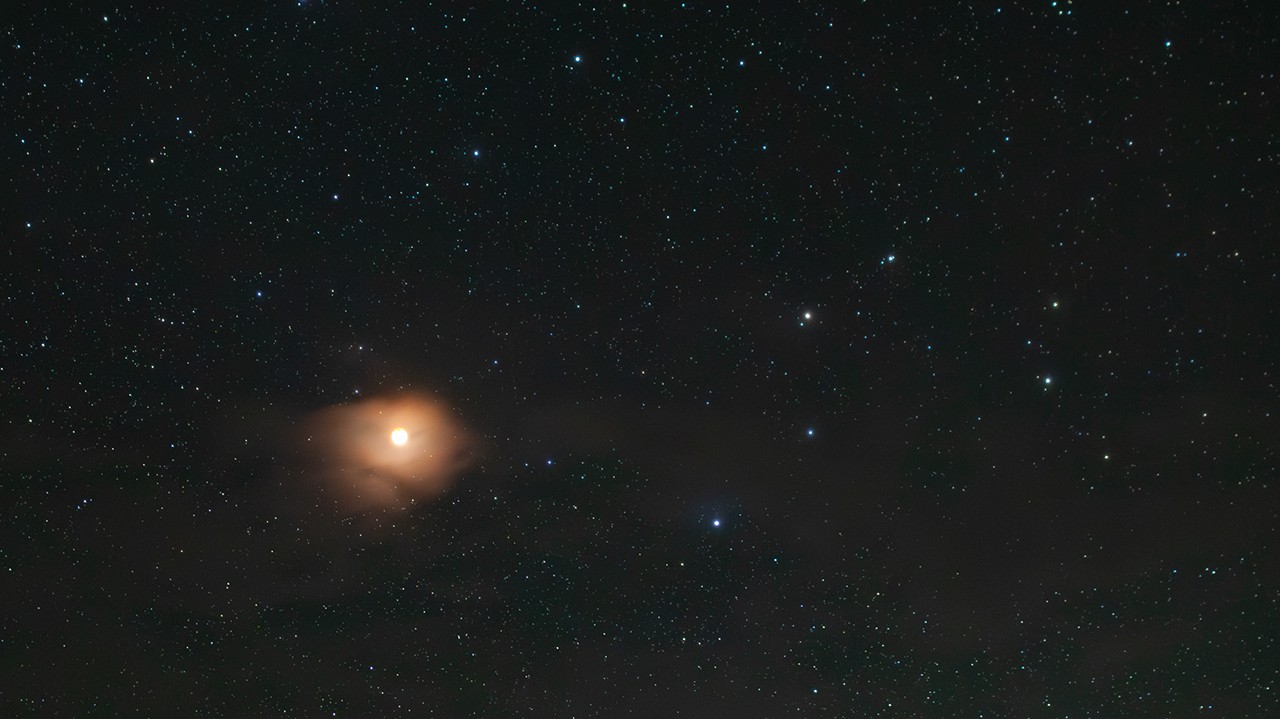
June 2026 Conjunction: Unprecedented Visibility for Public Engagement
The Venus-Jupiter conjunction on June 9th, 2026, marks a pivotal moment for both amateur and professional astronomy, distinguished by its exceptional visibility and strategic evening timing. This rare celestial event, where the two brightest planets appear strikingly close, offers a unique blend of visual spectacle and accessibility, differentiating it from less observable astronomical phenomena.
Crucially, this conjunction will be readily observable with the unaided eye shortly after sunset, eliminating the need for specialized equipment or specific geographical conditions. This inherent accessibility democratizes celestial observation, significantly expanding public engagement with scientific phenomena beyond dedicated enthusiasts. The evening timing further enhances its strategic value, aligning with peak public availability unlike earlier dawn conjunctions (e.g., August 2025), thereby maximizing collective observation and shared experience across diverse demographics.
Institutional Strategy: Enhancing Science Communication and STEM Engagement
Institutions such as NASA and the University of New Hampshire Observatory (via Director John Gianforte) strategically leverage predictable astronomical events like this conjunction for public education and scientific outreach. Their proactive communication translates complex celestial mechanics into tangible, engaging experiences, fulfilling a core mandate.
A key pedagogical strategy involves highlighting the planets’ apparent proximity from Earth despite their immense actual distances. This visual dichotomy effectively illustrates fundamental principles of perspective and orbital mechanics, demystifying astronomical concepts and significantly enhancing scientific literacy across broad audiences.
These high-profile conjunctions are crucial for reinforcing institutions’ roles as authoritative sources of scientific information and inspiration. By showcasing the cosmos’ beauty and regularity, they cultivate public interest in STEM fields, potentially influencing future generations’ engagement with science and technology.
Operational Guidance: Maximizing Public Participation and Accessibility
Specific operational guidance, such as advising observers to look low in the western sky between 45 minutes and two hours after sunset, is critical for maximizing public participation. These precise instructions empower individuals, including urban residents, to successfully locate and appreciate the conjunction, transforming a potentially obscure event into an accessible communal experience.
Acknowledging urban challenges like light pollution and obstructed horizons, the recommendation to find a ‘slice of open sky’ in the west-northwest provides practical empowerment. This fosters a sense of agency and inclusion, enabling city dwellers to actively participate in astronomical observation despite environmental limitations.
The suggestion to use binoculars, while not mandatory, offers an optional, low-investment pathway for enhanced engagement and detail. This tiered equipment recommendation caters effectively to a spectrum of interest and commitment, from casual stargazing to more dedicated skywatching.
Economic & Media Impact: Fueling Astrophotography and Public Discourse
Designating this conjunction an ‘excellent opportunity for photographers’ directly fuels the astrophotography sector. This endorsement drives demand for diverse photographic equipment—from entry-level cameras to specialized lenses and mounts—influencing consumer purchasing and market trends in optical technology. Concurrently, it stimulates content creation across social media, specialized forums, and news outlets, as photographers capture and share high-quality visuals, amplifying public awareness and fostering a self-reinforcing cycle of engagement.
The broader media landscape strategically integrates such events into editorial calendars, recognizing their inherent appeal and capacity for significant audience engagement. This integration contributes to a cyclical pattern of media coverage that elevates astronomy into mainstream discourse, particularly during peak viewing periods.
Beyond direct media impact, heightened public awareness around accessible skywatching events indirectly benefits local economies. This is evident in increased patronage of science museums, planetariums, and educational programs, and can even bolster astrotourism in regions promoting dark-sky preserves, even for urban-visible phenomena.
Broader Astronomical Context: Strategic Planning & Event Rarity
The Venus-Jupiter conjunction is integrated within a dynamic June 2026 astronomical calendar, featuring other significant events like Mercury joining the planetary ‘mini-parade’ (June 11th-15th), the Moon passing Venus (June 17th), and the June solstice (21st) alongside ‘deep-sky treasures.’ This rich sequence offers sustained, multi-faceted public engagement opportunities, catering to varied interests from casual planetary viewing to advanced deep-sky observation.
The predictable nature of these celestial mechanics enables institutions and media to engage in long-term strategic planning for public outreach. Anticipating these events allows for the preparation of educational materials, coordination of viewing parties, and development of compelling narratives, maximizing impact on scientific literacy and curiosity.
The infrequency of such highly visible conjunctions, with the next comparable opportunity not until November 10, 2028, significantly underscores the unique value of the June 2026 event. This rarity enhances its perceived significance, thereby encouraging broader public participation and deeper appreciation.
Structural Factors: Orbital Mechanics, Perspective, and Human Curiosity
Planetary conjunctions, where planets appear close due to their consistent orbital paths along the ecliptic, represent a fundamental structural aspect of our solar system. This orbital geometry ensures predictable recurrence, facilitating scientific forecasting and public anticipation over extended periods.
As John Gianforte clarifies, Jupiter’s true distance ‘far beyond Venus’ despite their apparent proximity underscores the critical role of Earth’s perspective in astronomical observation. This distinction is vital for comprehending the vast scale of the cosmos and reinforcing core astronomical principles regarding celestial body positions.
The enduring human fascination with celestial alignments, historically documented across diverse cultures, provides a deep cultural context for events like the Venus-Jupiter conjunction. These phenomena tap into a primal curiosity about our place in the universe, transcending purely scientific interest. Furthermore, the consistent visibility of bright planets such as Venus and Jupiter, even amidst urban light pollution, ensures these events remain accessible touchstones, a structural advantage for science communicators to engage broader societal segments.
Long-Term Impact: Cultivating Scientific Literacy and Societal Support
The cumulative effect of promoting and observing events like the June 2026 conjunction extends beyond immediate public engagement, serving as a fundamental building block for long-term scientific literacy. Each accessible astronomical event contributes to a broader educational framework, fostering a more scientifically informed populace.
Consistently providing opportunities for direct observation and interpretation of celestial phenomena reinforces the empirical nature of science. This hands-on approach grounds scientific concepts in tangible experience, often proving more impactful than abstract theoretical learning.
Moreover, the media’s critical role in amplifying these events sustains public interest in science between major discoveries. Regular features on accessible astronomical highlights foster a continuous dialogue about space, exploration, and scientific inquiry. Ultimately, the strategic promotion and widespread observation of such conjunctions cultivate societal appreciation for the scientific method, observational data, and the enduring relevance of scientific institutions and research.