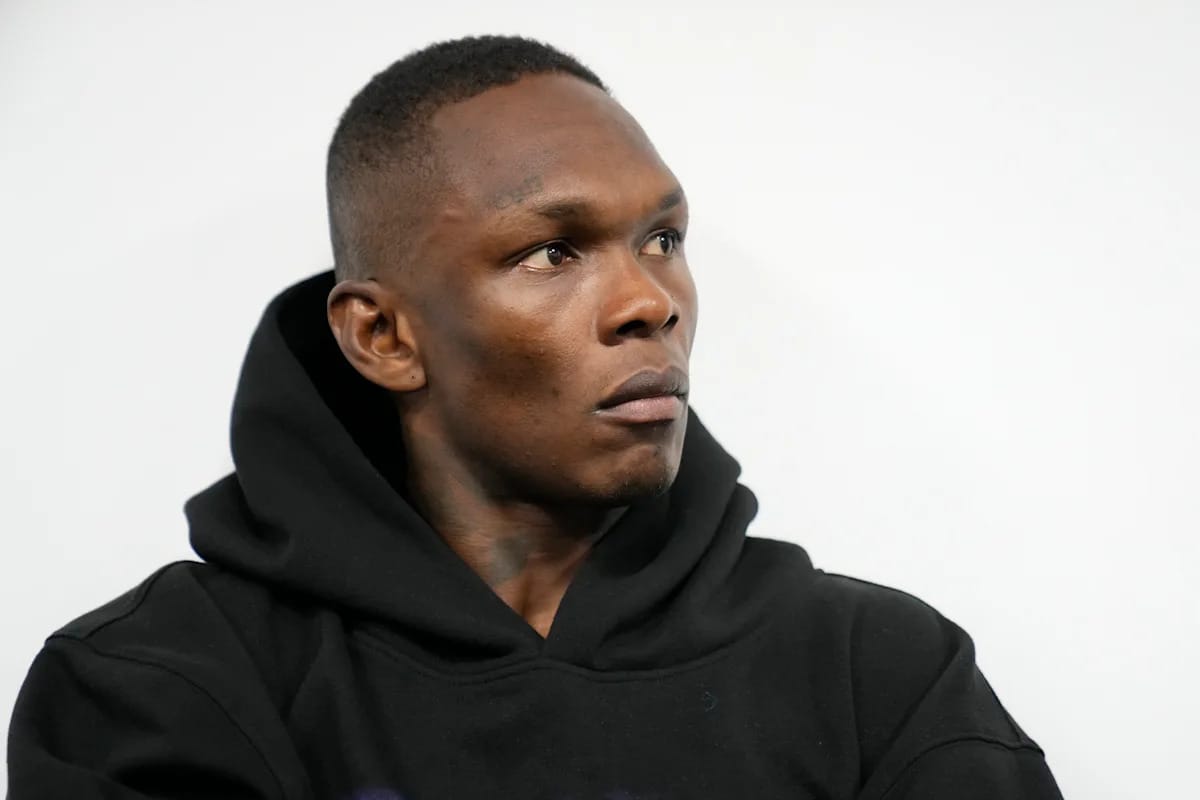
CONTEXTUAL ANALYSIS: Adesanya’s Evolving Motivations Reshape UFC Narrative
Former two-time UFC middleweight champion Israel Adesanya has recently articulated a palpable sense of disillusionment with the sport’s middleweight division, branding it ‘bland.’ His remarks signal a significant shift in his competitive philosophy, moving beyond the traditional pursuit of accolades and validation. This outspoken commentary from one of the UFC’s most prominent figures carries substantial weight, influencing perceptions of the division’s current state and broader trends within mixed martial arts.
Adesanya’s declaration that ‘it just doesn’t feel the same’ encapsulates a sentiment that can deeply resonate with long-time fans and analysts alike. When a fighter of his caliber, who has graced multiple main events and defined an era, expresses such a view, it suggests underlying challenges in cultivating new narratives and compelling rivalries within the weight class. His statements underline a moment of introspection for the division, questioning its capacity to inspire and excite.
Why Adesanya’s Comments Matter to the UFC Landscape
The significance of Adesanya’s comments extends far beyond a mere personal observation. As a global superstar, his words echo through the entire combat sports ecosystem, potentially impacting fan engagement, promoter strategies, and even the career trajectories of other fighters. His star power is a major draw, and his perception of ‘blandness’ could influence viewership numbers and the marketability of future middleweight bouts.
His assertion that he ‘isn’t chasing ghosts anymore,’ specifically ‘not belts; not validation,’ represents a profound shift in an athlete’s career arc. For many professional fighters, the championship belt is the ultimate symbol of achievement and the primary driver for relentless training and sacrifice. Adesanya’s pivot suggests a more introspective and perhaps mature approach to his career, prioritizing internal satisfaction and genuine challenge over external recognition.
This evolution in motivation is not uncommon among elite athletes who have reached the pinnacle of their sport multiple times. After achieving considerable success, the initial hunger for glory can transform into a desire for new experiences, legacy building, or simply enjoying the craft. Adesanya’s open acknowledgment of this change provides a rare glimpse into the psyche of a champion navigating the later stages of a high-pressure career.
Broader Trends: Athlete Autonomy and the Search for Meaning
Adesanya’s stance aligns with a broader trend in professional sports where athletes increasingly assert control over their careers and define success on their own terms. This shift reflects a growing emphasis on mental well-being, personal fulfillment, and strategic diversification beyond the immediate competitive environment. Modern athletes, empowered by larger platforms and greater financial stability, are less bound by traditional expectations.
The ‘bland’ state of a division, as perceived by a marquee fighter, highlights the cyclical nature of combat sports. Divisions often experience periods of dominance, intense rivalries, and then a phase where new talent needs to emerge to re-energize the landscape. Adesanya’s outspokenness could serve as a wake-up call for the UFC to actively cultivate new stars and compelling storylines within the middleweight ranks to maintain fan interest and competitive vibrancy.
Furthermore, the comment reflects the immense pressure on athletes to constantly innovate and entertain. In an era of constant content consumption, fighters are not just competitors but also entertainers. Adesanya, known for his unique style and charismatic persona, understands this dynamic implicitly, and his criticism points to a perceived lack of such compelling elements within his own division.
STRATEGIC IMPERATIVE: Embracing Risk and Redefining ‘Form’
Adding another layer to his evolving career narrative, Israel Adesanya has also explained his decision to take a ‘dangerous’ Joe Pyfer fight, despite what is described as his ‘poor UFC form.’ This choice, seemingly paradoxical for a fighter of his stature, offers significant insight into his current mindset and strategic approach to competition. It starkly contrasts with conventional wisdom, which typically advises a more cautious opponent selection following periods of underperformance.
The term ‘poor UFC form’ suggests recent setbacks or performances that did not meet his own high standards or fan expectations. In such circumstances, many fighters opt for less challenging matchups to regain confidence and rebuild momentum. Adesanya’s decision to instead seek out a ‘dangerous’ opponent like Joe Pyfer underscores his stated disinterest in chasing mere validation or easy wins. It points towards a desire for a genuine, high-stakes challenge that can reignite his competitive fire.
The Logic Behind a ‘Dangerous’ Matchup
For Adesanya, a ‘dangerous’ fight might be precisely what he needs to shake off any perceived stagnation or ‘blandness.’ Such a bout forces a fighter to elevate their game, to confront vulnerabilities, and to push past comfort zones. This could be interpreted as a strategic move to find personal growth and excitement within the sport, rather than adhering to a predictable career path dictated by rankings or title contention.
This approach can also be viewed as a testament to his confidence and a belief in his own capabilities, even when acknowledging a dip in ‘form.’ True champions often seek out the hardest tests, not just for the thrill of victory, but for the inherent challenge that refines their skills and mental fortitude. Adesanya might be deliberately placing himself in a situation where only his absolute best will suffice, thereby forcing himself to rediscover that version.
From a fan perspective, a ‘dangerous’ fight is inherently more compelling than a routine one. It generates heightened anticipation and a greater sense of stakes, regardless of championship implications. Adesanya, as a fighter who understands the entertainment aspect of the sport, may also be choosing a path that promises more engaging content for his audience, aligning with his critique of the division’s ‘blandness.’
BEYOND THE OCTAGON: Boxing Ambitions and the Sunset of a Career
Further outlining his future trajectory, Israel Adesanya has openly discussed his plans regarding his UFC division and a ‘potential attempt into boxing before retiring.’ This revelation confirms a broader strategic vision that extends beyond the confines of mixed martial arts, reflecting a common aspiration among elite combat sports athletes to test themselves in boxing, a discipline with deep historical roots and lucrative opportunities.
The prospect of Adesanya, renowned for his striking prowess within MMA, transitioning to professional boxing is tantalizing for fans. His background in kickboxing provides a strong foundation for such a move, making him a more credible crossover candidate than many of his peers. A boxing venture would offer new challenges, different opponents, and potentially significant financial rewards, echoing high-profile crossover bouts of the past.
The Allure of the Boxing Ring for MMA Stars
The idea of MMA fighters trying their hand at boxing is not new; it’s a recurring theme driven by both athletic ambition and commercial appeal. The financial incentives in high-profile boxing matches can often dwarf those available in MMA, providing a powerful motivation for fighters approaching the latter stages of their careers. For Adesanya, it represents an opportunity to add another unique chapter to his legacy.
Beyond the financial aspect, boxing offers a distinct competitive challenge. It demands a specialized skillset and strategic approach different from MMA, pushing fighters to adapt and evolve. For someone who feels the current MMA landscape is ‘bland,’ a fresh start in a different sport could provide the mental and physical stimulation needed to maintain peak performance and interest.
PUNCH Sports Extra reports The Nigerian Adesanya has spoken on the future of his UFC division; while also addressing a potential attempt into boxing before retiring.
This attribution, provided by ‘PUNCH Sports Extra,’ reinforces the legitimacy and international reach of Adesanya’s statements. It highlights that his future plans are a topic of global discussion, particularly in his native Nigeria, where his career holds immense national pride. The mention of ‘before retiring’ also provides a clear timeline, indicating that these are not fleeting thoughts but rather a considered part of his long-term career strategy.
Navigating the Path to Retirement
The discussion of retirement, even when prefaced by a potential boxing career, signifies a champion contemplating the end of his competitive journey. This phase is critical for any athlete, involving careful planning, financial considerations, and an assessment of one’s lasting legacy. Adesanya’s open dialogue about this transition suggests a thoughtful approach to winding down a storied career on his own terms.
His dual focus on invigorating his current division and exploring new horizons reflects a desire to maximize his remaining time as a professional athlete. It’s a testament to a fighter who, having achieved so much, is now focused on personal satisfaction and making a lasting impact, rather than just accumulating more titles. This approach often leads to more engaging and unpredictable career choices, benefiting both the athlete and the fans who follow their journey.
The interplay between seeking fresh challenges within the UFC, potentially stepping into the boxing ring, and eventually retiring, paints a complete picture of an athlete in control of his destiny. It underscores the evolving landscape of professional combat sports, where fighters like Adesanya are increasingly dictating their own terms and writing their own final chapters.