
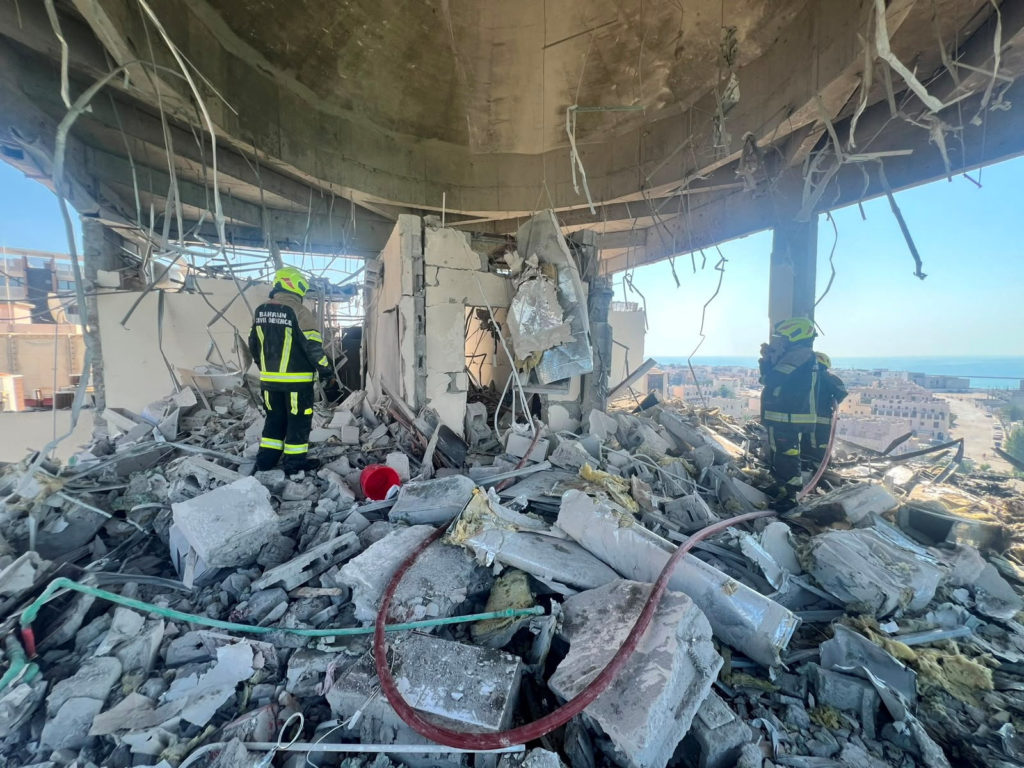
Regional Tensions Escalate: Iran Strikes Bahrain and Kuwait, Threatening Ceasefire Talks
Iran initiated drone and missile attacks targeting Bahrain and Kuwait on Sunday, a direct response to recent U.S. airstrikes and a multinational maritime body’s decision to reopen the Strait of Hormuz. This retaliatory action has significantly jeopardized ongoing negotiations aimed at establishing a lasting ceasefire.
The immediate trigger for this escalation appears to be the multinational maritime body’s announcement Saturday to expand a traffic route near Oman, a move Tehran perceives as a direct challenge and a new flashpoint concerning maritime passage.
Strategic Implications of Escalated Hostilities
The crossfire surrounding the Strait of Hormuz reopening signifies a critical juncture in regional security dynamics. Iran’s retaliatory strikes demonstrate a willingness to directly challenge U.S.-led maritime initiatives, potentially forcing a recalibration of international naval strategies in the Persian Gulf.
This escalation directly impacts the credibility of U.S. diplomatic efforts to de-escalate the conflict. By targeting allied nations like Bahrain and Kuwait, Iran signals a broader regional threat, complicating multilateral approaches to conflict resolution and potentially isolating negotiating partners.
Economic and Diplomatic Fallout from Strait of Hormuz Tensions
Iran’s threat of a “complete halt” to negotiations carries substantial economic weight, particularly concerning global maritime trade routes. The Strait of Hormuz is a vital chokepoint for oil shipments, and any prolonged disruption or heightened risk would inevitably lead to increased energy prices and market volatility.
For nations engaged in ceasefire talks, renewed hostilities represent a significant setback. The diplomatic capital invested is now at risk, and future engagement strategies must account for Iran’s demonstrated capacity for immediate, direct military response to perceived provocations.
Stakeholder Exposure and Shifting Leverage in the Persian Gulf
Bahrain and Kuwait, as direct targets, face immediate security concerns and potential economic disruption, highlighting the vulnerability of smaller states within the broader geopolitical contest between Iran and the United States.
The U.S. Navy’s initiative to reroute traffic, while intended to ensure freedom of navigation, has inadvertently created a new point of contention. This has amplified Iran’s leverage by providing a clear justification for its retaliatory actions and drawing international scrutiny to U.S. strategy.
Competitive Positioning in Regional Security Architecture
Iran’s actions underscore its strategic objective to maintain regional influence and deter perceived external interference. By demonstrating a capacity to strike beyond its borders, Tehran asserts its role as a significant regional power capable of imposing costs on adversaries and their allies.
The U.S. response, including airstrikes and maritime initiatives, reflects a strategy of projecting power and maintaining access to critical waterways. However, the current dynamic suggests a potential for a protracted cycle of escalation, where each action prompts a counter-action, undermining broader stability goals.
Long-Term Trajectories and Ecosystem Impact of Conflict
The current trajectory suggests a fragile ceasefire environment where de-escalation efforts are constantly tested by kinetic actions. This pattern of engagement could solidify a regional security paradigm characterized by persistent low-level conflict and heightened risk of wider conflagration.
The international community, particularly economic players reliant on regional stability, will closely monitor these developments. The ability of diplomatic channels to overcome this cycle of attack and counter-attack will determine the future flow of trade, investment, and regional cooperation.
Institutional Response and Diplomatic Pathways Amidst Crisis
The multinational maritime body’s decision to alter shipping routes near Oman, ostensibly operational, carries significant geopolitical ramifications. U.S. Navy oversight positions it as an instrument of U.S. policy, subject to interpretation and reaction by regional powers like Iran.
Iran’s threat to halt talks signals a strategic calculation to increase pressure on the U.S. and its allies, aiming to force concessions or a reassessment of U.S. military operations by leveraging the prospect of continued instability against the desire for peaceful resolution.
Capital Movement and Market Sensitivity to Regional Instability
Heightened tensions in the Strait of Hormuz directly influence global energy markets. Perceived threats to supply routes can trigger speculative buying and price increases, impacting global inflation and economic growth.
Investors and financial institutions will assess the duration and intensity of this conflict. Capital flows into the region, particularly in energy and logistics, will be scrutinized for risk, potentially leading to divestment or a shift towards more secure investment havens.
Performance Leverage in a Volatile Geopolitical Environment
For regional actors, projecting power and deterring aggression are key performance indicators. Iran’s strikes demonstrate tactical leverage by imposing immediate costs, while the U.S. seeks to maintain strategic leverage through military presence and maritime control initiatives.
The effectiveness of these strategies will be measured by their ability to achieve objectives without triggering wider conflict. The current situation suggests a precarious balance, where gains in one area may come at the cost of increased instability elsewhere.
Consequences for Regional Stability and the Global Order
The cycle of attacks and counter-attacks erodes the foundation for long-term regional stability, making diplomatic solutions increasingly difficult and reliance on military deterrence more pronounced.
Globally, the implications extend to the broader international order. The ability of major powers and regional actors to manage conflict and maintain open sea lanes is fundamental to global trade and security, and any disruption has far-reaching consequences.
The Fragility of Ceasefire Efforts in Contested Waters
Current events underscore the inherent fragility of ceasefire agreements in environments marked by deep-seated geopolitical rivalries. The reopening of the Strait of Hormuz, a critical artery, has become a focal point for these tensions, demonstrating how operational decisions can have profound strategic consequences.
Iran’s threat to halt talks signifies a strategic gamble, aiming to leverage disruption for concessions. This approach highlights a transactional view of diplomacy, where military actions serve as bargaining chips.
Multinational Maritime Body’s Role and Strategic Exposure
The multinational maritime body’s decision to expand its route near Oman, presented as an operational adjustment, has been interpreted by Iran as provocative. This highlights the delicate balance between ensuring freedom of navigation and avoiding actions that could escalate regional tensions.
The U.S. Navy’s oversight places it at the center of this strategic dilemma. Miscalculations could lead to further escalation, impacting regional security, global maritime trade, and energy markets.
Iran’s Strategic Calculus and Leverage Amidst Escalation
Iran’s retaliatory strikes against Bahrain and Kuwait demonstrate its intent to project power and impose costs on perceived adversaries’ allies. This strategy aims to deter further U.S. military actions and signal its capacity to disrupt regional stability.
By threatening to halt talks, Iran seeks to leverage the crisis for advantage, believing continued military pressure will force a policy reassessment and potentially lead to a more favorable negotiating position.
U.S. Strategy and Potential Recalibration Amidst Escalation
U.S. airstrikes and maritime initiatives aim to maintain freedom of navigation and deter Iranian aggression. However, the current escalation suggests these measures may be provoking a more assertive response from Iran.
Washington may need to recalibrate its approach, considering the potential for unintended consequences. The current dynamic risks a tit-for-tat escalation that could undermine broader U.S. interests in regional stability and secure energy flows.
Impact on Ceasefire Negotiations and Future Diplomacy
Renewed hostilities have cast a long shadow over ceasefire prospects. Iran’s threat to halt talks signals a potential breakdown in diplomatic channels, making peaceful resolution of the ongoing conflict more challenging.
The international community faces the challenge of navigating this complex situation, where military actions intertwine with diplomatic efforts. De-escalating tensions and restoring trust are crucial for the future of regional security and global economic stability.

Photo by mokhaladmusavi on Pixabay.