
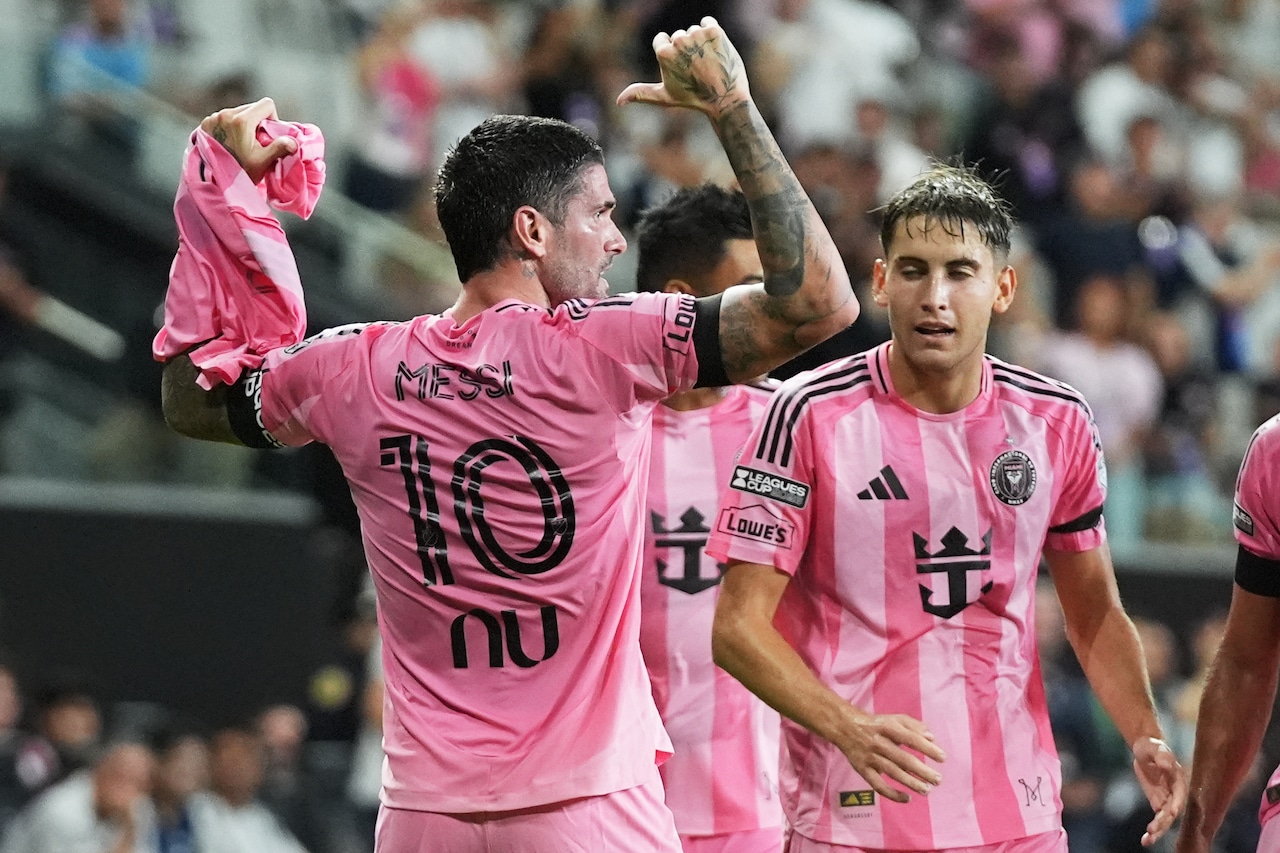
The Leagues Cup Phase One finale between Inter Miami and Club León at Nu Stadium represents a profound strategic stress test for the South Florida franchise. Scheduled for Wednesday, August 12, 2026, at 7:30 p.m. ET, the fixture converges competitive desperation with an internal institutional crisis, testing the roster’s ability to function independently of its primary creative engine.
Tournament Calculus and Statistical Volatility
Inter Miami’s current standing of three points—the result of a 4-2 victory over Atlético de San Luis and a 2-1 defeat to CF Monterrey—leaves the club in a precarious mathematical position. To avoid a premature exit from a tournament critical to their global branding, a result against León is non-negotiable. Conversely, Club León enters the match with maximum points and superior defensive metrics, having secured a 1-0 win over Nashville SC. This performance delta highlights the structural efficiency of the Liga MX side compared to Miami’s recent defensive fragmentation.
The Tactical Void: Life Without the Messi Pivot
The tactical landscape is fundamentally altered by the absence of Lionel Messi, who remains in Argentina following the passing of his father, Jorge Messi. The loss of the elder Messi, historically the chief architect of his son’s professional trajectory, introduces a psychological and operational variable that transcends the pitch. Tactically, Messi’s absence removes the ‘gravity’ that typically pinches opposing defenses, forcing Miami to pivot from a superstar-dependent model to a collective, work-rate-oriented structure that has lacked clinical execution in previous iterations.
Commercial and Institutional Vulnerability
The crisis extends to the Leagues Cup’s commercial ecosystem. As the marquee attraction for Apple TV’s broadcast strategy, Messi’s absence impacts viewership metrics and the narrative momentum of the competition. For Inter Miami, the long-term institutional challenge involves supporting a captain who has lost his most trusted advisor while simultaneously managing the high-pressure expectations of ownership and a global fanbase. This match serves as a barometer for whether the ‘Miami Project’ can sustain its elite status during a period of extreme personal and professional transition.
Structural Adjustments and Defensive Imperatives
León’s disciplined 4-4-2 or 4-2-3-1 formations are designed to exploit the defensive lapses seen in Miami’s loss to Monterrey. Without Messi to bridge the transition from defense to attack, the burden falls on Miami’s secondary Designated Players to dictate tempo and prevent León’s rapid counter-attacks. Success will depend on the midfield’s ability to maintain a compact shape and minimize turnovers in the central third, where León is most lethal.
Photo by pixexid on Pixabay.