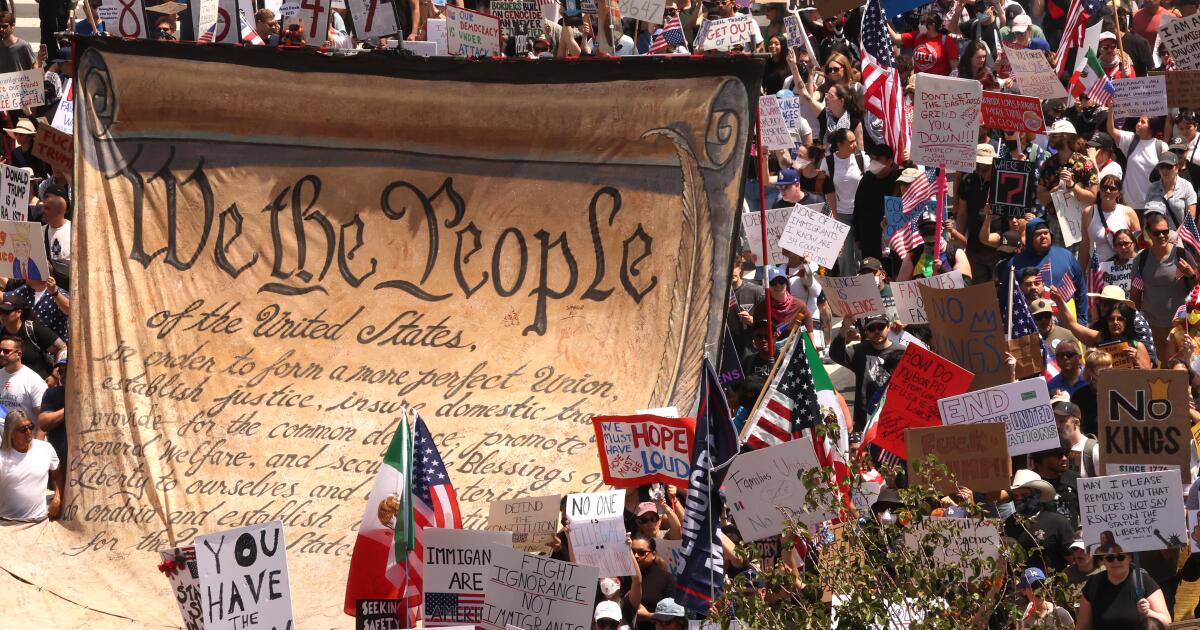
The geometric expansion of the ‘No Kings’ protest movement across American metropolitan hubs denotes a transition from localized civil dissent to a formalized campaign against executive unilateralism. By framing administrative actions as a departure from constitutional norms, the movement leverages high-visibility mobilization to challenge the operational legitimacy of the current executive branch.
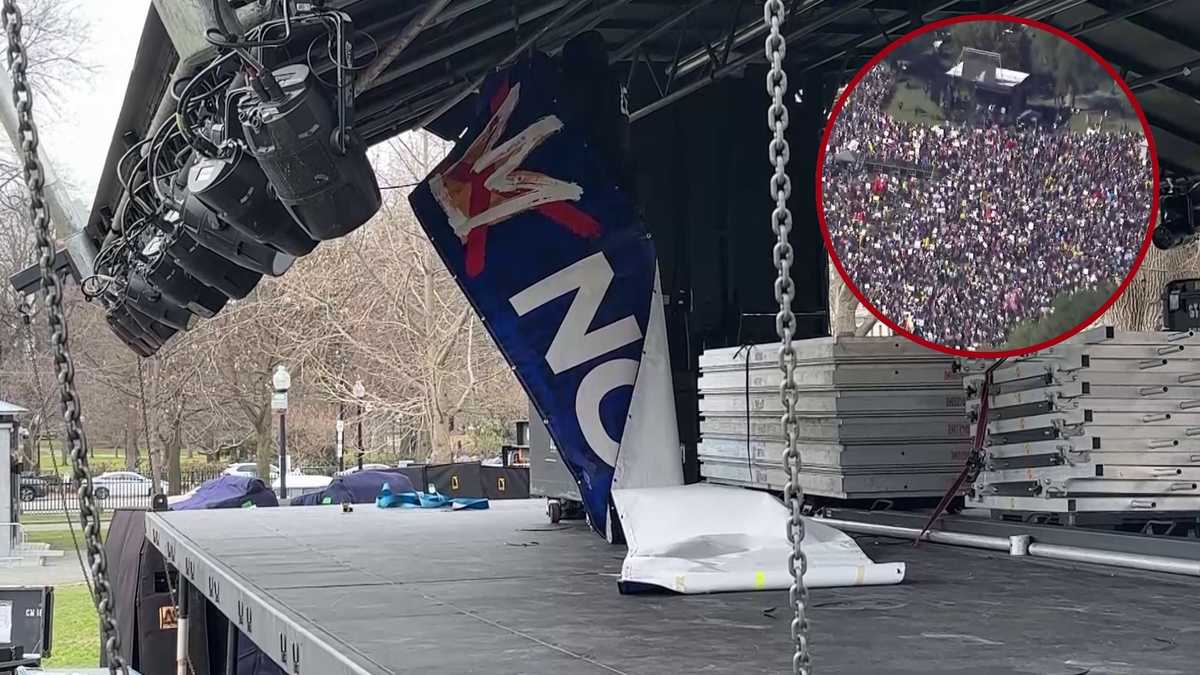
The logistics of these rallies—specifically the projected six-figure attendance in Boston and coordinated events across 41 Los Angeles locations—reveal a sophisticated organizational infrastructure. This is not merely reactive activism; it is a strategic effort to consolidate disparate socio-economic grievances under a unified framework of constitutional resilience.
Institutional Alignment and the Erosion of Executive Prerogative
The integration of high-ranking officials, including Governor Maura Healey and Senators Elizabeth Warren and Ed Markey, elevates the movement from the periphery to the center of institutional discourse. This alignment suggests a dual-track strategy: utilizing street-level pressure to bolster legislative resistance, thereby constraining executive authority through both public sentiment and official oversight.
While these officials utilize the platform to reaffirm democratic norms, their participation forces a clarification of partisan boundaries. The MassGOP’s pivot—framing the protests as disconnected from ‘kitchen table’ economic realities—illustrates the intensifying battle over narrative dominance. This friction highlights a fundamental disagreement: whether the primary threat to the republic is structural overreach or immediate consumer instability.
Operational Friction and the Militarization of Domestic Transit
A primary catalyst for this momentum is the identified operational friction within federal agencies, specifically the deployment of ICE personnel to supplement TSA functions at airports. This repurposing of immigration enforcement into domestic transit infrastructure creates tangible touchpoints for public dissatisfaction, transforming logistical inefficiency into a symbol of bureaucratic encroachment.
The resulting unpredictability in transit logistics serves as a physical manifestation of executive policy, alienating even politically moderate demographics. Concurrently, the movement frames requirements for citizenship documentation at polling locations as a structural barrier to participation, directly linking administrative directives to a broader narrative of autocratic drift.
Macroeconomic Volatility and Geopolitical Feedback Loops
The movement’s focus on escalating fuel costs and the protracted U.S.-Israeli conflict involving Iran underscores the intersection of foreign policy and domestic stability. These variables contribute to a sense of systemic volatility that the ‘No Kings’ campaign successfully channels into organized energy. By attributing inflation and energy costs to strategic executive choices, the movement bridges the gap between constitutional theory and financial reality.
This competition for the ‘everyday concern’ narrative is the movement’s critical strategic theater. To sustain longevity, organizers must maintain the link between executive decision-making and the erosion of purchasing power, ensuring that economic performance remains inextricably tied to perceived adherence to constitutional limits.
Structural Implications: The Legislative Vacuum
The persistence of these demonstrations—now entering their third iteration—signals a durable shift in public tolerance for governance that bypasses congressional consultation. National coordinator Sarah Parker’s emphasis on the administration’s avoidance of legislative input underscores a deepening structural divide. This bypass creates a consensus vacuum, which the movement fills with a narrative of ‘constitutional restoration.’
The reported participation of five million citizens in prior cycles suggests an engagement level capable of altering future electoral trajectories. As the movement scales, its capacity to disrupt standard administrative operations and force institutional responses will likely intensify, creating a more confrontational environment for all federal stakeholders.
Cultural Leverage and Narrative Sustainability
The strategic deployment of cultural assets, such as the Dropkick Murphys in Boston, serves as a force multiplier, ensuring messaging transcends traditional political echo chambers. This cultural leverage maintains narrative momentum and broadens visibility, creating a feedback loop in media coverage that emboldens participants and forces defensive responses from political opponents.
Ultimately, the ‘No Kings’ movement represents a convergence of constitutional advocacy and economic frustration. Its success will be measured by its ability to translate this energy into institutional change—whether through judicial challenges, legislative reform, or fundamental shifts in executive accountability. The resulting tension between the executive branch and public demands for oversight remains a defining feature of the contemporary political landscape.