A Cosmic Anomaly Challenges Astronomical Understanding
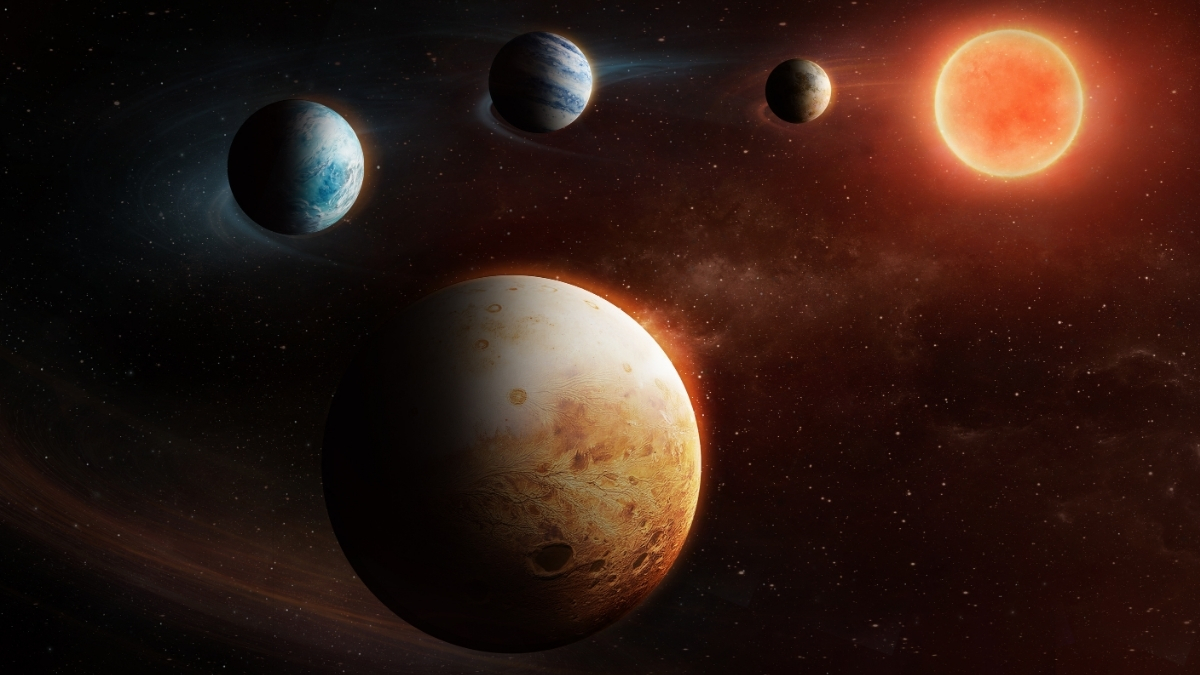
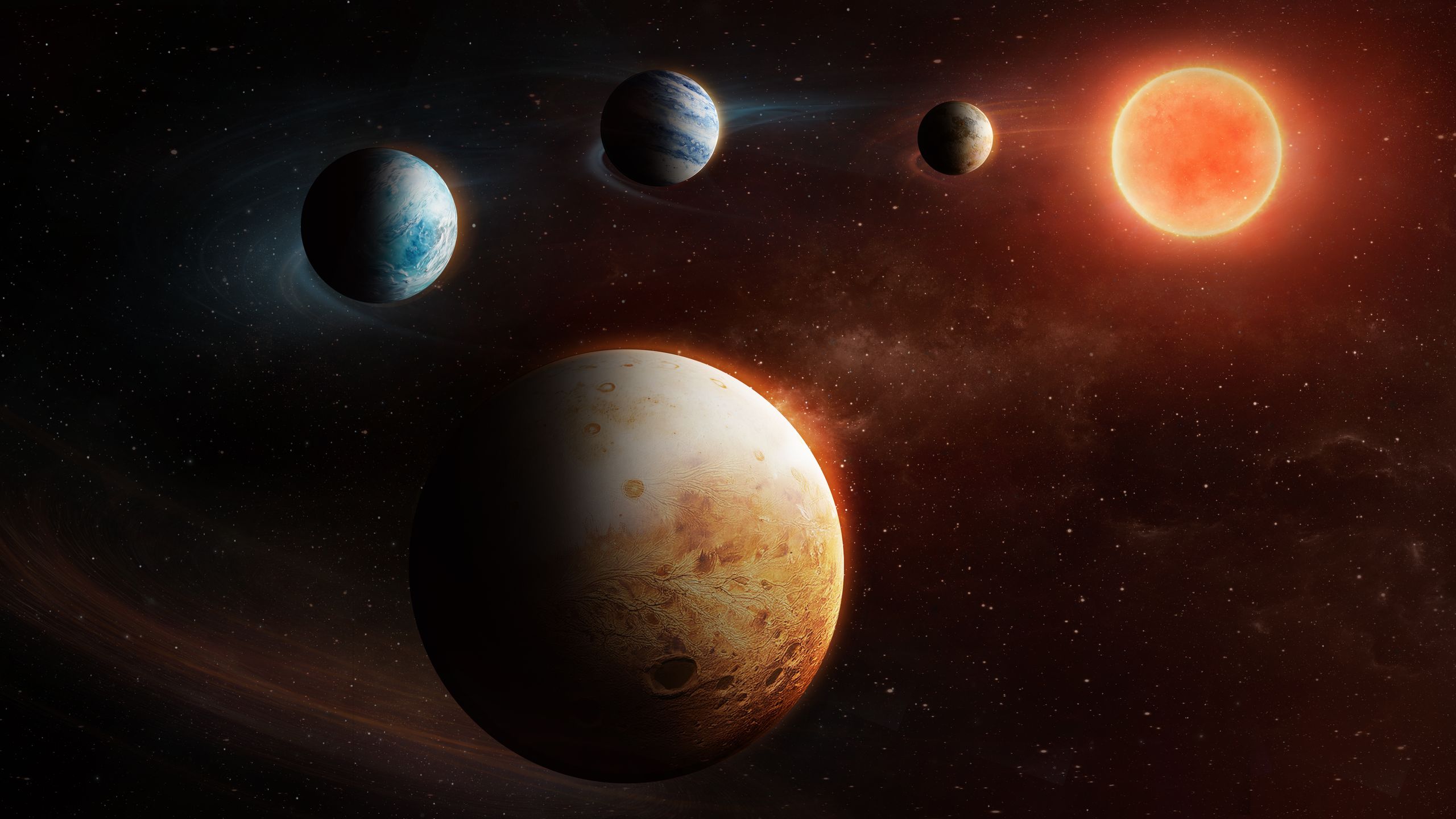
Astronomers have recently detected a planetary system described as “inside-out,” a configuration that directly contradicts long-standing scientific expectations. Unlike our archetypal solar system, where warm, rocky worlds orbit close to their star and gas giants are found in more distant paths, this newly identified system presents a perplexing reversal.
The discovery has prompted expressions of surprise from researchers, as it suggests a fundamental deviation from previously understood principles governing planetary formation. This atypical arrangement compels a re-evaluation of the established models that dictate how such celestial bodies coalesce and settle into their orbital patterns.
The Prevailing Model of Planetary System Formation
For decades, the standard understanding of planetary system development has been anchored by observations of our own solar system and subsequent theoretical modeling. This model posits that planets form from a protoplanetary disk of gas and dust rotating around a nascent star.
Within this disk, a temperature gradient is crucial: high temperatures near the star allow only refractory materials like silicates and metals to condense, leading to the formation of rocky, terrestrial planets. Farther out, beyond a region known as the frost line, cooler temperatures permit volatiles like water, methane, and ammonia to freeze, providing abundant material for the rapid accretion of massive gas giants.
The Perplexing “Inside-Out” Configuration
The newly observed system starkly diverges from this conventional ordering, presenting gas giants in close proximity to their central star while smaller, rocky planets occupy more distant orbits. This inverted architecture is not merely an unusual variation but a direct challenge to the causal mechanisms presumed to govern the initial distribution and subsequent evolution of planetary building blocks.
Such a layout implies that the conditions for planet formation, or the subsequent processes of planetary migration and orbital stabilization, must have unfolded in a profoundly different manner. The presence of massive gaseous worlds in regions typically associated with high temperatures and dense refractory material raises significant questions about the universality of established accretion and condensation sequences.
Reassessing Accretion and Migration Theories
The existence of an “inside-out” system necessitates a rigorous reassessment of the prevailing theories of planetary accretion and orbital migration. Current models often rely on specific parameters for material density, gas drag, and gravitational interactions within a protoplanetary disk to explain how planets grow and move into their final positions.
If gas giants can form or migrate to inner orbits while rocky planets are relegated to outer regions, it implies either a vastly different initial distribution of raw materials within the disk, or a set of strong gravitational or hydrodynamic forces capable of reversing or significantly altering expected migratory pathways. These findings suggest that the physics governing these processes may be more complex or varied than previously encapsulated in theoretical predictions.
Implications for Protoplanetary Disk Evolution
The evolution of protoplanetary disks, the birthplaces of planets, is a central area of astrophysical research. Models of disk evolution typically predict how gas and dust are transported, dissipated, and heated, influencing where and what type of planets can form.
An “inside-out” system challenges these models by suggesting that either the initial conditions of these disks, such as their mass distribution or chemical composition, can vary more widely than assumed, or that dynamic processes within the disk, perhaps involving turbulence or magnetic fields, play a more dominant and unpredictable role in shaping planetary architectures. This implies a wider spectrum of possible disk evolutionary paths that must now be considered.
Challenging the Universality of Planetary Architectures
For a significant period, our solar system served as the primary, albeit limited, reference for understanding planetary systems across the cosmos. While the discovery of exoplanets has broadened our perspective, many theoretical predictions still implicitly or explicitly build upon this familiar template.
This new discovery pushes the boundaries of observed planetary diversity, directly questioning the extent to which any single architectural template, including our own, can be considered universally representative. It underscores that planetary formation outcomes are likely far more varied and contingent upon local conditions and historical events within a given protoplanetary disk than previously hypothesized.
The Iterative Nature of Scientific Discovery and Knowledge Expansion
Unexpected astronomical findings like this “inside-out” system are fundamental catalysts in the scientific method, serving as crucial empirical data points that either validate or necessitate refinement of existing hypotheses. Scientific understanding is not static; it is an iterative process driven by observation, the formulation of explanatory models, and subsequent empirical testing.
Anomalies, far from being mere curiosities, are often the precise phenomena that reveal limitations in current theories, compelling researchers to develop more comprehensive and accurate descriptions of natural processes. This discovery exemplifies how new observational evidence can instigate a profound re-evaluation of long-held assumptions within the field of planetary science, pushing the boundaries of what is considered possible.
Shaping Future Observational Strategies
The existence of such an unusual system will undoubtedly influence the design, priorities, and analytical approaches of future exoplanet surveys and characterization missions. Astronomical observatories and instrument developers will be compelled to refine their detection capabilities and broaden their search parameters to account for a wider, more unpredictable spectrum of planetary configurations.
This shift in observational strategy is crucial; by actively seeking out and studying these unusual systems, scientists can gather the necessary data to constrain theoretical models and develop a more complete picture of cosmic diversity. The detection of an “inside-out” system underscores the need for flexible and adaptable research programs, capable of responding to unanticipated findings.
Advancing Theoretical Modeling in Astrophysics
Beyond observational adjustments, this discovery will also spur significant advancements in theoretical astrophysics. Modelers will need to construct new simulations and refine existing computational tools to explain how such an “inside-out” configuration could arise from known physical principles. This involves revisiting fundamental aspects of gravitational dynamics, hydrodynamics, and thermal evolution within protoplanetary disks.
The intellectual challenge posed by this anomaly encourages the development of more sophisticated and inclusive theoretical frameworks, potentially leading to breakthroughs in our understanding of exotic planetary formation pathways. It emphasizes the critical interplay between empirical data and theoretical innovation in pushing the frontiers of astrophysical knowledge.
The Evolving Understanding of Cosmic Diversity
The ongoing discovery of novel exoplanetary systems continuously refines humanity’s understanding of the cosmos, moving progressively beyond geocentric or solar system-centric perspectives. Each unique planetary arrangement provides invaluable insights into the myriad ways planets can form, evolve, and interact within their stellar environments.
This particular finding contributes significantly to the growing body of evidence indicating a profound diversity in planetary system architectures across the galaxy. It reinforces the understanding that the universe is far more varied and imaginative in its manifestations than current scientific theories can fully encapsulate, highlighting the vastness of unexplored physical phenomena.
The Interplay Between Observation and Theory
In the scientific discipline of astrophysics, theoretical models are constantly informed, constrained, and rigorously tested by observational data gathered through advanced instrumentation. When observations, like this “inside-out” system, deviate significantly from theoretical predictions, it serves as a critical indicator of gaps or inaccuracies within current theoretical constructs.
This dynamic interplay between empirical observation and theoretical refinement is central to the relentless advancement of astrophysical knowledge. Such a discrepancy acts as a powerful impetus, challenging the scientific community to either integrate the new data into existing theories or to forge entirely new conceptual understandings that can accommodate previously unforeseen cosmic realities.
Refining Scientific Consensus
Scientific consensus, though robust, is inherently provisional and subject to revision as new evidence emerges. It represents the best current explanation based on the preponderance of available data and rigorous peer review.
The detection of an “inside-out” planetary system functions as a critical test for the completeness and explanatory power of this consensus. Such an anomaly is not merely a curious outlier; it serves as a potent signal that demands a deeper theoretical exploration, potentially paving the way for a significant re-evaluation of foundational principles in planetary science.
Broader Implications for Exoplanet Research
The implications of this discovery extend across the entire field of exoplanet research, urging scientists to reconsider assumptions about the frequency and characteristics of different planetary system types. It compels a more open-ended approach to classifying and categorizing newly found systems, moving beyond simple comparisons to our own solar system.
This broader perspective will likely lead to the identification of more unexpected configurations, further enriching our understanding of the universe’s capacity for diverse planetary development. The “inside-out” system thus becomes a benchmark for the extremities of planetary architecture, pushing researchers to anticipate and explain a wider range of cosmic phenomena.
Challenges in Data Interpretation
Interpreting observations of distant exoplanetary systems inherently involves challenges due to limitations in data resolution and the indirect nature of detection methods. The confidence in characterizing a system as “inside-out” relies heavily on the sophisticated analytical techniques applied to the raw observational data.
This scenario underscores the continuous effort required in astronomy to refine observational techniques and data processing algorithms, ensuring that interpretations are as robust and accurate as possible. The surprising nature of this finding highlights the crucial role of verification and independent analysis in affirming such significant departures from expected norms.
The Pursuit of a Unified Theory of Planet Formation
Ultimately, discoveries like the “inside-out” system contribute to the ongoing scientific pursuit of a unified theory of planet formation, one that can explain the full spectrum of observed planetary system diversity. Such a comprehensive theory would need to account for not only the archetypal solar systems but also these rare and puzzling configurations.
Achieving this level of theoretical completeness requires integrating insights from various sub-disciplines, including stellar astrophysics, gas dynamics, and solid-state physics. The “inside-out” system serves as a critical touchstone, pushing the scientific community towards a more robust and all-encompassing understanding of cosmic evolution.