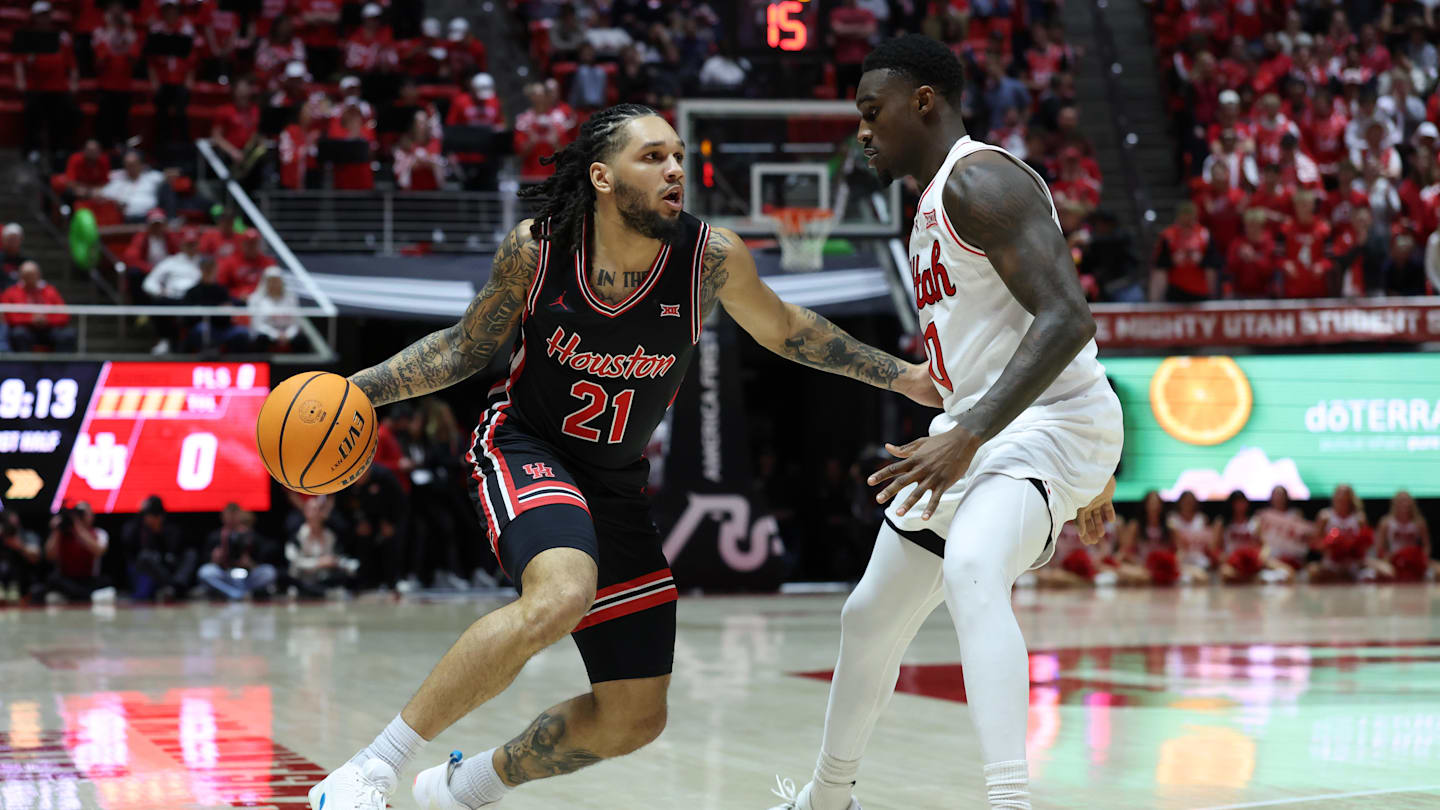
On February 10, 2026, the No. 3 Houston Cougars achieved a decisive 66-52 victory over the Utah Utes in Salt Lake City, a pivotal contest within the demanding Big 12 conference schedule. This game was marked by Houston’s Emanuel Sharp setting a new school career record for three-pointers, highlighting both individual athletic prowess and collective team dominance.
The outcome, characterized by a relentless Houston defense that effectively stifled Utah’s offensive efforts, represents more than a singular athletic event. It offers a clear illustration of the complex interplay between institutional strategies, established competitive regulations, and performance metrics that continually shape the landscape of major collegiate sports.
The Structural Dynamics of Collegiate Athletic Standing
The designation of the Houston Cougars as the No. 3 team nationally, coupled with an impressive 21-2 overall record and a 9-1 standing within the Big 12, signifies a robust institutional position within collegiate athletics. This esteemed ranking is not merely a momentary indicator of on-court success but rather a testament to sustained strategic investment and highly effective program management by the university’s athletic department. Sustaining such a high national profile necessitates consistent operational excellence across a multitude of domains, encompassing meticulous talent acquisition, advanced player development, and the cultivation of an elite coaching staff.
In contrast, the Utah Utes’ record of 9-14 overall and 1-9 in conference play positions them within a different stratum of the competitive hierarchy within the Big 12 and the broader national collegiate landscape. While athletic programs inherently experience cycles of development and performance, this record underscores the intensely demanding nature of major conference competition. It highlights the constant pressure on university athletic departments to continually optimize their strategic approaches in player recruitment, coaching methodologies, and overall program infrastructure.
These evident disparities in team records provide a tangible representation of the varied trajectories and operational challenges faced by institutions operating within the same overarching regulatory and competitive framework. They reflect different stages of program development, resource allocation priorities, and the efficacy of implemented athletic strategies. Such differences are critical for understanding the institutional context of each competitive encounter.
The Governance and Regulation of Conference Play within the Big 12
The designated “Big 12 action” between Houston and Utah places this game within the highly structured and self-governing ecosystem of an intercollegiate athletic conference. The Big 12 Conference operates under a distinct charter and a comprehensive set of bylaws, which together establish the regulatory framework dictating the operations of its member institutions’ athletic programs. This intricate framework is designed to ensure competitive balance and uphold the integrity of the league.
These conference regulations are extensive, governing crucial aspects such as the intricate scheduling of games, the specific rules of competition, the professional standards for officiating, and the methodology for determining conference standings and championship qualifications. Each of these elements collectively contributes to maintaining the fairness, predictability, and competitive intensity of league play. Adherence to these bylaws is a mandatory condition of conference membership, shaping every decision from player eligibility to game-day protocols.
A team’s performance within the Big 12 Conference holds direct and substantial implications for its potential qualification and seeding in post-season tournaments, including both the annual conference championship and the prestigious national NCAA tournaments. Every single conference game contributes cumulatively to a record that ultimately dictates eligibility and competitive positioning. This system of cumulative record-keeping inherently imposes a direct regulatory consequence on each competitive outcome, profoundly influencing institutional strategic planning and resource allocation for future seasons.
The institutional commitment to participate in a major conference like the Big 12 extends beyond merely competing on the court; it entails a fundamental adherence to a shared set of governance principles. These principles encompass crucial areas such as maintaining robust academic standards for student-athletes, upholding strict ethical conduct across all athletic operations, and ensuring financial transparency within athletic department budgets. All these facets are rigorously overseen by the conference’s dedicated administrative apparatus.
Consequently, the performance of individual teams serves as a direct reflection not only of their athletic prowess and competitive readiness but also of the institution’s broader capacity to operate effectively and ethically within these overarching regulatory expectations. The system provides accountability for how member universities manage their athletic programs, fostering an environment where both sporting success and institutional integrity are continuously evaluated.
Strategic Management and Program Development within University Athletics
The “relentless Houston defense” explicitly noted in the game report is a concrete manifestation of an athletic program’s strategic development and underlying coaching philosophy. This characteristic defensive approach is typically the outcome of a deliberate and long-term commitment to specific coaching decisions, the targeted recruitment of athletes possessing particular skill sets and attributes, and the implementation of extensive, specialized training methodologies. It powerfully reflects a commitment from the athletic department to cultivate a distinct style of play that is carefully aligned with its overarching competitive aspirations and the university’s institutional identity.
For the Utah Utes, the experience of being “stifled” and enduring a “blowout loss” necessitates an internal and comprehensive review of strategic effectiveness, ongoing player development initiatives, and actual game-day execution within their athletic program. These adverse outcomes are universally recognized as critical data points for both the coaching staff and athletic administrators, serving to inform future decisions regarding practice regimens, necessary tactical adjustments, and the precise priorities for upcoming recruitment cycles. Performance in high-stakes conference games thus functions as an essential benchmark for rigorously evaluating the efficacy and adaptability of current programmatic strategies.
The sophisticated management of a collegiate basketball program, especially one embedded within a major conference, entails complex and multi-layered administrative oversight. This extensive oversight includes critical budgetary allocations for coaching salaries, the maintenance and enhancement of state-of-the-art facilities, travel logistics, and student-athlete scholarships, all of which fall under the explicit purview of broader university governance structures. Therefore, the sustained success or the evident struggles of a team are, in significant part, a direct consequence of how effectively these substantial resources are managed, allocated, and strategically aligned with institutional objectives aimed at fostering competitive excellence and ensuring comprehensive student-athlete well-being.
Effective athletic program management also involves intricate processes for compliance with external regulations, internal policy development, and robust risk management. These administrative layers are crucial for sustaining long-term program viability and success, ensuring that competitive achievements are built upon a foundation of institutional integrity and operational soundness. The game’s outcome thus reflects not just athletic ability but also the underlying strength of these administrative and governance structures.
The Enduring Significance of Individual Achievements within the Institutional Narrative
Emanuel Sharp’s significant achievement of setting a new school career record for three-pointers extends far beyond a simple statistical entry in the record books. This milestone becomes an indelible and celebrated component of the institution’s rich athletic history and its ongoing narrative. Such individual records are fundamentally integral to the cultural fabric of university sports programs, serving as powerful benchmarks of athletic excellence and profound sources of institutional pride for the entire university community.
These celebrated achievements contribute significantly to the individual legacy of the athletes themselves, simultaneously enhancing the historical depth, prestige, and overall reputational standing of the university’s athletic department. They create a lineage of success that inspires current and future generations of student-athletes and alumni. The recognition of such a record reinforces the value placed on dedication and sustained high-level performance within the program.
The meticulous tracking, verification, and public celebration of career records are fundamental administrative aspects of athletic governance within universities. These robust systems ensure the accurate documentation and archival of achievements, providing essential historical continuity and consistently reinforcing the institutional values of perseverance, skill development, and competitive success. The widespread public acknowledgment of such milestones, facilitated through various media channels and official institutional communications, profoundly amplifies their cultural and strategic significance.
From a strategic recruitment perspective, individual records like Sharp’s can exert a considerable influence on the attraction of future talent and significantly boost fan engagement. Prospective student-athletes are frequently drawn to programs that boast a distinguished history of developing record-setting talent, recognizing the robust institutional support, superior coaching expertise, and comprehensive development pathways that facilitate such extraordinary accomplishments. This intergenerational linkage of competitive achievement powerfully reinforces the enduring appeal and strategic value of investing in a well-managed and high-performing athletic program.
Media Context and the Reputational Impact in Collegiate Sports
The intense media attention surrounding a game involving a nationally ranked team, such as No. 3 Houston, and a notable individual performance, exemplified by Sharp’s record, carries profound reputational implications for all institutions involved. Specialized sports media outlets, both traditional and digital, meticulously track, analyze, and report on such high-profile contests. This extensive coverage actively shapes public perception and significantly contributes to the overarching national narrative concerning collegiate basketball. A dominant victory, particularly against a conference opponent, consistently reinforces the public image of a top-tier program, solidifying its standing in the national conversation.
Conversely, a significant loss, especially one described as a “blowout,” can provoke critical analyses and raise pertinent questions about a team’s competitive viability, strategic effectiveness, and the overall direction of its athletic program. These media narratives are powerful, influencing perceptions among fans, alumni, and prospective student-athletes, underscoring the high stakes involved in every major collegiate sporting event. The editorial framing of game outcomes therefore becomes a crucial component of institutional reputational management.
In the contemporary digital landscape, game recaps, highlight reels, and individual achievements are rapidly disseminated across a multitude of platforms, influencing fan engagement, strengthening alumni relations, and even impacting broader university recruitment efforts beyond the scope of athletics. The heightened visibility garnered from being a highly-ranked program, or from fostering a record-setting player, directly contributes to a university’s broader brand recognition and its overall public profile. This pervasive media context unequivocally demonstrates how athletic success is intricately intertwined with the university’s overarching institutional objectives related to public visibility, brand prestige, and philanthropic support.
The descriptive language used in reporting, whether emphasizing a “blowout loss” or a “drubs” victory, vividly illustrates the media’s influential role in interpreting and presenting athletic events to an extensive and diverse audience. While factually grounded, these editorial descriptions actively contribute to the ongoing narrative of competitive strength versus relative weakness, which in turn profoundly influences the institutional perception of athletic programs. Consequently, every game, particularly those within major conferences, creates a ripple effect across media channels that directly impacts a university’s valuable reputational capital.
The Overarching Regulatory Ecosystem of Collegiate Athletics
Beyond the specific bylaws and administrative structures of individual conferences, all NCAA Division I athletic programs operate within a comprehensive and multifaceted regulatory ecosystem overseen by the National Collegiate Athletic Association itself. This expansive overarching framework establishes the fundamental principles and mandates that govern critical aspects such as student-athlete eligibility, the strict rules of amateurism, ethical recruitment practices, and the promotion of competitive equity across thousands of member institutions nationwide. While not explicitly detailed within the game report, the successful and legitimate staging and competition of this specific Big 12 contest implicitly relies upon rigorous adherence to these foundational principles and standards.
The NCAA’s intricate regulatory structure is meticulously designed to serve several key objectives: ensuring a truly level playing field for all competitors, safeguarding the holistic welfare of student-athletes, and ultimately maintaining the enduring integrity and public trust in collegiate sports. Member institutions are thus obligated to continually navigate and comply with these inherently complex regulations. These rules dictate everything from rigorous academic progress standards that student-athletes must meet to the permissible benefits they can receive, ensuring fair play and preventing undue advantages.
The absence of any reported regulatory infractions or eligibility issues in connection with this particular game between Houston and Utah underscores the routine and stringent compliance demanded of university athletic departments in their day-to-day and season-long operations. Compliance is not merely a formality but a continuous institutional effort involving dedicated staff, training, and internal auditing processes. It is a fundamental aspect of operating a legitimate and respected collegiate athletic program within the current framework.
This complex and pervasive web of governance and regulation serves as the essential bedrock that ensures competitive events, such as the Houston-Utah basketball game, are consistently conducted within well-established, transparent parameters. This structured environment fosters predictable and fair athletic competition across the collegiate landscape. The institutional capacity to effectively manage and sustain compliance with these multifarious regulations is a critically important, though often unseen, component of achieving and sustaining long-term athletic program success. It forms the foundational and validating layer upon which all on-court achievements are ultimately built, recognized, and given lasting meaning within the broader system of collegiate sports.
Concluding Perspectives on Collegiate Sports Dynamics
The basketball game of February 10, 2026, where the Houston Cougars secured a 66-52 victory over the Utah Utes, serves as a compelling microcosm of the multifaceted nature inherent in collegiate athletics. This event encapsulated moments of individual brilliance, prominently displayed in Emanuel Sharp’s record-setting performance, alongside significant collective team dynamics, characterized by Houston’s defensive dominance and Utah’s evident struggles against it.
More fundamentally, this specific contest functions as a discrete yet significant data point within an elaborate and interconnected structural system. This system is comprehensively governed by the specific bylaws of the conference, the strategic operational decisions of university athletic departments, and the overarching regulations stipulated by the NCAA. The outcome of such a game holds practical implications, as it actively informs institutional strategic decisions, significantly influences media narratives, and contributes directly to the ongoing competitive standing and reputational capital of both universities within a highly competitive landscape.
Therefore, while a single game score merely reports an immediate result, its true and profound significance lies in its intrinsic integration into the broader governance and operational frameworks that fundamentally shape collegiate sports. This particular event offers valuable insights into how institutions meticulously manage their athletic programs, how conferences rigorously enforce competitive standards and maintain fairness, and how individual achievements contribute meaningfully to a university’s enduring legacy in the broad and dynamic realm of intercollegiate competition. It illustrates the continuous interplay between performance, policy, and perception that defines the modern athletic enterprise.