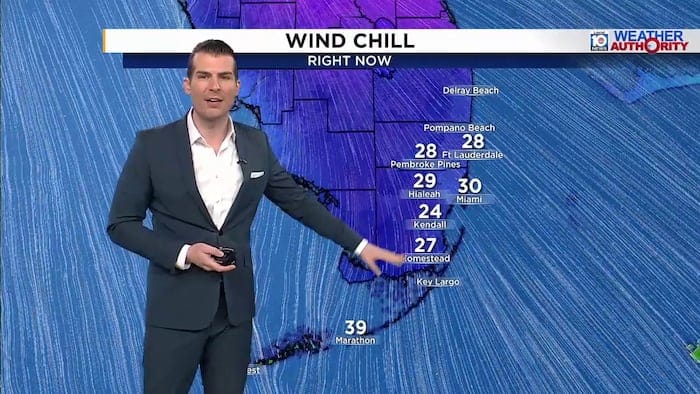
South Florida experienced a historic cold snap, with temperatures falling into the mid-30s Fahrenheit, accompanied by wind chills creating even colder sensations. This significant temperature drop prompted the National Weather Service (NWS) to issue a freeze warning for Miami-Dade and Broward counties.
Historic Cold Event
The region registered its most intense cold spell in over a decade on Sunday morning. Temperatures reached the mid-30s Fahrenheit, a level that can pose significant risks to sensitive ecosystems and infrastructure not accustomed to such low temperatures.
Meteorological Context and Warnings
The National Weather Service’s issuance of a freeze warning signifies the severity of the event and the potential for damaging frost and freezing conditions. Such warnings are critical alerts designed to inform the public and relevant authorities about impending weather phenomena that could cause harm or disruption.
These warnings are part of the NWS’s broader mandate to provide weather forecasts, warnings, and related data to protect life and property. The agency’s operational framework involves monitoring atmospheric conditions, analyzing weather models, and disseminating timely information through various channels.
Impact on Local Wildlife
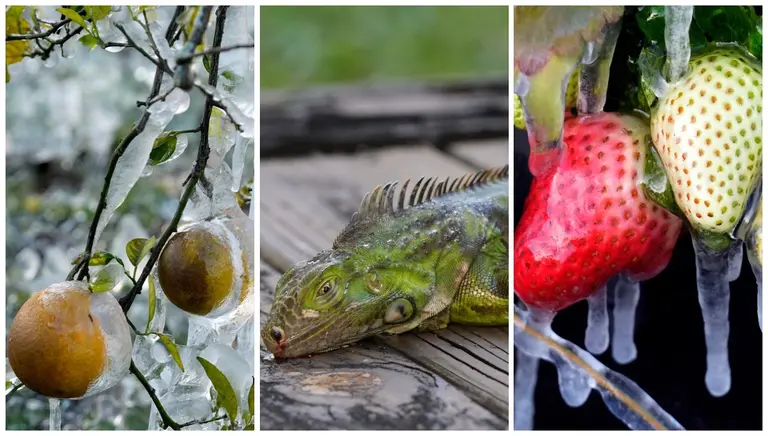
The extreme cold affected local wildlife, notably green iguanas. The report indicates that these non-native reptiles can enter a state of torpor, or lethargic stupor, due to the low temperatures. Authorities cautioned the public against handling iguanas in this state, as they may react defensively, exhibiting behaviors such as scratching or tail-whipping when they regain mobility.
This phenomenon highlights the ecological challenges posed by invasive species in environments unsuited to their typical physiological tolerances. The cold acts as an environmental stressor, temporarily immobilizing creatures that are otherwise adapted to warmer climates, making them vulnerable to environmental forces and human interaction.
Agricultural and Horticultural Concerns
Beyond wildlife, the cold snap also impacted fruits and potentially other agricultural produce. The mention of frozen fruits suggests that crops susceptible to freezing temperatures may have sustained damage. Florida’s agricultural sector, which includes a wide variety of fruits and vegetables, is particularly vulnerable to sudden and unseasonable cold weather.
Agricultural authorities and farmers typically implement protective measures during such events, including covering crops, using irrigation systems to protect against frost, and managing harvesting schedules to mitigate losses. The economic implications of widespread crop damage can be substantial for regional agriculture.
Broader Implications of Extreme Weather
The occurrence of such extreme cold in South Florida underscores the complex and sometimes unpredictable nature of weather patterns. While the region is known for its tropical and subtropical climate, localized or broader weather systems can bring uncharacteristic conditions.
The operational response to such events involves coordination between meteorological services, emergency management agencies, and the public. The NWS’s role is primarily advisory and informational, providing the scientific basis for protective actions. Local governments and emergency managers translate these warnings into actionable guidance for residents and businesses, such as advice on protecting plants, pets, and plumbing.
The structural and administrative response to such weather events relies on established protocols for disseminating warnings and coordinating preparedness efforts. These frameworks are designed to leverage meteorological expertise to minimize societal impact, ensuring that the public has access to the information needed to take appropriate precautions against adverse weather conditions.