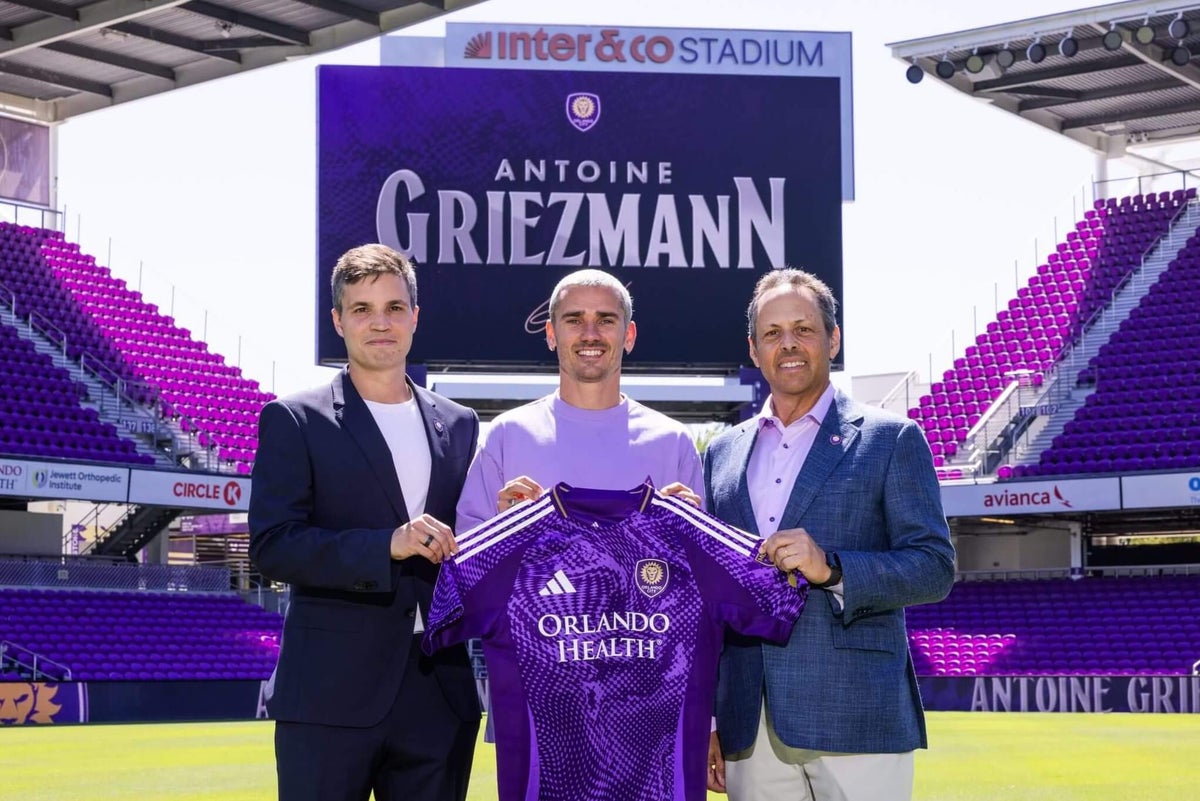
Griezmann to Orlando City: A Pivotal Move in MLS’s Global Strategy
Orlando City’s announcement of French World Cup-winning forward Antoine Griezmann as a Designated Player marks a significant strategic acquisition. This two-year deal, extending through the 2027-28 season with a club option, positions a globally recognized talent at the core of Orlando’s future ambitions, reflecting a deliberate evolution in the club’s roster construction and the league’s broader competitive positioning.
Strategic Sporting Impact: Elevating Roster & Competitive Standard
The signing of Antoine Griezmann, at 35, as a Designated Player, represents a calculated investment by Orlando City in both immediate on-field impact and long-term club development. The Designated Player (DP) rule, a cornerstone of Major League Soccer’s unique salary cap structure, enables clubs to acquire high-value talent whose salaries exceed the league’s standard limitations. This mechanism is strategically deployed to attract players of Griezmann’s caliber, balancing competitive parity within the league with the imperative of star power.
Griezmann’s extensive career statistics—including 298 goals and 132 assists across 792 professional appearances for top European clubs like Atlético Madrid, Barcelona, and Real Sociedad—underscore his proven ability at the highest levels of football. His arrival is expected to profoundly elevate the technical standard, tactical depth, and leadership within the Orlando City squad, directly influencing playoff contention and aspirations for silverware. Club owner and chairman Mark Wilf articulated this vision, emphasizing a commitment to consistently build a championship-caliber roster, a sentiment that resonated with Griezmann’s own desire for a clear future vision.
Commercial & Brand Acceleration: MLS on the Global Stage
Griezmann’s arrival is strategically framed as the “next world star” joining MLS, following high-profile transfers like Lionel Messi and Thomas Müller. This narrative is crucial for the league’s deliberate and sustained strategy to enhance its global brand recognition, attract international viewership, and secure increased investment. The consistent addition of globally renowned players directly contributes to the league’s media valuation, making broadcast rights more attractive to international partners and significantly boosting overall fan engagement.
This pattern of attracting established European talent represents a fundamental strategic shift for MLS, moving beyond its historical perception as merely a developmental league or a retirement destination. It positions MLS as a viable and attractive option for players still capable of performing at a high level, seeking new challenges and market opportunities. The commercial implications extend beyond direct club revenue, impacting league-wide sponsorship deals, merchandise sales, and the overall perception of MLS as a premier footballing entity. Each high-profile signing reinforces the league’s strategic objective of becoming a top-tier global football league.
Financial Leverage & Return on Investment
While specific financial terms beyond Griezmann’s Designated Player status are not disclosed, his historical career transfers—including a 54 million euro move to Atlético Madrid in 2014 and a 120 million euro transfer to FC Barcelona in 2019—contextualize the substantial market value he has commanded. Even at 35, the decision to sign Griezmann as a Designated Player implies a significant salary commitment from Orlando City, justified not solely by on-field performance but critically by anticipated commercial returns.
These returns include increased ticket sales, merchandise revenue, and enhanced sponsorship appeal. The presence of a player with Griezmann’s global recognition can significantly boost Orlando City’s brand visibility, attracting new fans and corporate partners. This commercial leverage is a critical component of the return on investment for such a high-profile acquisition, extending the value proposition beyond immediate sporting results. This financial strategy aligns with the ownership’s stated commitment to building a championship-caliber roster, recognizing that sustained success often correlates with amplified commercial opportunities.
Operational & Regulatory Complexities of Elite Transfers
The successful execution of Griezmann’s transfer hinges on several critical operational and regulatory steps, typical for cross-border sports employment. These include a comprehensive medical clearance to ensure the player meets the physical demands of the league and minimizes injury risk; the receipt of an International Transfer Certificate (ITC), issued by FIFA through national federations to confirm registration status and ensure compliance with global regulations; and securing a P-1 visa, a non-immigrant category for internationally recognized athletes entering the United States.
Griezmann’s arrival, set for July 13th, aligns with the opening of global football’s summer transfer window, a structured period for player movements. The mention of a previously failed move last winter underscores the inherent complexities and potential hurdles in high-stakes international transfers, where negotiation dynamics, regulatory approvals, and player preferences all influence successful deal completion.
Broader Ecosystem Dynamics & Industry Recalibration
Griezmann’s transfer generates significant implications across multiple stakeholder groups within the football ecosystem. For Orlando City, it provides a substantial boost to competitive aspirations and commercial appeal, directly translating into increased fan engagement and revenue streams. For Major League Soccer, the acquisition of another global icon reinforces its strategic narrative of growth and increasing prominence on the international stage, enhancing league-wide marketability, investment, and talent attraction.
Atlético Madrid, Griezmann’s former club, will experience a shift in squad dynamics, allowing for potential salary cap relief and restructuring opportunities. This transfer also signals to other European stars that MLS is an increasingly viable and attractive destination, offering competitive contracts and a dynamic league environment. Fans, both of Orlando City and MLS generally, benefit from an enhanced quality of play and the excitement generated by such a high-profile signing, leading to increased attendance and media consumption. The media landscape also intensifies its coverage and analysis of MLS, further elevating its profile through the recurring narrative of “world stars” joining the league.
Ultimately, Griezmann’s transfer is a tangible manifestation of MLS’s evolving strategic blueprint: leveraging star power to drive commercial growth, elevate competitive standards, and solidify its position as a dynamic and increasingly influential force in the global football landscape. This ongoing transformation redefines expectations for the league’s future trajectory, reflecting a broader recalibration within the global football industry where MLS steadily increases its strategic leverage.