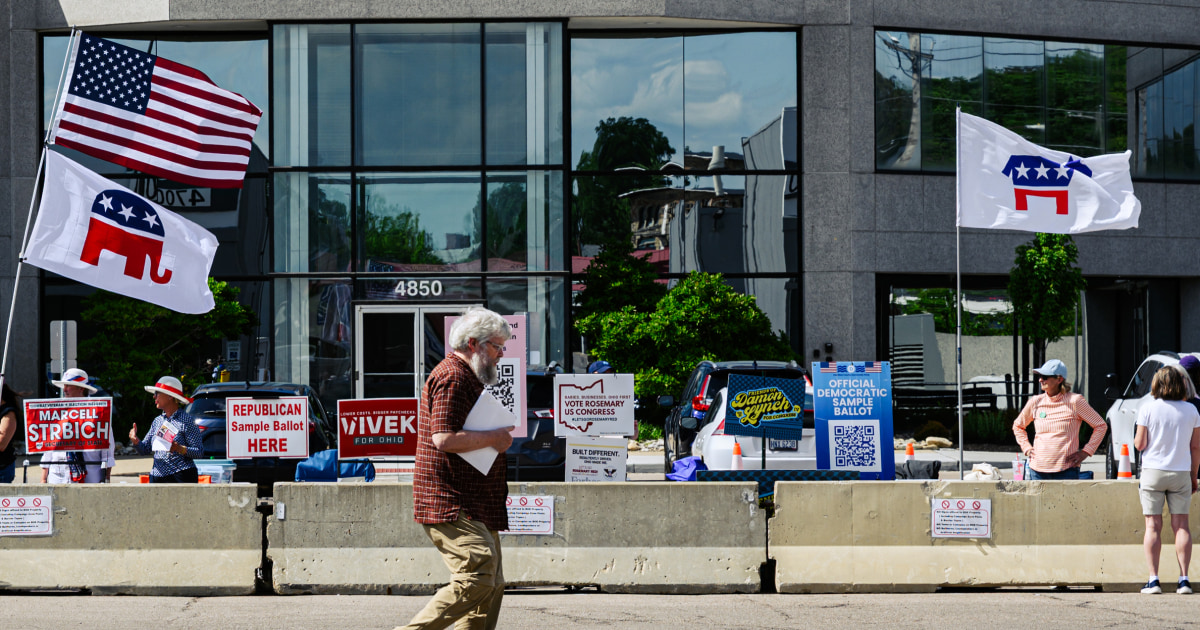
The primary outcomes in Indiana and Ohio function as critical data points in the Republican Party’s ongoing structural transformation. These contests illuminate a move away from institutional stability toward a model where ideological and procedural compliance with national leadership—specifically the Trump-aligned wing—determines political survival. In Indiana, the purge of state-level incumbents underscores a new reality: traditional incumbency advantages are insufficient against candidates leveraging nationalized grievances, particularly regarding redistricting.
Redistricting as a Litmus Test for Institutional Loyalty
In Indiana, the defeat of multiple state senators who resisted the endorsed congressional map signals the weaponization of redistricting as a tool for party discipline. This shift indicates that state-level autonomy is being superseded by a centralized strategy aimed at long-term federal dominance. By ousting dissenters, the pro-Trump faction has not only secured a more favorable map but has also established a precedent where procedural non-compliance results in immediate electoral obsolescence.
For strategists and donors, this development marks a transition from ‘retail politics’ to ‘narrative politics.’ The ‘kingmaker’ status of the former president has evolved into a mechanism for enforcing party cohesion. Incumbents now face a strategic dilemma: prioritize local institutional independence or align with national directives to mitigate primary risk. This centralization streamlines the party’s ability to project power from state legislatures to the federal level without internal friction.
Ohio’s Bifurcated Strategy: Populist Executives vs. Institutional Legislators
The Ohio results present a dual-track strategy for GOP dominance. The projection of Vivek Ramaswamy as the gubernatorial nominee institutionalizes the outsider-populist archetype at the state executive level. His transition from a national platform to a regional power base suggests a calculated move to build a durable populist infrastructure. His upcoming matchup against Amy Acton will serve as a definitive test of administrative expertise versus disruptive political messaging.
Conversely, the Senate race featuring incumbent Sherrod Brown and GOP challenger Jon Husted reflects a more traditional consolidation of party resources. Husted’s candidacy represents the establishment’s attempt to flip a critical federal seat by utilizing a candidate with deep institutional ties. This bifurcated approach—populism for the executive and institutionalism for the legislature—suggests a sophisticated diversification of the party’s electoral portfolio to maximize appeal across different demographic segments.
California’s Volatility and the Vacuum of Leadership
The California gubernatorial race has transitioned into a period of extreme fluidity following Eric Swalwell’s withdrawal amid misconduct allegations. This exit has dismantled the previous hierarchy of the race, forcing a scramble among the remaining seven candidates to capture a suddenly unanchored donor and voter base. In California’s nonpartisan primary system, this reshuffling necessitates a pivot toward broader ideological appeal to secure a top-two finish.
The speed with which Swalwell’s support evaporated highlights the high reputational risks inherent in modern political cycles. For the remaining field, the challenge is now one of differentiation in a crowded environment where no single candidate holds a definitive institutional mandate. This volatility underscores the fragility of political momentum and the impact of personal conduct on structural party goals.
Nationalization and Midterm Risk Management
Vice President JD Vance’s intervention in Iowa to support Representative Zach Nunn illustrates the GOP’s defensive strategy for the House majority. By deploying high-profile national figures to stabilize vulnerable incumbents, the party is effectively nationalizing local races to insulate them from economic headwinds. This ‘midterm jitter’ response suggests that even in traditionally safe or trending GOP districts, national leadership views high-level intervention as a prerequisite for victory.
The integration of data-driven analysts like Steve Kornacki into the public consciousness reflects the increasing sophistication of how these results are consumed and utilized. These primaries are not merely local choices but are strategic indicators used to calibrate the flow of national capital and media resources. The momentum established in Indiana and Ohio will likely dictate the GOP’s resource allocation through the general election cycle, prioritizing ideological purity and structural control.