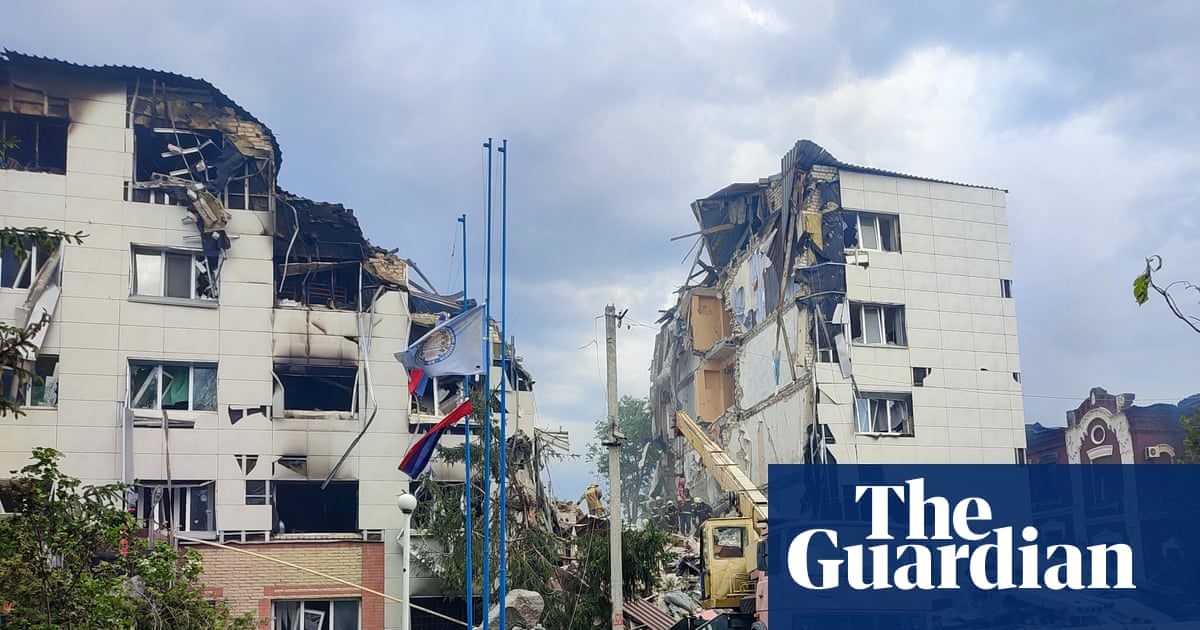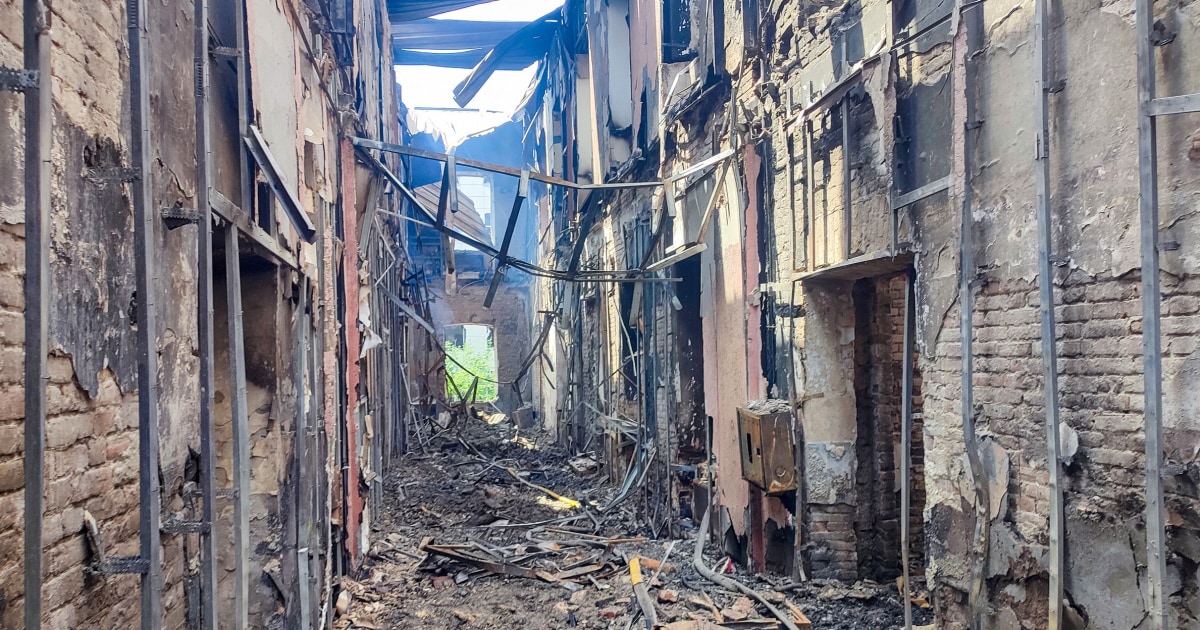
The drone strike targeting the Starobilsk Professional College dormitory in the Russian-occupied Luhansk region of eastern Ukraine represents a critical intersection of kinetic warfare, international law, and strategic communication. This localized strike quickly transcended its immediate tactical boundaries, generating diametrically opposed narratives from Moscow and Kyiv that illustrate the complex friction of modern information warfare. The incident highlights how contemporary combatants leverage domestic tragedy, operational intelligence claims, and multilateral institutions to secure strategic legitimacy while undermining adversary alliances.
Kinetic Catalyst and Conflicting Casualty Dynamics
The structural destruction of the five-story educational facility in Starobilsk has become a central flashpoint for escalatory rhetoric. Russian state television immediately disseminated footage of the collapsed facade and subsequent rescue operations, framing the strike as a deliberate, terroristic targeting of civilian infrastructure. This rapid media mobilization was followed by high-level political posturing; Russian President Vladimir Putin characterized the event as a terrorist act and ordered the military command to draft concrete retaliatory measures. This rapid translation of a tactical event into a strategic directive demonstrates how localized kinetic actions are immediately synthesized into state-level escalatory signaling.
The human toll of the strike remains contested, reflecting the asymmetrical information ecosystems of active conflict zones. Russian officials initially reported six fatalities, a figure subsequently revised to sixteen, and later to twenty-one deaths alongside forty-two injuries. State emergency services emphasized that the casualties predominantly comprised young women, a detail leveraged by state news outlets like RIA to build domestic consensus for retaliatory military action. To reinforce this narrative of civilian victimization, Russian state media heavily featured individual survivor accounts, notably that of twenty-one-year-old Olga Kovaleva, thereby operationalizing human tragedy to solidify domestic mobilization and justify future kinetic responses.
Institutional Friction and Multilateral Diplomatic Theater
The diplomatic fallout of the Starobilsk strike materialized rapidly at the United Nations Security Council, where Russia convened an emergency session to accuse Ukraine of systematic war crimes. This diplomatic maneuver represents a calculated effort by Moscow to exploit multilateral frameworks, seeking to diplomatically isolate Kyiv and degrade the political viability of continued Western defense assistance. By presenting casualty lists and visual evidence of the destroyed dormitory, Russian diplomats attempted to construct a prima facie case of a violation of international humanitarian law, testing the cohesion of Ukraine’s international coalition.
In response, Ukrainian Ambassador to the United Nations Andrii Melnyk rejected the accusations, characterizing the emergency session as a diversionary propaganda exercise designed to obscure Russia’s own systemic operational conduct. Kyiv’s defense rested on the assertion of conformity with *jus in bello* principles, which dictate a strict differentiation between civilian objects and legitimate military objectives. The Ukrainian delegation countered by highlighting a series of highly targeted strikes against high-value military assets on the same day, including command centers and air defense nodes, framing their operations as precise, intelligence-led degradations of the Russian war machine rather than indiscriminate kinetic acts.
Operational Intelligence and Targeting Discrepancies
The core strategic dispute lies in the fundamental disagreement regarding the nature of the Starobilsk target. While Moscow maintains the dormitory housed exclusively students, Ukrainian military intelligence asserted that the facility was being utilized as an active base of operations for an elite Russian drone command unit. This discrepancy highlights the critical role of intelligence-led targeting and the profound challenges of target verification within urban conflict zones. The integration of specialized military personnel into dual-use or civilian infrastructure remains a persistent source of legal and operational friction in contemporary warfare.
Given the high tactical utility of unmanned aerial vehicle (UAV) operators, such units have become primary targets for interdiction efforts aimed at disrupting tactical reconnaissance and strike capabilities along the Luhansk frontline. If the Ukrainian targeting intelligence was accurate, the strike constitutes a high-value degradation of Russian tactical capabilities; if the intelligence was flawed, or if the civilian collateral damage was disproportionate to the anticipated military advantage, the strike presents significant political and legal vulnerabilities for Kyiv. The inability of independent international observers, including Reuters, to verify these claims highlights the profound information vacuum surrounding remote strikes in occupied territories.
Information Sovereignty and Domestic Mobilization Paradigms
The media management surrounding the Starobilsk strike illustrates the systematic integration of battlefield events into national security communication strategies. Russian state-run news agencies have sustained a highly granular focus on the recovery efforts, highlighting the identities and biographies of the victims. This continuous coverage is designed to evoke a strong emotional resonance, reinforcing the state’s narrative of defensive necessity and sustaining public tolerance for the material and human costs of the protracted conflict.
Conversely, Ukraine’s communication strategy emphasizes transparency, precision, and adherence to international legal norms. By contextualizing the Starobilsk strike within a broader array of targeted operations—including strikes on oil refineries, ammunition depots, and air defense systems—Kyiv seeks to project an image of disciplined, high-precision warfare. This posture is vital for maintaining the trust and strategic alignment of Western partners, whose continuous supply of advanced weaponry and real-time intelligence is contingent upon Ukraine’s perceived compliance with international humanitarian law. These divergent communication strategies demonstrate that information sovereignty is as critical to contemporary warfare as physical territorial control.
Alliance Dynamics and Sovereign Legitimacy Disputes
The geopolitical shockwaves of the strike have also influenced the strategic posturing of neighboring European states and international security alliances. Czech President Petr Pavel leveraged the escalatory context of the strike to urge NATO allies to adopt a more assertive collective posture, arguing that the alliance must demonstrate decisive resolve to deter systemic revisionist actions. This statement reflects a growing anxiety among Eastern European member states that perceived Western hesitation could embolden further Russian assertiveness, highlighting ongoing internal debates within NATO regarding the threshold for escalation versus deterrence.
Furthermore, the incident underscores the contested sovereignty of the annexed territories. While Moscow claims the Luhansk region as sovereign Russian territory, the international community continues to recognize it as occupied Ukrainian land. This fundamental legal divergence dictates how military actions in the region are interpreted: Kyiv and its allies view strikes in Luhansk as legitimate acts of self-defense and territorial reclamation, whereas Moscow frames them as direct incursions into its territorial integrity. This intractable dispute guarantees that any military operation within these territories will generate disproportionate diplomatic friction and escalatory rhetoric.
Strategic Trajectories and the Retaliatory Cycle
President Putin’s explicit vow of retaliation introduces a highly volatile operational variable into the immediate trajectory of the conflict. Military commanders on both sides must now factor a heightened probability of retaliatory strikes into their defensive and offensive planning, potentially triggering a destructive cycle of escalation targeting critical infrastructure and command hubs. The political pressure on the Russian military to deliver a visible response forces commanders to balance symbolic political mandates against the reality of tactical resource constraints and ammunition preservation.
Ultimately, the Starobilsk drone strike illustrates the multidimensional nature of modern conflict, wherein a single kinetic event is instantly translated into diplomatic, legal, and informational warfare. The struggle to dominate the post-strike narrative reflects the high stakes involved in maintaining international legitimacy and domestic cohesion. As rescue operations conclude and tactical posturing transitions into potential retaliatory operations, the underlying structural drivers of the conflict remain unresolved, indicating a high probability of continued volatility and escalation along the Luhansk axis.