
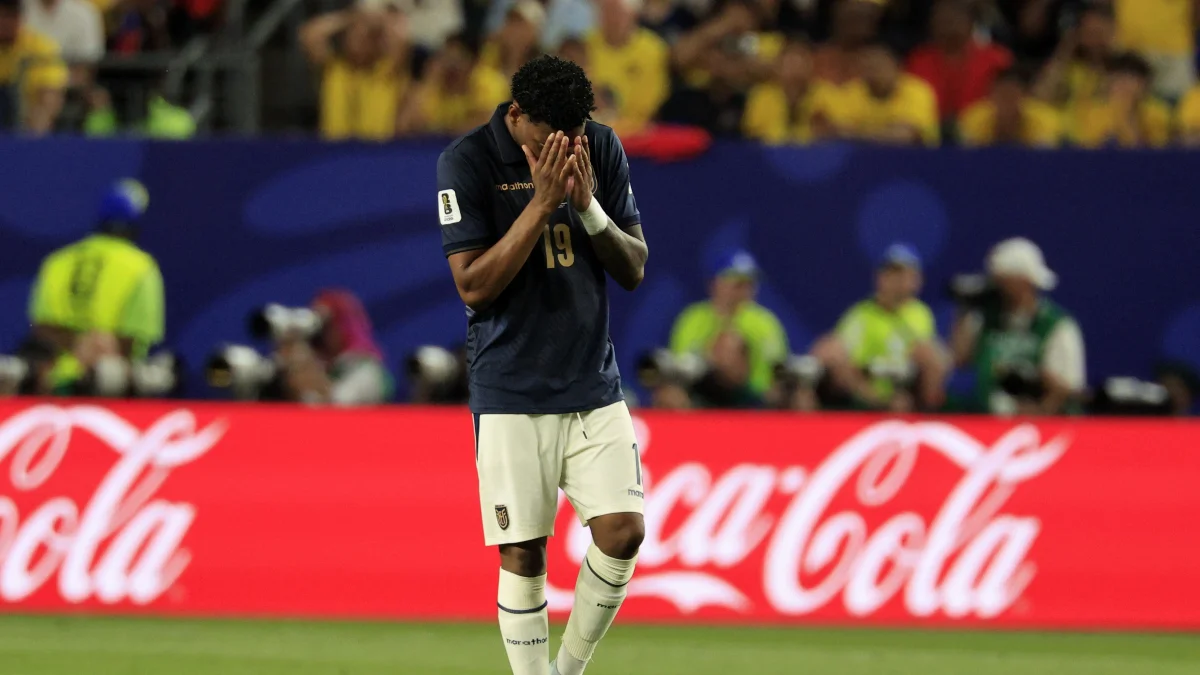
Ecuador’s World Cup 2026 Campaign: Navigating On-Field Setbacks and Unprecedented Fan Dissent
Ecuador’s 2026 World Cup qualification campaign has been immediately defined by a confluence of on-field struggles and unprecedented off-field fan dissent, setting a volatile tone for ‘La Tri’s’ journey. An opening 1-0 defeat against Ivory Coast in Columbus, Ohio, not only generated tactical pressure but also ignited public dissatisfaction, challenging team morale and coaching strategies from the outset.
Tactical Framework and the ‘Déficit de Gol’
The 1-0 loss to Ivory Coast immediately exposed Ecuador’s ‘déficit de gol’—a critical lack of attacking potency—and intensified scrutiny on interim coach Sebastián Beccacece’s tactical framework. His decision to deploy a back three (Piero Hincapie, Willian Pacho, Alan Franco) with aggressive wing-backs (Pervis Estupinan, John Yeboah) aimed to balance defensive solidity with offensive thrust. However, early missed opportunities, notably Enner Valencia’s one-on-one chance against Curacao’s Eloy Room, underscored a persistent challenge: converting chances into tangible results, a deficiency amplified by the late goal conceded against Ivory Coast. Despite Curacao’s own struggles in finishing, the pressure on Ecuador to operationalize its offensive strategy and improve clinical execution in subsequent fixtures, crucial for 2026 World Cup qualification in a group with varying opponent strengths, remains paramount. The ongoing evaluation of player performance within this system and the coach’s adaptability will be key.
The Evolving Landscape of Fan Engagement and Media Scrutiny
Beyond the pitch, Ecuador’s campaign was rocked by an unconventional fan protest: two content creators delivered a bucket of eggs to the team’s hotel, Le Meridien, in Columbus, Ohio. This symbolic act, amplified across social media, represented a direct expression of discontent with the team’s performance and Coach Beccacece’s tactical choices. The incident immediately escalated from public criticism to a deeply personal attack, as evidenced by Gonzalo Plata’s brother publicly condemning it as a ‘lack of respect’ for ‘La Tri’. This form of direct engagement by digital content creators highlights a profound shift in the media landscape. National federations now face not only traditional media scrutiny but also the immediate, often emotional, influence of independent digital voices. Managing these new dynamics requires sophisticated brand management, robust communication frameworks, and enhanced security protocols to mitigate psychological impacts on players and maintain team cohesion amidst intense public pressure.
Institutional Response and Strategic Imperatives for ‘La Tri’
The ‘difficult week’ endured by the Ecuadorian national team—characterized by ‘dudas, críticas y descontento’ (doubts, criticisms, and discontent)—demands a comprehensive institutional response from the Ecuadorian Football Federation (FEF). This extends beyond immediate security measures to proactive fan engagement, sophisticated public relations, and robust internal team management. Financially, early competitive setbacks and public controversies risk deterring sponsors, impacting merchandise sales, and devaluing media rights, directly threatening the long-term financial health and global visibility of ‘La Tri’ as they aspire to the 2026 World Cup. Strategically, these incidents underscore the critical need for long-term planning that integrates tactical evolution, comprehensive psychological support for players, and effective crisis communication. Furthermore, the incident in Columbus highlights the complex logistics of international fixtures, where host cities and federations must collaborate to ensure secure environments, constantly reviewing protocols in response to evolving fan interaction dynamics.
Conclusion: Interconnected Challenges in a High-Stakes Qualification Journey
Ecuador’s nascent 2026 World Cup qualification campaign epitomizes the intricate, interconnected challenges facing modern national football teams. The confluence of early on-field performance deficiencies, volatile fan engagement fueled by digital media, and the inherent pressures on coaching staff and players creates a complex ecosystem requiring multi-faceted strategic management. The events in Columbus, Ohio, serve as a potent early test for ‘La Tri,’ demanding not only tactical acumen and player resilience but also astute institutional leadership to navigate public scrutiny and maintain focus. Ultimately, how Ecuador addresses these deeply entwined sporting, social, and managerial pressures will dictate its trajectory towards securing a coveted spot in the 2026 World Cup.

Photo by emelec on Pixabay.