Eagles Preseason Opener Exposes Critical Depth and Offensive Woes
The Philadelphia Eagles commenced their 2026 preseason with a 24-7 defeat against the Baltimore Ravens. While typical for a preseason game prioritizing evaluation over outcome, the loss starkly illuminated critical concerns regarding team depth and offensive execution, especially in the initial offensive sequences.
Baltimore, under Head Coach Jesse Minter, achieved its stated objective of exhibiting poise and physicality. The Ravens controlled the contest, showcasing contributions from a wide range of players, underscoring their preparedness and team cohesion early in the preseason.
Offensive Inefficiency and Quarterback Limitations
The Eagles’ offense was a primary area of concern, marked by an inability to sustain drives and generate meaningful yardage. With veteran quarterbacks Andy Dalton and Tanner McKee leading the unit for much of the game, the team accumulated only 77 yards and two first downs across eight drives. Notably, no single offensive play exceeded 13 yards, suggesting systemic issues in play-calling, execution, or offensive line performance under pressure.
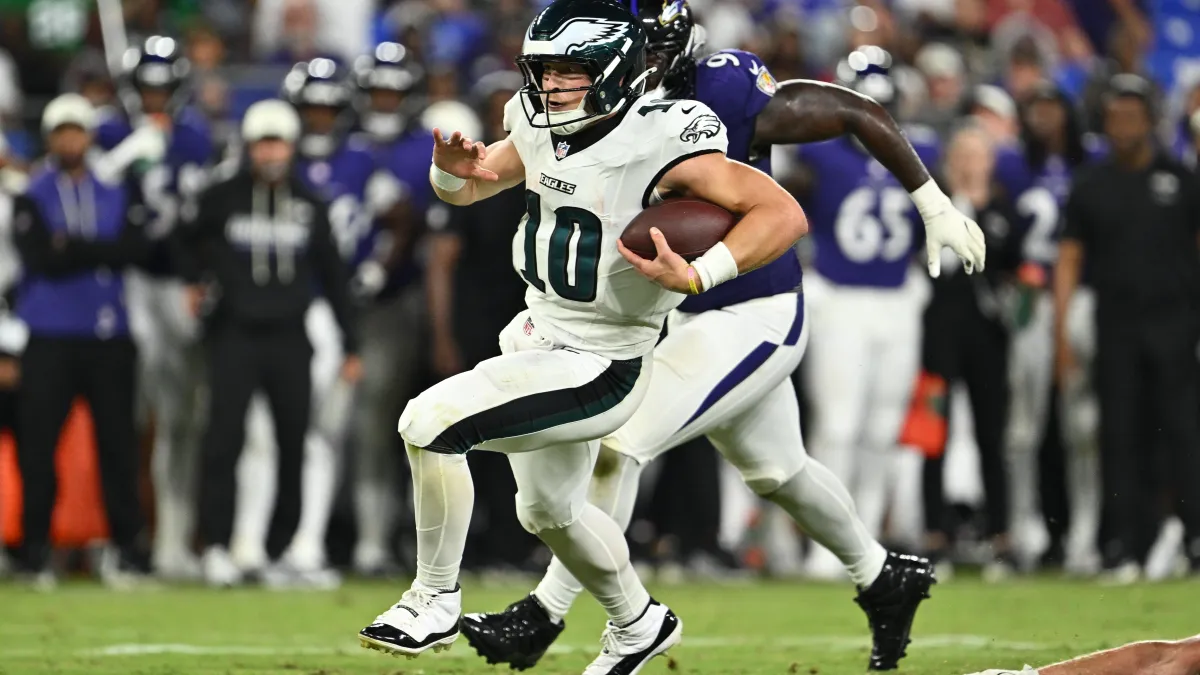
The offense’s lone scoring drive was orchestrated by rookie fourth-string quarterback Cole Payton. Payton, a fifth-round pick from North Dakota State, accounted for 45 rushing yards on three carries, including a critical 17-yard gain on fourth-and-3, and a 6-yard touchdown pass to Erik Ezukanma. His performance, while a bright spot, also served to underscore the broader offensive limitations when more established quarterbacks were on the field.
Payton’s dual-threat capabilities, evident in his leading role in both passing and rushing statistics for the Eagles, present a potential strategic element. However, his fourth-string status indicates this dynamic is not yet integrated into the primary offensive strategy, highlighting a reliance on unproven talent to spark the unit.
Emerging Talent and Rookie Impact
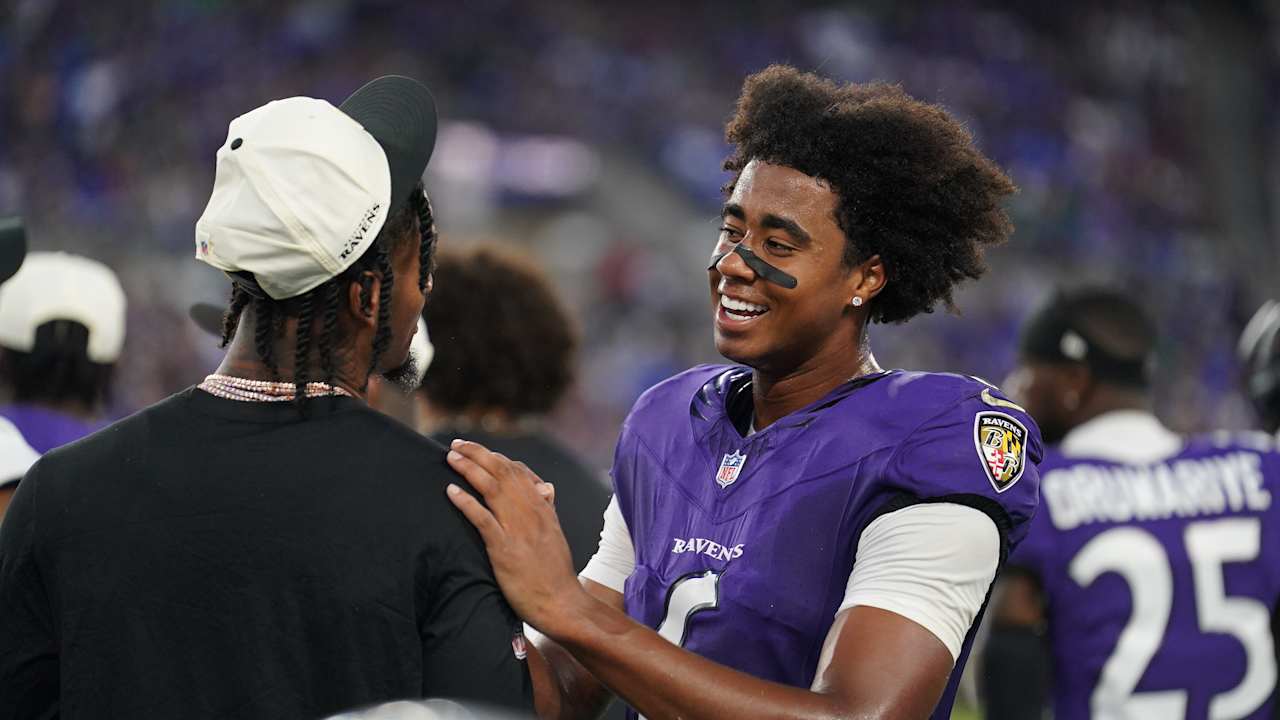
Baltimore’s training camp standout, Ja’Kobi Lane, continued his impressive preseason showing by scoring the game’s opening touchdown. Lane’s 16-yard reception involved a strong inside cut against Eagles cornerback Kelee Ringo, demonstrating his potential as an impact rookie. His ability to effectively gain leverage and make a play signals a level of consistency that could translate to regular-season contributions.
Lane’s early success and consistent practice performance, as noted by Coach Minter, position him as a key emerging player for the Ravens. His demonstrated ability to make plays against NFL competition, even in limited preseason snaps, indicates readiness and offers a strategic advantage for Baltimore’s offense.
Strategic Implications and Depth Assessment
The Eagles’ preseason opener served as a critical diagnostic tool for evaluating team depth and identifying areas requiring immediate strategic attention. The offensive struggles, particularly with experienced quarterbacks, raise questions about the offensive line’s pass protection and the scheme’s effectiveness against varied defensive schemes.
The reliance on a fourth-string quarterback for the team’s only scoring drive highlights potential vulnerabilities in the quarterback hierarchy and the need for more consistent offensive production from the outset. This situation may pressure the coaching staff to accelerate player development or explore alternative strategies to bolster the unit.
For the Ravens, the opener validates their coaching philosophy and player development initiatives. Their ability to execute with poise and physicality, even with reserves, indicates a strong foundation and clear strategic direction under Coach Minter. The emergence of players like Ja’Kobi Lane provides tangible evidence of successful scouting and preparation, offering a competitive edge.
The performance disparity underscores the ongoing evaluation process for both organizations. The Eagles must address offensive inefficiencies and solidify depth, particularly at critical positions, to avoid regular-season struggles. Conversely, the Ravens appear to be building momentum with a cohesive unit prepared for challenges.
The broader NFL landscape demands continuous improvement. The Eagles’ performance highlights the risks of relying on unproven talent or underdeveloped schemes against disciplined opponents. Strategic decisions regarding player development, roster adjustments, and offensive strategy will be crucial for the Eagles’ 2026 season trajectory.
Preseason games are vital for evaluating player performance under pressure, informing roster and strategic decisions. The Ravens’ balanced contributions and consistent execution suggest a robust internal evaluation process. The Eagles must leverage this early data to rectify critical weaknesses for regular-season readiness.
The competitive implications of preseason performances inform draft, free agency, and trade strategies. A team’s ability to identify and develop talent, as demonstrated by the Ravens, provides a significant long-term advantage in a league valuing parity and innovation.
The Eagles’ situation, marked by offensive struggles and reliance on late-game heroics from a lower-tier quarterback, presents a clear strategic challenge. The organization must assess the sufficiency of current offensive personnel and schemes or explore substantial adjustments, likely involving offensive line performance, quarterback development, and play-calling effectiveness.
The Ravens, conversely, appear more stable, with their opener validating their strategic approach and coaching. Their emphasis on physicality and poise, coupled with promising young talent, suggests positive organizational momentum and may attract further investment in player development.
Ultimately, the 2026 preseason opener serves as a stark reminder of NFL competitive pressures. The Eagles’ ability to translate this early data into actionable strategic improvements will be key to their season. The Ravens have provided an early indication of potential, setting a performance benchmark.
The institutional imperative for both teams is learning from early performances. The Eagles face a rigorous self-assessment of offensive capabilities and depth. The Ravens must build on positive momentum and refine strategies. The league’s competitive balance means even preseason outcomes carry strategic weight.
The narrative surrounding the Eagles’ opener is one of concern over offensive consistency and depth, contrasted with the Ravens’ demonstration of preparedness and emerging talent. This sets the stage for strategic adjustments. The Ravens’ apparent ability to extract maximum value from players and practices is a hallmark of successful franchises.
Strategic implications are clear: the Eagles must address offensive shortcomings to remain competitive. The Ravens have laid a foundation for a potentially successful season. Baltimore’s competitive leverage through early execution and talent identification contrasts with Philadelphia’s pressure to rectify weaknesses.
The institutional focus for the Eagles will shift towards enhancing offensive efficiency and solidifying depth. This may involve accelerated player development, roster moves, or re-evaluating offensive schemes. The Ravens will likely aim to maintain their trajectory, leveraging early successes to build confidence and refine their game plan.
The NFL’s competitive environment demands constant adaptation. The Eagles’ performance highlights offensive stagnation risks, while the Ravens’ execution underscores the benefits of a prepared, physically dominant team. These observations provide a critical lens for strategic decisions and operational adjustments for the upcoming season.
The institutional challenge for the Eagles is transforming a concerning opener into a catalyst for improvement. The Ravens’ performance offers a model of early-season success, emphasizing coaching, player development, and consistent execution. The competitive implications are significant as both teams navigate crucial preparation phases for the 2026 season.
The strategic imperative for the Eagles is to address identified offensive deficiencies and ensure adequate depth. The Ravens’ early success suggests a strong organizational foundation and clear strategic vision. Baltimore’s competitive leverage through demonstrated execution and emerging talent contrasts with Philadelphia’s pressure to rectify early-season issues.
The institutional focus for the Eagles will be on enhancing offensive efficiency and solidifying depth. The Ravens will aim to maintain positive momentum, leveraging early successes to build confidence. The competitive landscape demands continuous adaptation, and these preseason results provide critical data for strategic imperatives.
The strategic challenge for the Eagles is to address offensive shortcomings and ensure depth. The Ravens’ early success indicates a strong organizational foundation and clear strategic vision. Competitive leverage for Baltimore through execution and talent contrasts with pressure on Philadelphia to rectify weaknesses.
The institutional focus for the Eagles will be on offensive efficiency and depth. The Ravens will aim to maintain momentum. The competitive landscape demands adaptation, and these outcomes provide critical data for strategic imperatives.