
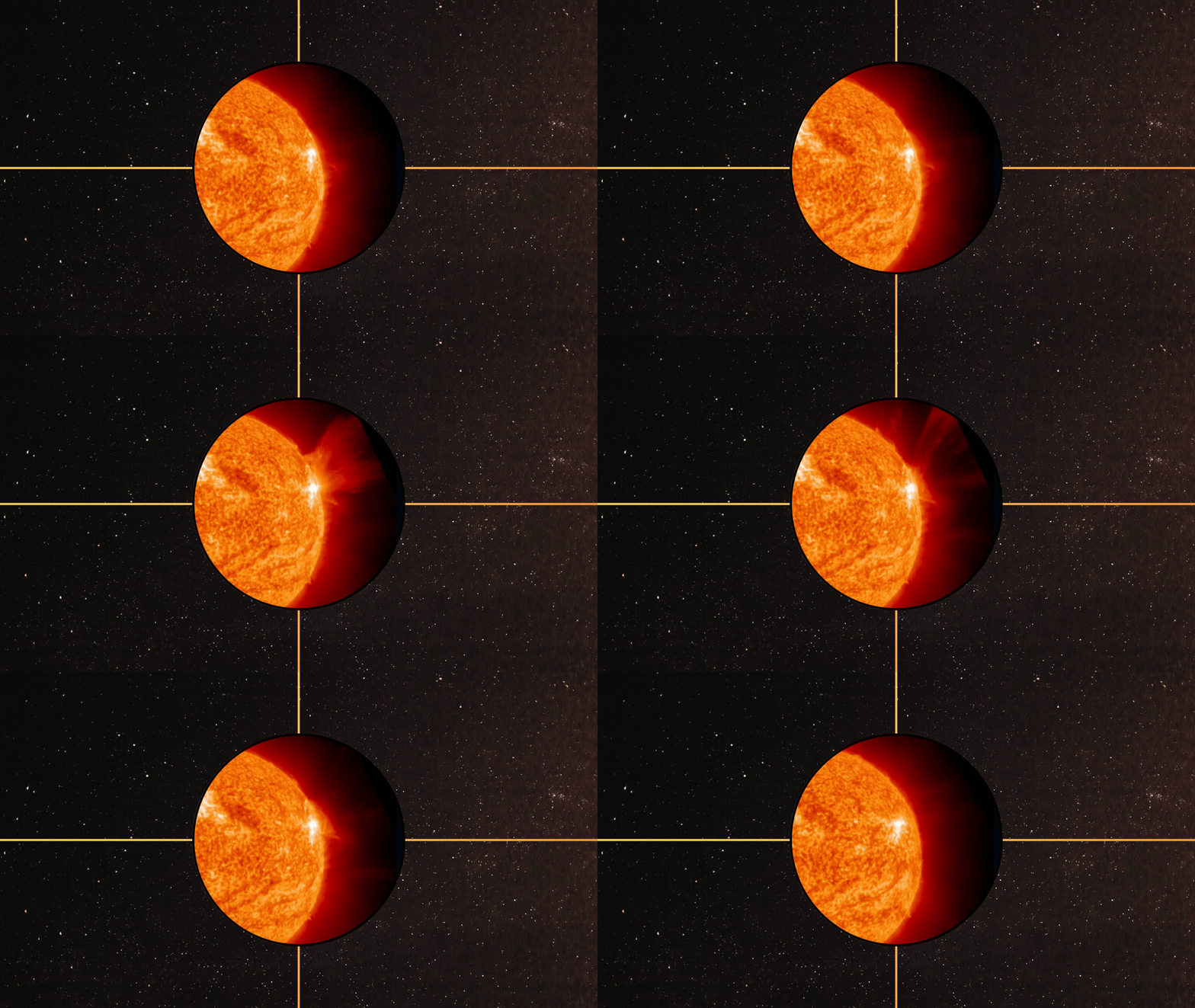
Analytical Overview of the X-Class Eruptive Sequence
The solar environment recently transitioned into a state of high-magnitude instability, characterized by the eruption of two X-class flares from Active Region 4419 within a seven-hour temporal window. This sequence—comprising an X2.4 flare peaking at 9:07 p.m. EDT on April 23 and an X2.5 event at 4:14 a.m. EDT on April 24—represents the most significant eruptive pulse in 78 days. These events signify a rapid reorganization of magnetic flux, necessitating immediate recalibration of predictive models for terrestrial and orbital infrastructure.
Ionospheric Perturbations and Geographic Attenuation
The primary terrestrial impact manifested as R3-Strong radio blackouts, driven by sudden ionospheric disturbances (SIDs). The X2.4 eruption targeted the Pacific basin and Oceania, causing high-frequency (HF) signal degradation that compromised trans-oceanic maritime and aviation communication channels. This was followed by the X2.5 event, which centered its peak ionizing radiation over East Asian economic hubs. For sectors reliant on Global Navigation Satellite Systems (GNSS) or high-frequency trading (HFT), these windows of signal scintillation introduced measurable operational risks and data latency.
Orbital Mechanics and Atmospheric Expansion
Beyond signal interference, the influx of extreme ultraviolet (EUV) and X-ray radiation induced thermospheric swelling. This expansion increases atmospheric density at Low Earth Orbit (LEO) altitudes, heightening satellite drag. For constellation operators, this necessitates unplanned station-keeping maneuvers, which accelerates propellant depletion and complicates mission longevity. Furthermore, the energetic particles associated with these flares increase the probability of single-event upsets (SEUs) and surface charging on sensitive orbital avionics.
Institutional Coordination and Mitigation Strategies
The response utilized the bifurcated capabilities of the U.S. space weather infrastructure: NASA’s Solar Dynamics Observatory (SDO) provided the high-cadence diagnostic imagery required for structural analysis, while NOAA’s Space Weather Prediction Center (SWPC) facilitated the operational transition into actionable R3 alerts. This synergy is critical for power grid stability; while these events primarily triggered radio blackouts, the risk of geomagnetically induced currents (GICs) remains a secondary concern for long-haul transmission lines should associated Coronal Mass Ejections (CMEs) achieve Earth-directed trajectories.
Strategic Outlook on Infrastructure Resilience
The 78-day interval preceding this sequence highlights the non-linear progression of the current solar cycle. Active Region 4419’s production of a ‘sympathetic flare’—where one eruptive event triggers another across a magnetic bridge—underscores the complexity of current solar dynamics. As global dependency on space-based assets scales, the economic consequences of ionospheric interference, ranging from supply chain delays to increased aerospace insurance premiums, demand more robust hardening of global communication protocols and power distribution networks.
Photo by PublicDomainPictures on Pixabay.