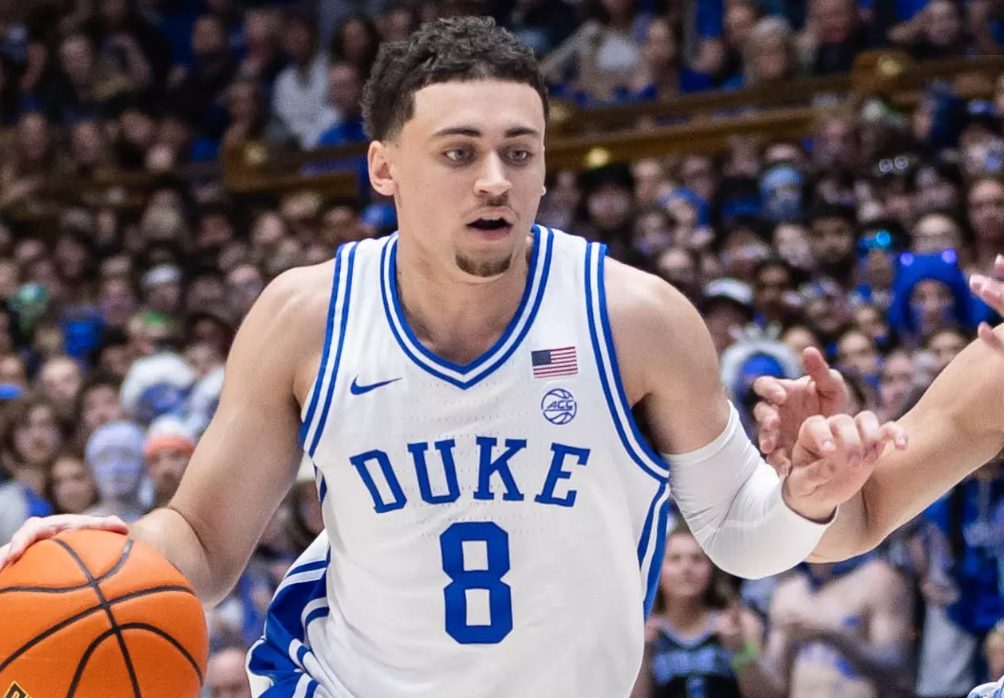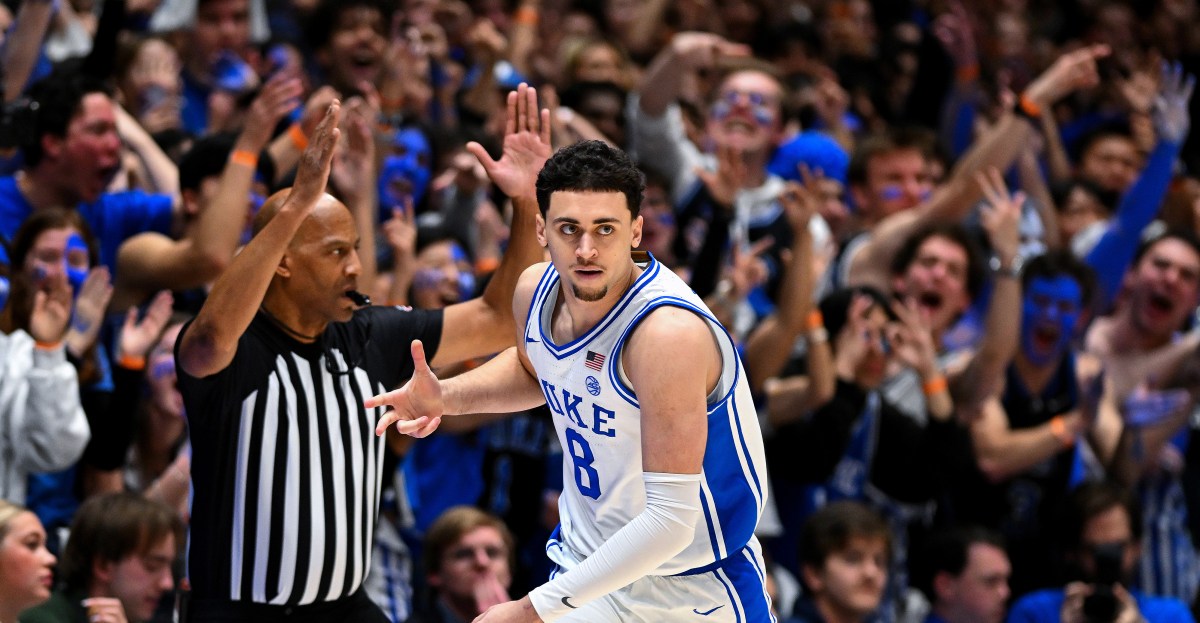
The entry of Duke guard Darren Harris into the transfer portal ahead of the 2026-27 cycle represents more than a personal career shift; it illustrates the increasingly transactional nature of blue-blood roster management. Harris, a 6-foot-5 wing with two years of eligibility remaining, exists at the intersection of Duke’s tactical pivot toward immediate veteran production and Indiana University’s strategic geographic expansion.
Strategic Roster Fluidity and Duke’s Positional Pivot
Duke’s internal personnel assessment indicates a move away from multi-year developmental projects in favor of high-ceiling, immediate-impact archetypes. While Harris demonstrated cultural alignment and mechanical growth, his production metrics did not meet the threshold for a primary rotational role in Jon Scheyer’s evolving system. By facilitating this departure, Duke optimizes its scholarship liquidity, clearing the path to recruit a high-usage scoring wing capable of providing multi-dimensional offensive versatility.
This decision reflects a broader institutional philosophy prioritizing proven efficiency over latent potential. In the hyper-competitive ACC landscape, Duke is increasingly incentivized to prioritize players who can impact the game beyond perimeter spacing. This ‘market correction’ allows the program to balance the influx of elite freshman talent with seasoned portal acquisitions, ensuring the roster remains resilient against the physical demands of national championship contention.
Indiana’s DMV Pipeline and Network-Based Recruitment
Indiana University has emerged as the frontrunner for Harris, primarily through the institutional leverage provided by assistant coach Kenny Johnson. Johnson’s historical ties to the Team Takeover program on the Nike EYBL circuit create a recruitment conduit that bypasses traditional barriers. For the Hoosiers, Harris represents a low-risk, high-reward acquisition vetted by the Duke system and possessing a physical profile suited for the Big Ten’s defensive rigors.
Securing a St. Paul VI (Virginia) product reinforces Indiana’s strategic presence within the DMV talent corridor. This regional focus is not merely incidental; it is a calculated attempt to diversify the roster with battle-tested East Coast prospects. By targeting Harris, Indiana capitalizes on established trust and a pre-existing rapport, reducing the recruitment friction often associated with the high-speed portal environment.
Statistical Upside: Mechanical Refinement and Gravity
Analysis of Harris’s sophomore data reveals a significant developmental trajectory. His three-point efficiency rose from 22.7% as a freshman to 33.3% on 69 attempts, suggesting a stabilization of his shooting mechanics. More telling is his free-throw percentage, which climbed from 50% to 76.9%. These metrics serve as a proxy for improved mental composure and refined shooting form, indicating that his floor-spacing ‘gravity’ could be maximized in a system that offers higher volume.
With nearly 69% of his career attempts coming from deep, Harris’s tactical value lies in his ability to punish zone defenses and create driving lanes for primary playmakers. Unlike one-year rentals, Harris offers two years of continuity, allowing a coaching staff to integrate him into long-term tactical schemes—a rare commodity in the modern transfer market.
Institutional Implications of the NCAA Ecosystem
The Harris transfer is emblematic of ‘talent liquidity’ in the NCAA. Programs now operate under a model of constant re-evaluation, where roster spots are treated as high-value assets that must yield immediate returns. Duke’s willingness to part with a former four-star recruit underscores a confidence in their ability to reload via the portal, while Indiana’s interest highlights a strategy of acquiring ‘professionalized’ talent from rival elite programs.
Ultimately, Harris’s move is a calculated gamble on role expansion. For Indiana, he represents a tactical solution to floor-spacing deficiencies; for Duke, his departure is a prerequisite for a more aggressive offensive upgrade. Both programs are executing distinct but complementary strategies to navigate the volatility of the contemporary collegiate landscape.