
Kyle Busch Secures Maiden Daytona 500 Pole Position Amid Structural Qualifying System
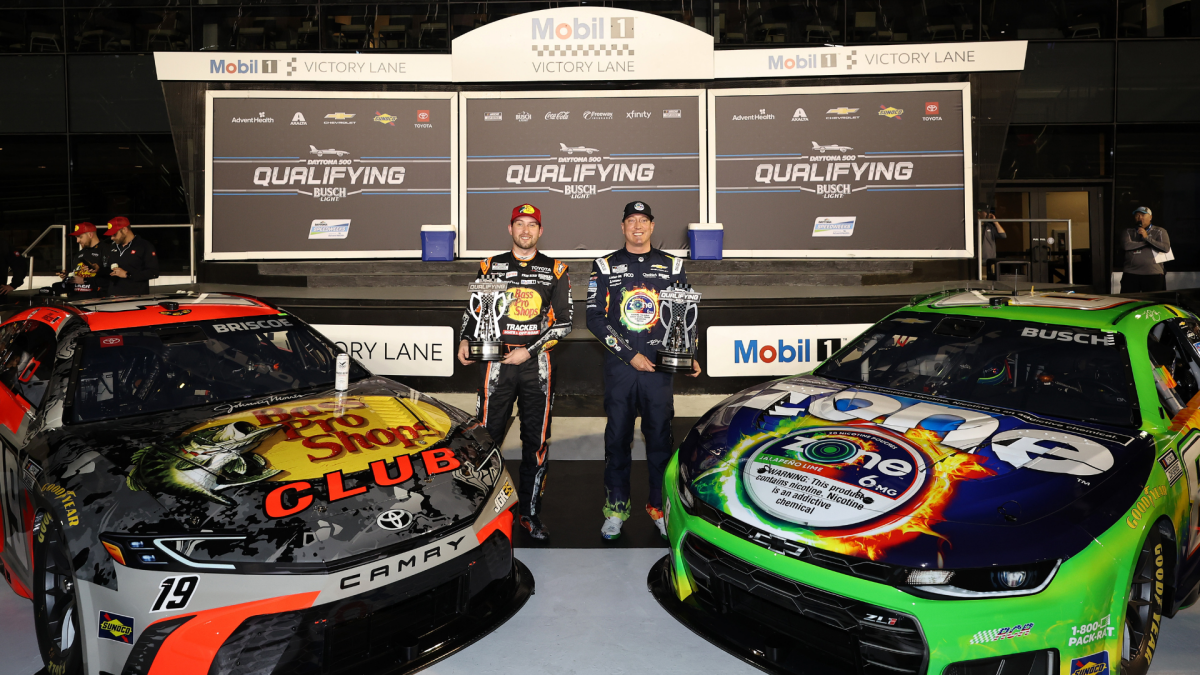
Kyle Busch secured the pole position for the 2026 Daytona 500 at Daytona International Speedway in Daytona Beach, Florida. This achievement marks the first time in Busch’s career that he has claimed the top starting spot for the sport’s most prestigious event, immediately setting a defining tone for his competitive posture entering the season.
Alongside Busch on the front row will be Briscoe, who achieved a high-profile qualifying run to secure a front-row starting position for the second consecutive year. These two positions, determined exclusively through raw speed time trials, are the only starting spots locked into the field prior to the ensuing competitive races.
The Structural Imperative of the Duel Races
While the top two starting positions are decided by single-car qualifying runs, the structural framework of the Daytona 500 mandates an additional, highly complex competitive layer to determine the majority of the 40-car field. The starting lineup for Sunday’s main event will be fully determined by the outcomes of the crucial Duel races, which are scheduled to take place on Thursday night.
This two-stage qualifying system—combining engineered speed trials with compulsory racing events—is an institutional characteristic unique to the Daytona 500. It ensures that favorable starting positions are earned not only through technical preparation and aerodynamic efficiency but also through demonstrated on-track ability under immediate competitive pressure, a fundamental requirement for superspeedway racing.
Strategic Depth and Risk Management in the Duels
The Duel races introduce significant strategic complexity for every participating team. For teams not already locked into the front row, the objective is twofold: achieving a high finish to secure a favorable starting spot and, critically, avoiding any damage to the primary race car, which could necessitate extensive and costly repairs before the main event.
The institutional policies governing chassis and parts allocation in the NASCAR Cup Series impose tight constraints on resource management. Damaging a primary vehicle in the Duels can compromise a team’s preparation, forcing them to utilize backup cars or expend critical resources that were earmarked for other stages of the lengthy season. Consequently, the Duels are navigated with a calculated risk/reward calculus that balances immediate competitive gain against long-term resource preservation.
This required balancing act inherently shifts the competitive emphasis away from pure individual lap speed, which earned the pole, toward drafting ability, positional management, and the tactical deployment of team resources. The successful navigation of the Duels is a key measure of a team’s organizational capacity under high-stakes conditions.
The Cultural Significance of the Daytona Pole
Securing the pole position for the Daytona 500 carries a weight far exceeding that of a standard race qualifying session. Known institutionally as the “Great American Race,” the event serves as the official and cultural commencement of the NASCAR Cup Series season.
A pole position here guarantees the driver and team a permanent place in the statistical history of the sport’s most recognized annual event. For a competitor of Busch’s stature, securing this particular pole, his first, transcends mere statistics and immediately contributes to his career legacy, serving as a marker of completeness in his competitive portfolio.
Although superspeedway racing dynamics, particularly the drafting required at Daytona, often mitigate the on-track advantage of starting first, the pole position provides concrete strategic benefits. Institutionally, the pole winner receives the highly coveted first choice of pit stall, an advantage that proves material during mandatory pit cycles throughout the 500-mile race, offering efficiency and reduced congestion under competitive pressure.
Competitive Context Entering the 2026 Season
The qualifying result provides immediate competitive insight into the engineering and preparation capabilities of the field entering the 2026 campaign. Busch’s performance serves as an emphatic opening statement of intent, particularly given that the source context indicates his entry into the season was already defined by a prior, high-profile narrative.
In the highly regulated environment of the NASCAR Cup Series, achieving peak aerodynamic performance in qualifying reflects meticulous preparation and effective utilization of permissible technical parameters. This early success signals that the team is competitive immediately under the new season’s framework.
Conversely, Briscoe’s consistency in securing a front-row starting spot for the second consecutive year highlights the sustained proficiency of his team in mastering the specific demands of superspeedway qualifying. Such consistent performance at the sport’s biggest event underscores a repeatable methodology for technical execution at Daytona International Speedway.
Institutional Media Framing of the Season Opener
The Daytona 500 qualifying process is carefully structured to maximize media and audience engagement over several days, fulfilling its role as the anchor event for the industry’s market positioning. The time trials create immediate, measurable success stories, such as Busch’s maiden pole, which generate foundational storylines for media coverage.
The subsequent Duel races, acting as competitive filters, introduce immediate drama and unpredictability. This multi-day, high-stakes system ensures continuous relevance and sustained reporting cycles, driving widespread interest both domestically and internationally for the competitive calendar year ahead. The structural choice to split qualifying in this manner is a critical component of the event’s overall institutional design, ensuring that competitive elements remain front-and-center in the absence of a complete starting field.
The official timing and broadcast designation of the Duels—scheduled for Thursday night—are key editorial decisions designed to create a prime-time, high-value television product that precedes the climactic Sunday event. This careful scheduling underscores the Duels’ function not merely as a technical necessity but as a highly valued, stand-alone media property within the broader NASCAR ecosystem.
The results of the Duel races, which will finalize the grid, are anticipated with significant attention because they determine the remaining 38 starting spots, influencing crucial strategies concerning drafting partners, pit road logistics, and early race track positioning. Until those races conclude, only the top two qualifiers—Busch and Briscoe—have their starting fates secured, emphasizing the temporary and tiered nature of Daytona’s unique qualifying structure.
Photo by PublicDomainPictures on Pixabay.